
Hosting brunch, drinks and nibbles, or a soup supper
You want to put a whole or shareable white loaf on the table. The shape, crust and whether it’s made with sourdough all matter, and you’re looking for a size that suits the meal.


Choose a whole white sourdough or rustic loaf if its appearance and sharing it at the table are your priorities. If you want to serve warm bread just before the meal, consider a bake-at-home option and check how it needs to be prepared. In either case, choose a size that you can finish; being called sourdough or rustic does not automatically make white bread wholemeal.
You want to put a whole or shareable white loaf on the table. The shape, crust and whether it’s made with sourdough all matter, and you’re looking for a size that suits the meal.
You want to choose when to serve it and have the time and suitable equipment for a final bake.
You’re choosing white bread for a special occasion, but you also want to check the ingredients, allergens and fibre content. If iodised salt matters to you, check the ingredients list for that too.
First decide how you want to serve the bread: whole at the table or baked just before the meal. Then check the size you need and the information on the packaging.
| What to consider | Check | Who is this important to? |
|---|---|---|
| Appearance and flavour | Check whether the loaf is whole, unsliced or easy to share; check the ingredients if you specifically want sourdough. | For a brunch or soup supper, I want a loaf I can put on show on the table and share. This presentation is the top priority for around 36% of consumers. |
| Serving it warm | Check whether it needs baking, and what equipment, temperature and preparation time are specified for the product you’ve chosen. | I want to bake the bread just before eating, so I can decide when to serve it. Around 29% of consumers give this the highest priority. |
| Size and leftovers | Check the weight or number of pieces and choose an amount that suits the meal. | I don’t want to be left with a large amount of bread after one meal. Keeping leftovers to a minimum matters most to around 21% of consumers. |
| Ingredients and nutritional information | Read the current ingredients and allergen information; compare fibre only on a like-for-like basis, such as per 100 g. | If ingredients or allergens determine my choice, I don’t want to rely on words such as sourdough or rustic. This check comes first for around 14% of consumers. |
These words don’t tell you whether a loaf is wholemeal. The Dutch Nutrition Centre (Voedingscentrum) recommends replacing white bread with wholemeal or brown bread as much as possible.
If you want to know what type of bread you’re buying, read the product description and ingredients rather than relying on the name alone.
The term ‘baker’s salt’ on its own doesn’t tell you which salt has been used in a particular loaf.
Check the ingredients list for baker’s salt or iodised salt. If you’re buying unwrapped bread in store, ask for the product information.
Bake-at-home bread needs to be prepared before serving. PLUS gives different instructions for its white sourdough baguette depending on whether you use an oven or an air fryer.
Before buying, read the instructions for the bread you’ve chosen and check that you have the equipment you need.
Remember to allow time and factor in using the oven or air fryer just before the meal.
Albert Heijn’s Liefde & Passie and OerDesem ranges are worth exploring if you’re looking for white sourdough or a rustic-style loaf.
Jumbo offers white sourdough in baguette and tear-and-share formats, among other options, for meals where you want to share the bread.
Lidl lists a rustic white wheat sourdough loaf for anyone looking for a whole loaf in this style.
At ALDI, you could look for Bakkersgoud rustiek wit as a whole loaf, or choose a bake-at-home product for a different serving occasion.
PLUS Korenlanders Desem Wit and its white sourdough baguette offer two different options: a loaf for the table and a baguette to bake at home.
At Dirk, you can compare different types of white bread, including rustic bake-at-home baguettes.
This white rustic baguette is a good fit for a meal where you want to put bread on the table or share it. Check the packaging if you want to serve it warm.
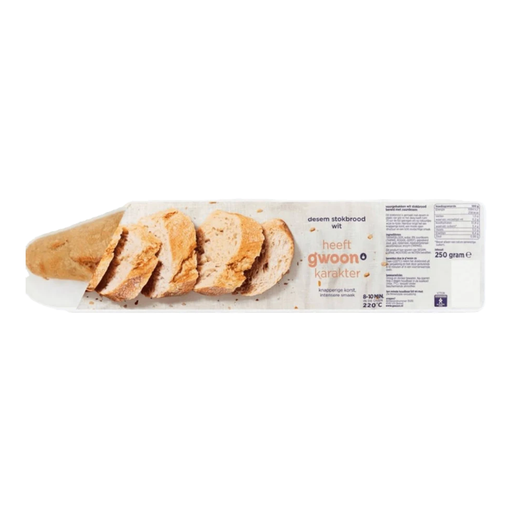 Image unavailable
The baguette shape makes it ideal for sharing with a meal.
Contents: 250 g.
Check the preparation instructions on the packaging if you want to serve the bread warm. Read the latest allergen information if it’s relevant to your choice.
No, sourdough on its own doesn’t tell you whether a loaf is wholemeal. Check the product description and ingredients to find out. The Dutch Nutrition Centre (Voedingscentrum) recommends replacing white bread with wholemeal or brown bread as much as possible.
No. Bread that’s ready to eat can be served straight away, but bake-at-home bread needs preparing. PLUS recommends baking its white sourdough baguette in an oven at 220 °C for 8 to 10 minutes, or in an air fryer at 200 °C for 4 minutes. Follow the instructions provided for any other product.
Don’t assume so without checking the ingredients. The official Commodities Act regulations define baker’s salt as iodised table salt for bread and other bakery products, but that definition doesn’t tell you which salt is in your loaf. Read the ingredients list or ask for product information if you’re buying unwrapped bread.
No, sourdough doesn’t mean that bread is gluten-free. For example, the product description for Jumbo Desem Breekbrood Wit lists wheat. Check the latest ingredients and allergen information for every loaf you choose.
Choose the number of pieces or the weight to suit the meal and the number of people eating. A smaller baguette or tear-and-share loaf may be more practical than a whole loaf if you need less; check the packaging for advice on storing any leftovers.