
If you want to put a whole loaf on the table
Want to slice and share bread at the table for a leisurely breakfast, lunch or dinner? A whole hearth-baked loaf or rustic white loaf suits the way you want to serve it.


A whole hearth-baked loaf or rustic white loaf is ideal for a meal where you want to slice the bread yourself. Choose a bake-at-home baguette if you want to prepare the bread just before serving and have oven space available. Sourdough alone tells you nothing about the fibre content or the type of salt used. Check the preparation instructions, allergens and ingredients for each loaf, especially if iodine is relevant to your choice.
Want to slice and share bread at the table for a leisurely breakfast, lunch or dinner? A whole hearth-baked loaf or rustic white loaf suits the way you want to serve it.
A bake-at-home baguette is a good choice if you want to prepare the bread shortly before the meal and have a suitable oven available. Follow the instructions for the product you choose.
Are allergens, the type of salt used or fibre important to your choice? Check the information for the specific loaf rather than relying on words such as white, sourdough, rustic or organic.
First decide whether you want to slice a whole loaf or serve individual portions. Then plan any baking around the meal and check the product information that matters most to you.
| What to consider | What to check when buying | Who it matters to |
|---|---|---|
| Presentation and sharing | Check whether it’s a whole loaf, baguette or individual rolls, and whether you want to slice the portions yourself. | If I want to put a whole loaf on the table, I want to be able to divide it into slices myself. Around 38% of consumers prioritise this way of presenting and sharing bread. |
| Baking and serving time | Check whether the bread needs baking and follow the temperature and baking time for the loaf you choose. | For a dinner, I want to bake the bread shortly before serving, but the oven needs to be free. This serving time is the top priority for around 37% of consumers. |
| Ingredients and nutritional information | Read the latest allergen information, check the type of salt if needed, and compare fibre per 100 g. | If I need to take allergens, iodine or fibre into account, I need the details for the specific loaf. This check matters most to around 25% of consumers. |
According to the Netherlands Nutrition Centre, bakers are not required to use baker’s salt. The name of the bread alone won’t tell you which type of salt was used.
If iodine is relevant to your choice, check the ingredients list for baker’s salt or iodised salt. For unpackaged bread, ask which type of salt was used.
These words don’t tell you how much fibre a particular loaf contains. The Netherlands Nutrition Centre advises replacing white bread with wholemeal or brown bread as much as possible for everyday eating.
If fibre matters to your choice, compare the amount listed per 100 g rather than relying on the style name.
Bread that still needs baking requires oven space and preparation time. This matters if you want to put it straight on the table.
Read the instructions for the specific product before buying and work out when the oven will be available.
You can’t tell which allergens a loaf contains from its shape or description. The Netherlands Food and Consumer Product Safety Authority says that sellers must also provide allergen information for unpackaged food.
Read the label on pre-packed bread and ask for allergen information about unpackaged bread before choosing.
These brands offer a range of white bread shapes. Check the preparation instructions and ingredients for each product; a brand name won’t tell you whether a loaf is right for your meal.
Offers, among other things, white hearth-baked loaves and white sourdough products.
Offers white sourdough baguettes and rustic white bake-at-home baguettes, alongside other sourdough breads.
Its Korenlanders range includes white sourdough bread and white sourdough demi-baguettes.
Offers, among other things, Bakkersgoud Rustiek Wit and Boeren Tijger Wit.
Offers rustic white sourdough bread as part of its bread range.
Offers, among other things, Batard white bread and rustic white bake-at-home baguettes.
This selection includes white baguettes and individual rolls to serve with a meal. If you’d rather put a whole hearth-baked loaf on the table, choose that shape instead. Don’t assume the baguettes are ready to serve straight away without checking.
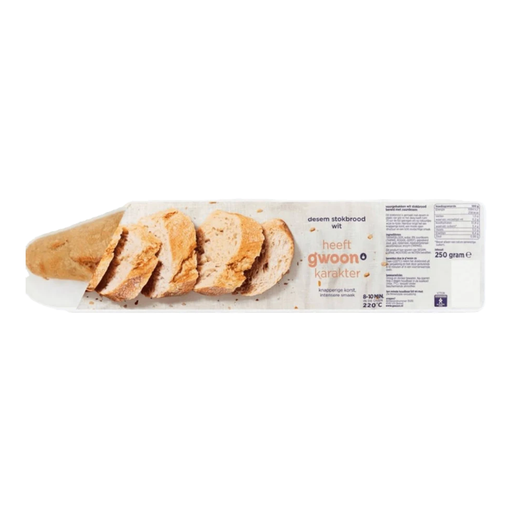 Image unavailable
A baguette to serve in portions with a meal.
Weight: 250 g. Before planning when to serve it, check the packaging to see whether it needs baking.
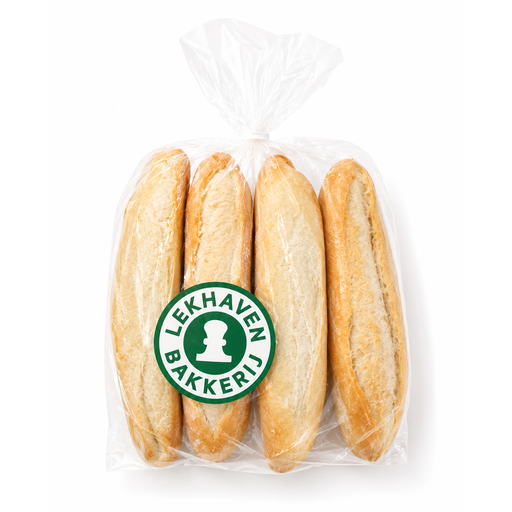 Image unavailable
Four individual baguettes are a good choice if you want to serve several portions and can plan when to bake them.
Four baguettes, 135 g each. Check the current packaging for the baking time before deciding when to serve them.
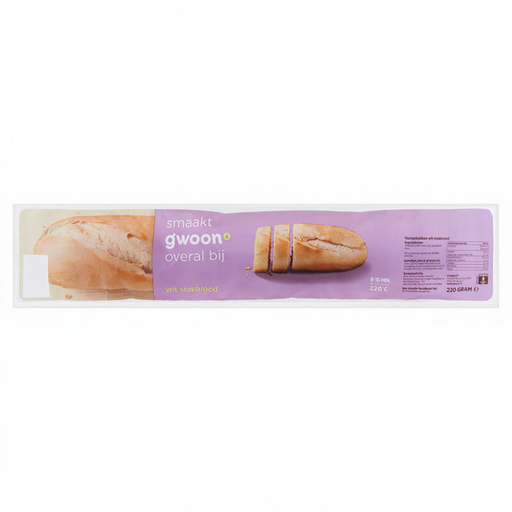 Image unavailable
A white baguette to serve with a meal.
Weight: 220 g. If you want to prepare it shortly before eating, check the baking instructions on the packaging.
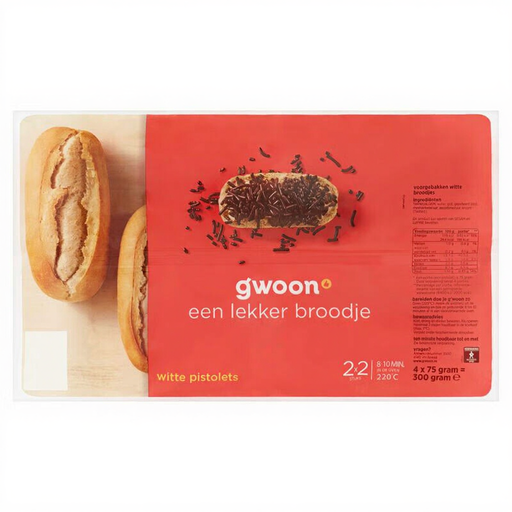 Image unavailable
Individual rolls are a good choice if you’d rather serve one portion per person than slice a whole loaf.
Four rolls, 300 g in total. Check the current packaging for allergen information.
No, you can’t assume that: according to the Netherlands Nutrition Centre, bakers are not required to use baker’s salt. For packaged bread, check the ingredients list for baker’s salt or iodised salt. For unpackaged bread, ask which type of salt was used.
Before you buy, ask the seller for allergen information about the specific loaf. The Netherlands Food and Consumer Product Safety Authority says sellers must tell consumers about any allergens in unpackaged food too.
No, the word sourdough doesn’t tell you how much fibre it contains. Compare the fibre listed per 100 g for the products you’re considering. For everyday eating, the Netherlands Nutrition Centre advises replacing white bread with wholemeal or brown bread as much as possible.
Plan the baking according to the instructions for your baguette and make sure you have enough oven space. PLUS gives instructions of 8–10 minutes at 220 °C for its Korenlanders white sourdough demi-baguette, but don’t use that time and temperature for another product.