
Parents who pack bread for school every day
With a whole loaf, it matters how many slices are actually eaten. Check the size of the loaf and consider whether you can freeze some of it before it becomes less appealing.


A whole white loaf is a practical choice for school lunches if the bread is eaten or frozen in time. Longer-lasting sliced white bread is more suitable when you’re planning ahead for several school days; check the ingredients and allergens for each variety. If you’re also weighing up which type of bread to choose for everyday lunches, you can consult the Voedingscentrum’s school lunch list: it includes white bread among the everyday choices, and wholemeal or brown bread among the healthier choices.
With a whole loaf, it matters how many slices are actually eaten. Check the size of the loaf and consider whether you can freeze some of it before it becomes less appealing.
If a loaf needs to last for several school days, the storage instructions and whether it can be frozen on the day you buy it matter more than the shape of the loaf alone.
If your child has an individual dietary restriction or there are specific requirements at school, the allergen information for the exact variety is what counts. An older packet or a similar loaf is no substitute.
First, work out how much bread you’ll get through during the school week. Then check how to store it and whether your chosen variety suits your nutritional preferences and any individual dietary requirements.
| What to consider | What to check | Who is it important for? |
|---|---|---|
| How much bread you can use | Check the size of the loaf and choose an amount that will be eaten or frozen in time. | I pack sandwiches for school almost every day and don’t want any of the loaf to go to waste. Making the most of the quantity they buy is the top priority for around 36% of consumers. |
| Storage and lunchboxes | Read the storage advice and check whether the bread can be frozen according to the packet. | When I plan lunches in advance, I want to be able to pack bread on later school days that my child enjoys eating. For around 29% of consumers, the convenience of packing a lunchbox comes first. |
| Type of bread and nutritional information | Check whether the bread is white, brown or wholemeal, and compare the fibre per 100 g if needed. | I want to choose the type of bread for everyday lunches carefully, even if white bread is the preferred option. For around 21% of consumers, this nutritional choice is the main consideration. |
| Allergens and individual suitability | Check the current packet for the exact variety and take account of any requirements that apply to your child. | If my child has an allergy or another individual dietary restriction, I need to know whether this particular bread is suitable. For around 14% of consumers, this check is the top priority. |
A whole loaf isn’t necessarily a convenient amount if some of it goes unused.
Compare the sizes of similar loaves and consider how many slices you’ll use in time or can freeze.
The Voedingscentrum lists wholemeal and brown bread among the healthier choices for a school lunch, and white bread among the everyday choices. These aren’t interchangeable descriptions of the same nutritional option.
Check the type of bread on the packet and decide which variety you can realistically include in your packed lunches.
Allergens vary between varieties. Albert Heijn lists cereals containing gluten and soya among the allergens for AH Wit heel; PLUS also lists milk and lactose for PLUS Boeren wit heel.
Check the current allergen information every time you buy bread, and take account of any individual requirements for your child.
Bread designed to stay fresh for longer offers little benefit if the whole loaf will be eaten quickly. Its ingredients may also differ from those of a basic loaf.
Choose according to your storage routine and check the ingredients for the specific variety.
Albert Heijn offers both AH Wit heel and AH Extra lang lekker casino wit heel, two varieties for different storage routines.
Jumbo offers several white breads, as well as a separate 500 g Lekker Vrij van Gluten white bread variety.
ALDI describes a whole white loaf with a soft crumb, baked in a tin.
Lidl offers an 800 g white loaf which, according to the product page, is available in store only.
PLUS Boeren wit heel is an 800 g loaf with listed ingredients, nutritional information and freezing instructions.
Dirk offers Bakker van der Akker Boeren tijger wit heel, a white tiger loaf suitable for lunches, among other uses.
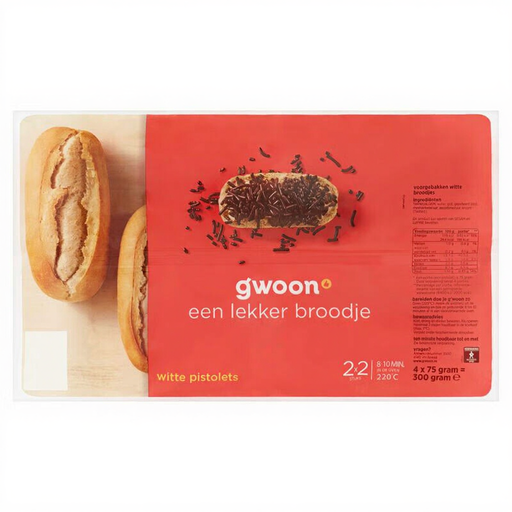
If you’d rather pack individual white rolls than slices from a whole loaf, you could consider this pack of four. Before buying, check that the storage instructions and ingredients suit how you plan to use them.
 No image available
An option if you’d like to pack individual white rolls instead of slices from a whole loaf. The pack contains four rolls, weighing 300 g in total.
If you’re planning lunches for several days, check the storage advice on the packet. If your child has an individual dietary restriction, also read the current allergen information and take account of any school requirements.
Not according to the Voedingscentrum’s school lunch list: it includes white bread among the everyday choices, and wholemeal or brown bread among the healthier choices. If you pack white bread, you could consider a different type for the next lunch.
No, check the exact variety. AH Wit heel and PLUS Boeren wit heel list cereals containing gluten; PLUS also lists milk and lactose. If your child has an individual dietary restriction, follow the information on the current packet and any requirements that apply to them.
Follow the instructions for the bread you’ve chosen. Albert Heijn says you can freeze the AH varieties covered in its information at home on the day you buy them. Work out how much you need for each school day, and check the label for further storage advice.
You can’t assume that every loaf does. The Netherlands Food and Consumer Product Safety Authority explains that iodine compounds may be added to bread through baker’s salt. If the ingredients matter to your choice, check the ingredients list for the variety you’re buying.