For a special secondary school lunch, you could choose white sourdough, a hearth-baked loaf or rustic bread if the crust, shape and way of serving matter. Check the allergens and school rules before packing it, and see whether the bread is ready to eat or needs preparing at home. The Voedingscentrum recommends replacing white bread with wholemeal or brown bread as often as possible for everyday meals.
Who is this choice relevant to?
Anyone organising a special school lunch
For a shared lunch, you’re looking for bread with a different shape or crust from ordinary sliced white bread. A hearth-baked loaf or tear-and-share bread could work, as long as its size and preparation suit the number of lunch portions you need.
Parents who need to consider allergens
You’ll need to check the ingredients and allergen information for your chosen bread against the pupil’s needs and the school’s rules. The product name alone isn’t enough, particularly for bread containing spelt, kernels or seeds.
Families choosing white bread for a special occasion
You want to serve something different for this lunch, while also seeing how its fibre content compares with other white bread options. For everyday meals, the Voedingscentrum recommends choosing wholemeal or brown bread instead of white bread as often as possible.
What should you look for when choosing?
First, check that the bread meets the relevant allergen requirements. Then choose a shape that works for packing or sharing, and compare nutritional information on a like-for-like basis.
| What to consider |
What to check before buying |
Who is this important for? |
| Appearance and eating experience |
Look at the shape and crust, and consider whether the bread will be taken sliced or as a whole loaf. |
If I’m sharing lunch, I want a loaf that looks different on the table from ordinary sandwiches. Appearance and flavour are the top priorities for around 29% of consumers planning this kind of lunch. |
| Preparation and portions |
Check whether the bread needs baking and read the storage and preparation instructions on the packaging. |
On a busy school morning, I want to be able to pack the bread without any extra preparation, or portion it in advance. Practicality is the main concern for around 29% of these consumers. |
| Allergens and school rules |
Read the current ingredients list and allergen information, including any warnings about traces, and check these against the school’s rules. |
If a pupil needs to avoid certain ingredients, I want to know what’s in the bread before packing it. For around 21% of consumers, checking this is the top priority. |
| Nutritional value |
Compare fibre per 100 g and check whether the bread is labelled as white, brown or wholemeal. |
I might choose white bread for a special lunch, but I also want to consider another type of bread for everyday lunches. Around 21% of consumers put this consideration first. |
Common mistakes
-
Assuming sourdough, spelt or rustic bread is gluten-free
These words don’t mean that a bread is gluten-free. The sourdough and spelt breads mentioned contain gluten-containing grains, and the name alone doesn’t tell you whether it contains other allergens.
Every time you buy bread, check the ingredients and allergen information on the current packaging, and follow the rules for the pupil and school in question.
-
Confusing a rustic crust with wholemeal bread
A crunchy crust, sourdough or kernels don’t automatically make white bread wholemeal. The Voedingscentrum recommends replacing white bread with wholemeal or brown bread as often as possible.
Check the type of bread on the packaging. If you’re choosing between white breads, compare the stated fibre per 100 g.
-
Assuming every branch stocks the same range
Lidl says its oven-fresh range may vary by branch. ALDI’s freshly baked range is available in stores with a bakery section.
Check your chosen branch before the planned lunch, and decide which alternative bread would also suit your plans.
-
Buying a whole loaf without a plan for leftovers
A whole loaf may give you more portions than you need for one lunch. If you want to keep some for later, you’ll also need to consider how the product should be stored.
If needed, divide the loaf into lunch portions and follow the storage instructions on the packaging. The Voedingscentrum recommends taking only the portions you need out of the freezer when you want to freeze bread.
Brands to compare
The bread ranges listed offer different shapes and preparation methods for a special lunch. Check the specific product and your chosen branch, rather than relying on the brand name alone.
Albert Heijn
Albert Heijn offers white hearth-baked loaves, among other options, as well as AH Liefde & Passie Spelt, a rustic bread that Albert Heijn says is made with sourdough.
- Albert Heijn’s product information lists 4.3 g of fibre per 100 g for AH Liefde & Passie Spelt and 1.6 g per 100 g for AH Vloerbrood wit heel.
- Check the current packaging for ingredients and allergens. A rustic shape doesn’t tell you whether the bread is suitable for a pupil with dietary restrictions.
Jumbo
Alongside ordinary white bread, Jumbo offers a part-baked white sourdough tear-and-share loaf designed for sharing.
- Jumbo lists 3.4 g of fibre per 100 g for Desem Breekbrood Wit and 2.4 g per 100 g for its ordinary white bread.
- Make sure you have time to prepare the tear-and-share loaf before you leave.
Lidl
Lidl includes a rustic white wheat sourdough loaf in its bread range.
- This is a white sourdough option for anyone looking for a rustic-shaped loaf.
- Lidl says the bread is only available in store, and its oven-fresh range may vary by branch. Check the product information about ingredients and allergens in store.
Aldi
ALDI includes Bakkersgoud rustiek wit in its freshly baked bread range.
- ALDI describes the product as white bread with a crust and a soft centre.
- ALDI says its freshly baked range is available in stores with a bakery section, so check your branch and the product packaging.
PLUS
PLUS Beiers Vloerbrood wit heel is a hearth-baked loaf option for a lunch with larger slices.
- PLUS lists 3 g of fibre per 100 g and provides allergen information for this product.
- Check that the bread is available at your chosen branch before buying.
Dirk
Dirk Batard wit is a white batard for anyone who would rather take an oblong loaf than a standard whole sliced loaf.
- According to Dirk’s product description, the batard contains wheat and rye and has a firm crust.
- Before packing it for a pupil, check the packaging in store for the full ingredients list and allergen information.
White bread options at Joybuy
These white baguettes are worth considering if you’re looking for a different shape from ordinary sandwiches for your lunch. For each product, check whether its ingredients and any preparation required suit the pupil and the time you have before leaving.
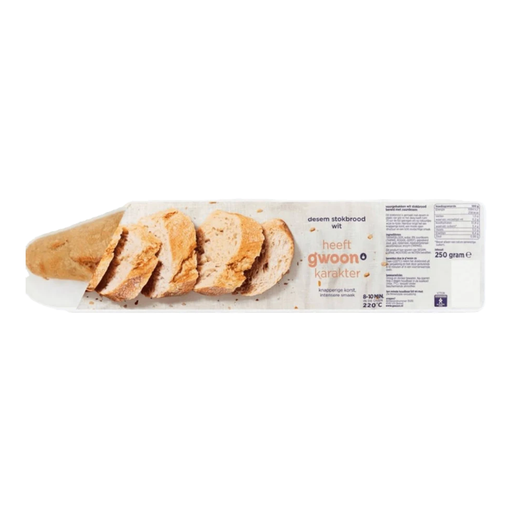 Image unavailable
G'woon White Rustic Baguette 250 g
The rustic baguette shape works well for a special lunch with filled pieces of bread. Check the packaging for the ingredients, including wheat and spelt, and any warnings about traces of allergens. Only compare the stated fibre with other breads once you know whether it’s given per 100 g or per portion.
View at Joybuy
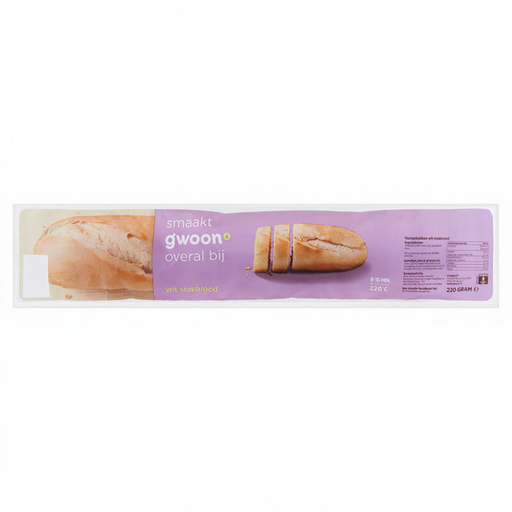 Image unavailable
g'woon White Baguette 220 g
The white baguette shape could work well if you want to divide the bread into pieces for lunch. Before buying, check the allergen information, including gluten-containing grains, lupin and sesame, and read the packaging to see whether and how the bread needs to be baked.
View at Joybuy
Frequently asked questions
Is special white bread suitable for an everyday school lunch?
For everyday meals, the Voedingscentrum recommends replacing white bread with wholemeal or brown bread as often as possible. You can choose a white hearth-baked or sourdough loaf for a special lunch, but its crust or name doesn’t automatically make it wholemeal.
Is white sourdough or spelt bread gluten-free?
No. Sourdough and spelt don’t mean that a bread is gluten-free. The products mentioned here that contain wheat or spelt aren’t suitable for anyone who needs to eat gluten-free. Check the current ingredients list and allergen information, and follow the school’s rules.
Does all bread contain iodised baker’s salt?
No. According to the Voedingscentrum, using baker’s salt when baking bread isn’t compulsory. Check the label of the specific bread to see whether baker’s salt is listed as an ingredient.
What should I do if a whole loaf is too much for one lunch?
Divide the bread into portions and follow the storage instructions for your chosen product. If you want to freeze it, take out only the portions you need; this is in line with the Voedingscentrum’s storage advice.


