What should you look for when buying?
Start with the lunch you want to make: the way a loaf is sold is key if you want to cut your own thick slices, while storage and nutritional information also matter for a regular lunch. Then check the packaging of the specific loaf.
| What to consider |
What to check when buying |
Who it matters to |
| Slicing and loaf shape |
Check whether the bread is sold whole or pre-sliced, and look at the slices. If you’re slicing it yourself, also check that the portions will fit in your lunchbox. |
For generous toppings, I want to choose how thick my sandwich is. Around 33% of consumers put the choice of slice style first. |
| Storage for working days |
Read the storage advice and check whether you can divide the loaf into handy lunch portions. |
If I don’t eat bread every day, I want to be able to keep unused portions for another working day. This is the main concern for around 27% of consumers. |
| Nutritional information |
Compare fibre and salt per 100 g on the current packaging; if portion sizes vary, also check the amount per portion. |
If I eat bread for lunch regularly, I want to know how white bread compares nutritionally with the alternatives I buy. This is the most important factor for around 27% of consumers. |
| Allergens and ingredients |
Read the current ingredients list, allergen information and any cross-contamination warning. If you follow a gluten-free diet, also check the product’s own labelling. |
If someone I’m making lunch for needs to avoid certain ingredients, I need to be able to identify the right product. Around 13% of consumers prioritise this check. |
Brands to compare
These supermarket chains list different types of bread that could work for an office lunch. Compare how each individual product is sliced and what its packaging says, rather than looking at the chain’s name alone.
Albert Heijn
Albert Heijn lists white hearth-baked bread, white tiger bread and toastie bread, among other options.
- You can compare different types of bread within the range.
- Check how each loaf is sliced, and use the current packaging for ingredient and allergen information.
Jumbo
Jumbo’s white bread range includes square sandwich, toastie and tiger bread, among other types.
- These bread types offer different options for sandwiches and toasties.
- Check the slices of the product you choose before counting on a particular thickness.
Lidl
Lidl describes a fibre meter on its packaged loaves.
- The fibre meter can help with an initial comparison; its ratings are based on fibre per 100 g.
- Also read the nutritional information and check how the bread you want to buy is sliced.
ALDI
ALDI’s freshly baked daily range includes white bread, farmhouse white tiger bread and white rolls, among other options.
- You can weigh up a loaf for sandwiches against white rolls.
- Check that the way your chosen loaf is sliced suits your lunch.
PLUS
PLUS offers online bread categories if you want to compare bread as part of a grocery order.
- The bread category lets you browse different types before choosing a product.
- Check the product packaging for details on how it’s sliced and its nutritional information.
Dirk
Dirk lists white bread alongside other types in its range.
- You can compare white bread with another type of bread for the same lunch.
- Check the details and allergens for the specific product.
White baguettes for lunch on Joybuy
These white baguettes are an option if you want to make a baguette lunch, but they’re not automatically a substitute for thick slices from a whole loaf. If thick slices are what you’re looking for, check how the baguette is sold and whether it can be sliced to your preferred thickness.
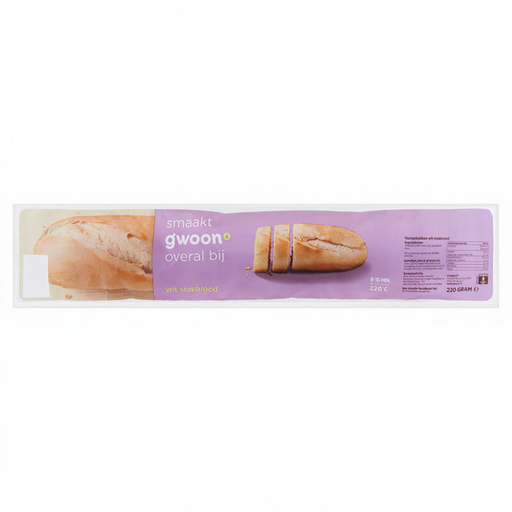 Image unavailable
g'woon white baguette, 220 g
A white baguette for anyone who wants to use this type of bread as the basis for lunch.
Bread weight: 220 g. Before buying, check whether you can slice it the way you want for your lunch.
View on Joybuy
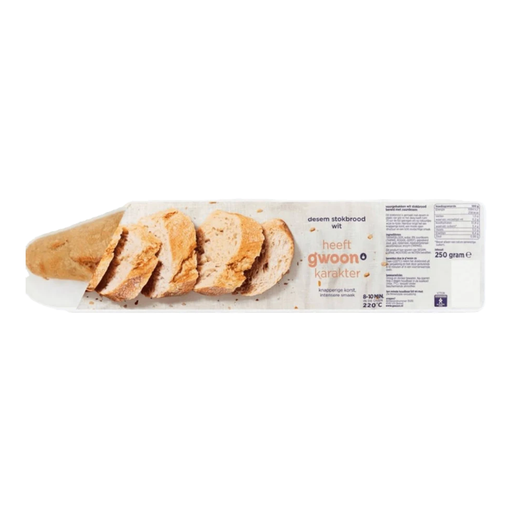 Image unavailable
G'woon rustic white baguette, 250 g
A rustic white baguette for a lunch made with this type of bread.
Bread weight: 250 g. If you want to cut thick slices, check how it’s sold and look at the slices.
View on Joybuy
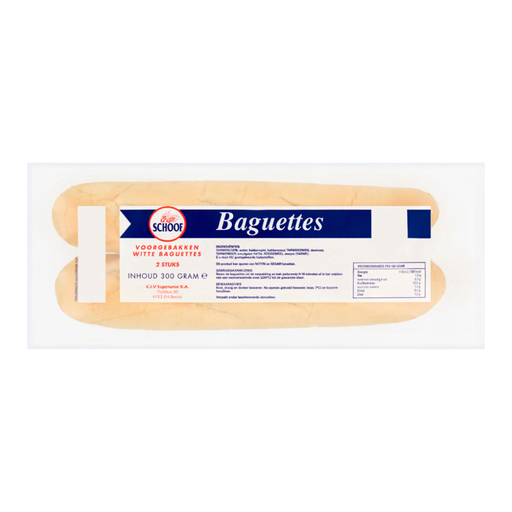 Image unavailable
g'woon white baguettes, 2 pieces, 300 g
A pack of two white baguettes, ideal if you want to spread them across several lunches.
Pack size: 2 pieces, 300 g in total. Check how they’re sliced and the storage instructions when planning your lunches.
View on Joybuy
Frequently asked questions
Is white bread labelled ‘thick cut’ always sold in thick slices?
Don’t rely on the label alone: check the actual slices and see whether the bread is sold whole or pre-sliced. Albert Heijn and Jumbo’s range pages show different types of bread, but the type of loaf doesn’t guarantee a particular slice thickness.
Does all white bread in the Netherlands contain iodine?
You can’t tell from the type of bread alone. According to the Netherlands Food and Consumer Product Safety Authority, iodine compounds may only be present in bread, bread substitutes and other bakery products if they have been added through bakers’ salt containing no more than 65 mg of iodine per kg of salt. Check the bread’s ingredients or ask the baker if this matters to your choice.
How should I store bread for lunches on several working days?
Follow the bread’s storage instructions and divide larger quantities into portions. The Netherlands Nutrition Centre advises freezing bread in portions as soon as you buy it, then taking out what you need each day.
Is regular white wheat bread suitable for a gluten-free lunch?
No, regular white wheat bread isn’t gluten-free. For a gluten-free lunch, check the labelling and ingredients of the specific product, and take care to avoid cross-contamination when preparing it. If you have a wheat allergy, you’ll also need to check the allergen information; a ‘gluten-free’ label alone won’t answer that question.
How can I compare the nutritional value of white bread for a regular lunch?
Compare the nutritional information per 100 g and, if your portions vary, per portion too. Look at fibre and salt, among other things. The Netherlands Nutrition Centre advises replacing white bread with wholemeal or brown bread as much as possible; use the packaging to compare the values for the breads you’re considering.


