
Someone who regularly has bread for lunch while working from home
You want to choose a whole or half white loaf that you’ll actually get through. The loaf shape and weight can help you compare products.


A whole white loaf is a good choice for your working-from-home lunch if you can use it all or freeze some slices. If you only eat bread now and then, a half loaf may better suit how much you get through. Also compare the weight and check the nutritional information and ingredients, especially if fibre, salt or allergens matter to you.
You want to choose a whole or half white loaf that you’ll actually get through. The loaf shape and weight can help you compare products.
You don’t have several slices of bread every day you work from home, so you’re choosing between a half loaf and a whole loaf with some slices to freeze.
When choosing white bread, you check its fibre, salt, ingredients and allergens. Whether it contains bakers’ salt or iodised salt may also matter to you.
First, work out how much bread you’ll use and whether you can freeze some. Then compare the size and labels of the types of bread that suit your lunch.
| What to consider | What to check | Who it’s for |
|---|---|---|
| Size of a whole loaf | Compare the loaf shape and weight; the word ‘whole’ alone doesn’t tell you everything about how much bread you’re getting. | If I often have bread for lunch at home, I want to choose a whole loaf that I’ll get through. For around 36% of consumers, quantity is the top priority when buying regularly. |
| Nutritional information | Check the fibre and salt per 100 g, and read the ingredients for the specific loaf. | If I regularly have bread for lunch, I want to know the nutritional values on my pack. Around 29% of consumers give this label information the highest priority. |
| Portions and storage | Work out how many slices you’ll use, then choose a half loaf or freeze a whole loaf in portions. | I don’t eat bread every day and want to avoid the rest going stale or being thrown away. Getting a quantity that suits your needs matters most to around 21% of consumers. |
| Ingredients and allergens | Check the allergen information and, if it matters to your choice, the type of salt used. | If I need to avoid certain ingredients or want to know which salt is used, I read the label before choosing. This is the main consideration for around 14% of consumers. |
Loaf shapes and weights vary. A smaller pack may better suit how much bread you eat at lunch, but the pack size alone doesn’t tell you how much bread you’re getting.
Compare the weight of the same type of bread and think about how many slices you’ll use.
If you only use a few slices, the rest may go stale or be thrown away before you get round to eating it.
Choose a half loaf or freeze the slices you won’t use soon in portions. Follow the storage advice on the pack.
Fibre, salt, ingredients and allergens depend on the specific product and can vary between recipes.
Read the current packaging, especially when an ingredient or allergen affects your choice.
The type of bread or the shop’s name for it won’t tell you which salt is used in a particular loaf.
Look for bakers’ salt or iodised salt in the ingredients list. If the information isn’t clear, ask the retailer or manufacturer to explain.
ALDI lists a whole white loaf and a whole white tiger loaf. First, choose the type of loaf that suits your lunch.
Albert Heijn lists products including AH Extra lang lekker wit heel, with product-specific ingredients and nutritional information.
Jumbo lists whole and half white loaves, as well as a separate gluten-free white variety.
PLUS lists products including Casino white bread in whole and half sizes, as well as a whole white tiger loaf.
Lidl lists an 800 g white loaf sold in store.
These white rolls and baguettes are suited to a lunch with fillings. Choose a pack size and loaf shape that work for you; they aren’t a direct alternative to a whole or half sliced white loaf.
 No image available
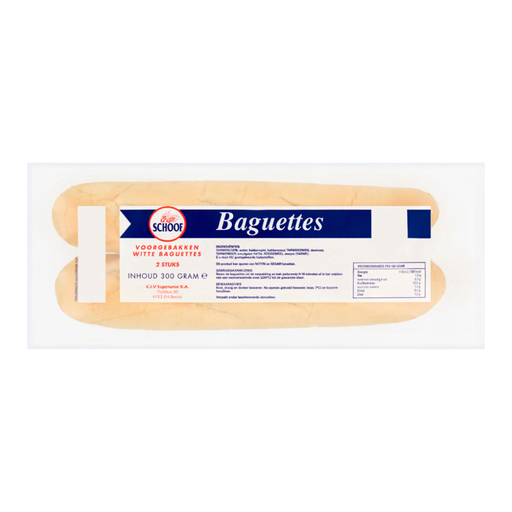
For a lunch where you’d like to have two separate baguettes.
The pack contains 2 pieces, with a total weight of 300 g. Check the current ingredients and allergen information if it matters to your choice.
 No image available
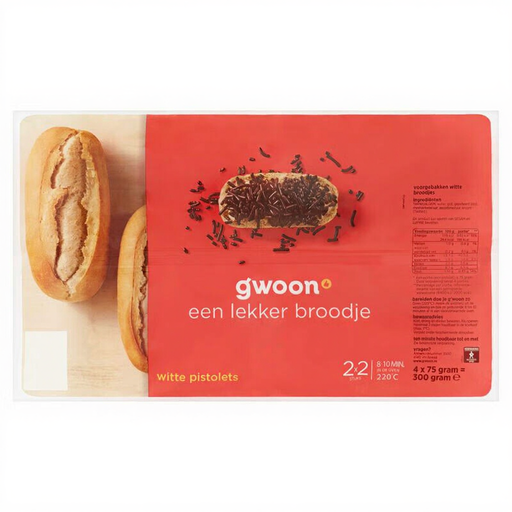
For anyone who’d rather split their lunch across separate rolls than slice into a whole loaf.
The pack contains 4 pieces, with a total weight of 300 g. If you have an allergy, read the current allergen information on the packaging.
 No image available
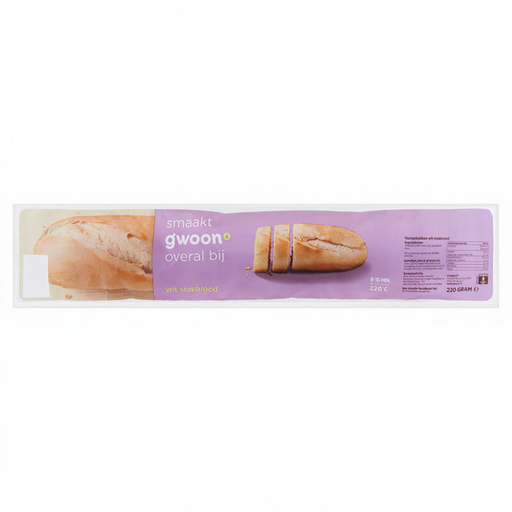
For a lunch where you’d like one white baguette rather than several rolls.
The baguette weighs 220 g. Before buying, check the preparation instructions if you’re looking for bread that’s ready to eat straight away.
A half loaf suits lighter bread eaters who won’t get through a whole loaf in time and don’t want to freeze some. For the same type of bread, compare the weight too and think about how many slices you’ll actually eat.
Freeze the slices you won’t use soon in portions and follow the storage advice for that product. For AH Extra lang lekker wit heel, Albert Heijn recommends freezing it on the day of purchase and using it within one month; don’t automatically apply this advice to other loaves.
Don’t assume that every white loaf contains iodised salt. Brood.net Professionals describes the use of iodised bakers’ salt as an agreement under a covenant. Check the ingredients list for the loaf you choose to see whether it contains bakers’ salt or iodised salt.
No. Check the allergen information for the specific product. Jumbo Casino White Loaf Half lists wheat and gluten and also warns that other allergens may be present; another type of white bread may have different ingredients or allergen information.
No, white bread generally contains less fibre than wholemeal bread. Voedingscentrum lists 1.2 g of fibre for a 45 g slice of white bread cut at home. When comparing individual products, check the fibre values on the same basis, such as per 100 g.