
Households that often make toasties or filled snacks
If a child already accepts these meals, it’s worth checking whether the slice, crust and size suit the way you’re preparing it and the portion you want to serve.


Choose a firm slice of white bread for a toastie or filled snack if the eater accepts that type of bread; compare the slices themselves, as the product name doesn’t tell you how thick they are. If the crust or a firm bite is the sticking point, a small portion of soft bread may be a better fit. For everyday bread, the Netherlands Nutrition Centre recommends brown or wholemeal bread. Check the ingredients and allergens for every loaf, too.
If a child already accepts these meals, it’s worth checking whether the slice, crust and size suit the way you’re preparing it and the portion you want to serve.
If a crust, dryness or a large bite is a sticking point, a small portion of a familiar, soft type of bread may be more appealing than a thicker slice. The Netherlands Nutrition Centre advises against pressuring a child to eat.
White bread can remain a familiar option while the family also offers brown or wholemeal bread. The Netherlands Nutrition Centre highlights the nutritional differences between white bread and these types of bread. For a fussy eater, a gradual transition may help them get used to a different texture.
Let the meal and the eater’s response to texture guide the type of bread you look at. Bread for toasties, a soft roll, and brown or wholemeal bread don’t necessarily serve the same purpose.
When: for a toastie or filled snack that the child accepts in this type of bread.
Trade-off: bread for toasties isn’t necessarily thickly sliced, and white bread contains fewer nutrients than brown and wholemeal bread, according to the Netherlands Nutrition Centre.
When: if a hard crust or a large bite makes mealtimes difficult.
Trade-off: soft rolls aren’t a substitute for thick slices when you need slices for a toastie.
When: for everyday bread, when fibre and nutritional value are more important.
Trade-off: a different flavour or texture may take some getting used to for a fussy eater; offer the change without putting pressure on them to eat.
| What to consider | What to check when buying | Who it matters to |
|---|---|---|
| Firmness for snacks | Look at the actual slice and size. Check whether the bread is intended for the way you plan to prepare it. | When I make a toastie or filled snack, I want a slice that suits the meal; firmness is the top priority for around 31% of consumers. |
| Soft texture | Pay attention to the crumb and crust, and choose a portion you can serve in a small size. | When my child struggles with a hard crust or a large bite, I want to offer a familiar type of bread without putting pressure on them to eat; texture acceptance matters most to around 23% of consumers. |
| Everyday bread | Compare types of bread and, if you’re comparing nutritional values, the fibre per 100 g. | I want to be able to offer brown or wholemeal bread alongside white bread my child accepts; around 31% of consumers prioritise this everyday consideration. |
| Ingredients and allergens | Check the current label for allergens, and look for baker’s salt or iodised salt if that’s relevant to your choice of bread. | If there’s an allergy or I’m keeping an eye on the salt used, the information on the specific loaf needs to be accurate; label checks are the top priority for around 15% of consumers. |
Albert Heijn describes its Extra lang lekker toastie bread as bread for toasties. That alone doesn’t tell you how thick the slices are compared with other white bread.
If thickness matters for the way you’re preparing it, check the slice, crust and size on the packaging or in store.
A firm slice of white bread can be practical for a snack, but white bread contains fewer nutrients than brown and wholemeal bread, according to the Netherlands Nutrition Centre.
Choose the type of bread that suits the meal, and also look at brown and wholemeal options for everyday use that you can offer without pressure.
Ingredients and allergens vary by product. You should also check the specific loaf for any mention of baker’s salt or iodised salt.
Check the current ingredients and allergen information when you buy, especially if an allergen is relevant to your household.
According to the Netherlands Nutrition Centre, pressure can make a child start to dread mealtimes. Trying a different bread texture doesn’t automatically mean you need to serve a larger portion.
Offer a small amount of the new option alongside familiar food, and give them time to get used to it.
These examples can help you identify different types of bread. Check the slices and current label for each product you choose.
Albert Heijn describes its Extra lang lekker toastie bread as white, square bread for toasties.
Jumbo has a white bread category where you can browse different types of bread.
Lidl lists white bread, including an 800 g loaf, and provides ingredient and allergen information for its freshly baked range.
Aldi describes a white tin loaf as a whole loaf with a soft crumb.
Plus offers pre-baked, sliced white party bread for a snack.
Dirk lists casino white bread and other types of white bread in its bread range.
These white rolls are an option when a roll is a better fit for the type of bread you’re looking for. If you want slices for a toastie, look at a different type of bread.
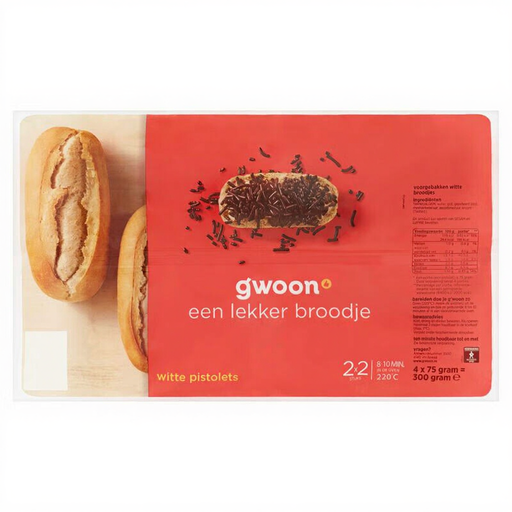 Image unavailable
For a meal or snack where individual rolls are a better fit than thick slices; the pack contains 4 white rolls with a combined weight of 300 g.
These aren’t thickly sliced pieces of bread. Check the current label if ingredients or allergens are important to your choice.
No. A thicker slice is a good fit if the eater accepts a toastie or filled snack in that form. If the crust or a large bite is the sticking point, try a small portion of a softer type of bread instead, without pressuring them to eat.
For children, the Netherlands Nutrition Centre recommends brown and wholemeal bread instead of white bread, partly because of their fibre and other nutrients. If a child mainly accepts white bread, you can gradually offer a different type without putting pressure on them to eat.
Read the bread’s ingredients list and look for baker’s salt or iodised salt. The Netherlands Nutrition Centre notes that bread baked with baker’s salt is relevant to iodine intake; don’t assume which salt has been used based on the colour or thickness of the slice.
Check the current allergen information for the specific loaf. Wheat and other gluten-containing cereals may be relevant, while the presence of ingredients such as soya, milk or sesame varies from one recipe to another.