What should you look for when choosing?
First decide whether you want a whole loaf to slice or individual portions to serve. Then consider whether part-baking fits your plans, and check the nutritional information and allergens for the bread you choose.
| What to consider |
What to check when buying |
Who is this important for? |
| Shape and crust |
Check whether you’re buying a whole rustic loaf, a batard or rolls, and whether you want to slice the bread yourself. |
I want to put bread on a sharing platter and choose the size of the slices myself. Around 45% of consumers put presentation and ease of sharing first. |
| Serving time |
Check whether the bread is ready to serve or needs baking, and follow the baking time on the packaging if needed. |
If I need the oven for other things just before drinks, I want to be able to serve the bread without any extra preparation. Serving time is the main consideration for around 33% of consumers. |
| Ingredients and nutritional information |
Read the allergen information and, if you wish, compare fibre and salt per 100 g; check the iodine information on the specific product. |
I need to know what’s in the bread before serving it to my guests. This check is the top buying priority for around 22% of consumers. |
Relevant brands and shops to compare
These examples can help you compare bread shapes and product information. Check the current range at the shop where you plan to buy.
Albert Heijn
A point of reference for part-baked white rustic loaves that you can finish baking at home.
- AH Robuust white rustic loaf listed 7% sourdough and an oven baking time of 10–12 minutes.
- Albert Heijn listed this particular loaf as discontinued; only choose an alternative based on its current product information.
Jumbo
A shop where you can compare different white breads, including Boeren Tijger Wit and white multiseed bread.
- Jumbo describes a variety of breads in its range.
- Check the ingredients and availability of the bread you choose; a range description is no substitute for the product label.
Lidl
Worth considering if you’re looking for bake-off bread or want to compare the fibre information on packaged loaves.
- Lidl lists oven-fresh bake-off bread and uses a fibre rating on packaged loaves.
- Fibre information won’t tell you whether a loaf is suitable for your guests; check the ingredients and allergens too.
ALDI
A point of reference for both rustic white bread and individual part-baked rolls.
- ALDI describes Bakkersgoud rustic white bread as having a golden-brown crust, and lists an oven and air fryer as preparation options for its part-baked rolls.
- Check the instructions for the rolls you actually buy; those for a whole loaf aren’t interchangeable with instructions for individual rolls.
PLUS
An example of a white rustic loaf with ingredients and nutritional information listed for the specific product.
- PLUS Bavarian White Rustic Loaf listed ingredients including wheat flour, rye flour and sourdough powder.
- The product page said this loaf wasn’t available at the selected shop; check the range at your local PLUS.
Dirk
A point of reference for a white batard that you can slice yourself for a sharing platter.
- Dirk describes Batard white as a wheat and rye bread with a mild flavour and firm crust.
- Check the latest ingredients and allergen information when you buy, especially if you’re shopping for guests with dietary requirements.
White loaves and rolls on Joybuy
These baguettes are ideal for slicing yourself to serve on a sharing platter; the white rolls offer individual portions. Check whether each product needs preparing before you serve it.
 No image available
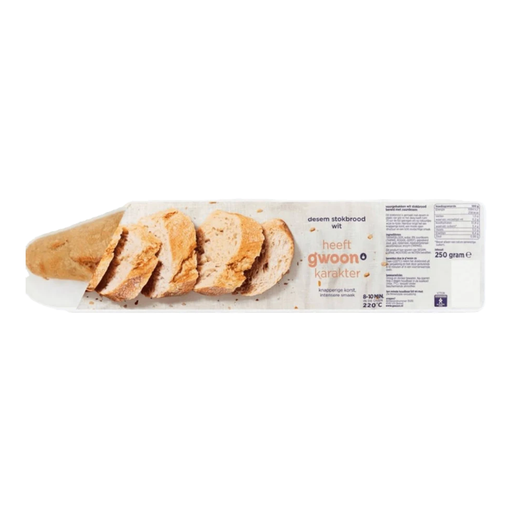
G'woon White Rustic Baguette, 250 g
A rustic white baguette to slice yourself for a sharing platter.
Contents: 250 g. Check the packaging to see how to serve or prepare the baguette, and read the latest ingredients and allergen information.
View on Joybuy
 No image available
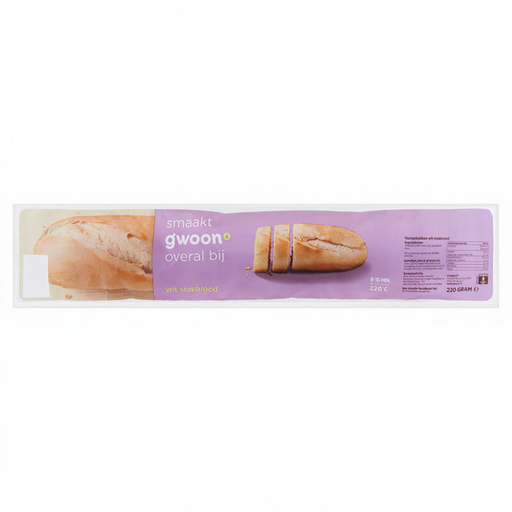
g'woon White Baguette, 220 g
A white baguette to slice yourself for toppings or toast.
Contents: 220 g. Check the preparation instructions on the packaging before planning when to serve it, and read the latest allergen information.
View on Joybuy
 No image available
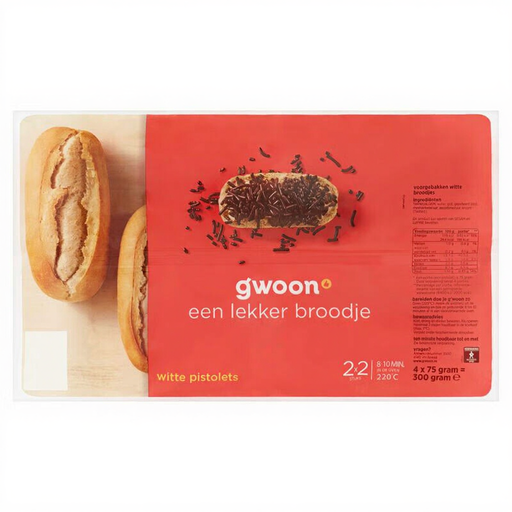
g'woon White Rolls, 4 stuks, 300 g
Four individual white rolls for guests to help themselves to.
Contents: 4 rolls, 300 g in total. Check the packaging to see whether the rolls need baking, and read the latest ingredients and allergen information.
View on Joybuy
Frequently asked questions
Does white bread in the Netherlands have to contain iodised baker’s salt?
No. According to the industry association NBC, using iodised baker’s salt is not a legal requirement. If the type of salt matters to your choice, check the ingredients list for the bread you’re buying.
How can I check allergens when buying bread for guests?
Read the latest allergen information on the packaging of the bread you’re actually serving. Don’t rely on the name or shape of the bread: ingredients and possible traces can vary from product to product.
Can I freeze white rolls in advance?
For soft white rolls, the Netherlands Nutrition Centre recommends keeping them in the freezer for 1–3 months; quality may decline if they’re stored for longer. Also follow the storage and use-by instructions for the specific product.
Does a rustic appearance tell you anything about nutritional value?
No, you can’t tell the nutritional value of white bread from its appearance. Compare the nutritional information, such as fibre and salt per 100 g, if these differences matter to your choice.


