Who is this choice relevant for?

Anyone hosting a coffee get-together

You’re looking for white bread that looks appealing on the table and is easy to share with sweet or savoury toppings. A rustic loaf or batard may work well for this kind of presentation; check that your preferred shape is available in store before buying.

Anyone who prioritises softness

You want smaller, evenly sized portions and are considering whether your guests will find a firm crust comfortable to eat. The Netherlands Nutrition Centre notes that a dry mouth or gum problems, among other things, can make eating more difficult. If someone is known to have difficulty chewing or swallowing, a general bread choice is no substitute for individual advice.

Anyone keeping an eye on fibre

You want to serve white bread but are comparing the nutritional information for specific products. According to the Netherlands Nutrition Centre, wholemeal bread is particularly rich in fibre, vitamins and minerals. White bread with added fibre is not the same product as wholemeal bread.

What should you look for when choosing?

First, decide whether the bread is mainly for presentation, needs to be easy to serve in small portions, or is part of a regular dietary choice. A rustic name alone won’t tell you anything about the fibre content or whether the crust will suit your guests.

What to consider What to check when buying Particularly relevant for
Presentation and sharing Consider whether a whole or half loaf is right for your group and whether your preferred type of loaf is available. If you want to serve bread at the coffee table, choose a shape that’s easy to slice and share. Roughly 40% of consumers prioritise presentation and ease of serving.
Crust and portions Consider the crust, crumb and possible slice thickness; tailor the portions to your guests. If a firm crust isn’t suitable, small, evenly sized portions matter more than a rustic appearance. Around 30% of consumers prioritise softness and easy-to-serve portions.
Fibre and regular use Compare the fibre per 100 g on the label and, if you have regular coffee get-togethers, include brown or wholemeal bread in the comparison too. If the group meets regularly, you may want to know how the white bread compares with alternatives for fibre. Around 30% of consumers put this nutritional comparison first.

Common mistakes

  • Assuming a rustic name means wholemeal

    A rustic loaf or bread with an artisan look isn’t automatically wholemeal. For example, PLUS lists its Beiers Vloerbrood wit as containing 3 g of fibre per 100 g; this figure applies to that specific loaf.

    Compare the product description and fibre per 100 g. The Netherlands Nutrition Centre recommends replacing white bread with brown or wholemeal bread as much as possible.

  • Choosing the crust without asking your guests

    A decorative, firm crust may be less comfortable for someone who has difficulty chewing. The Netherlands Nutrition Centre notes that a dry mouth and gum problems, among other things, can affect eating.

    Ask in advance what kind of portions and crust your guests would prefer. If someone is known to have difficulty chewing or swallowing, follow their individual care or dietary advice; a description such as ‘soft’ doesn’t confirm that the bread is suitable for someone with swallowing difficulties.

  • Trying to work out allergens from the bread’s name

    The name ‘white bread’ doesn’t tell you which allergens a particular product contains. The Netherlands Food and Consumer Product Safety Authority states that allergen information for prepacked foods must appear on the label, while information for unpackaged products must be available in another way.

    Check the latest ingredients and allergen information. For unpackaged bread, ask how you can access this information before buying.

  • Buying more bread than you need

    If you’re hosting a small group, you may have portions left over from a whole loaf that won’t be eaten straight away.

    Check whether half a loaf will be enough. If you’d like to store any portions, follow the product’s storage instructions and freeze suitable portions promptly.

Brands to consider

Albert Heijn

A useful starting point if you’re looking for a white rustic loaf: Albert Heijn lists AH Robuust vloerbrood wit.

  • The product name makes it easy to compare this type of loaf with other white breads.
  • Albert Heijn warns that ingredients, nutritional values and allergy information may change. Always check the latest packaging.

Jumbo

Worth considering if you want to compare a specific white bread with added fibre with other types of bread.

  • Jumbo lists 7,3 g of fibre per 100 g for Jumbo Wit Brood met Extra Vezels.
  • This nutritional value applies to this specific product, not to all of Jumbo’s white bread. Check the latest label for the option you choose.

Lidl

An option if you’re looking to buy oven-fresh bread or white rolls for a coffee get-together.

  • Lidl describes its range of oven-fresh bread.
  • Lidl says its fresh range may vary by store. Check with the store you plan to visit.

Aldi

An option to consider for a rustic white loaf to serve at the table: ALDI lists Bakkersgoud Rustiek wit.

  • ALDI describes this loaf as having a crisp crust and soft centre.
  • According to ALDI, the Bakkersgoud Rustiek range is available in stores with a bakery section. Consider whether the crust will suit your guests.

PLUS

PLUS Beiers Vloerbrood wit is a specific white rustic loaf you can compare using its product information.

  • PLUS lists 3 g of fibre and 1,08 g of salt per 100 g for this loaf.
  • Check the latest ingredients and allergen information, as well as availability at the store where you’re shopping.

Dirk

A useful starting point for comparing different types of white bread, including casino, boerenwit and batard.

  • Dirk lists these different types of white bread in its range.
  • The name of a type of bread doesn’t tell you about its crust, crumb or availability at the store you visit.

White rolls at Joybuy

If you’d like to serve individual portions with coffee, here are some white rolls to consider. Check the latest packaging if the crust, fibre or allergens will affect your choice.
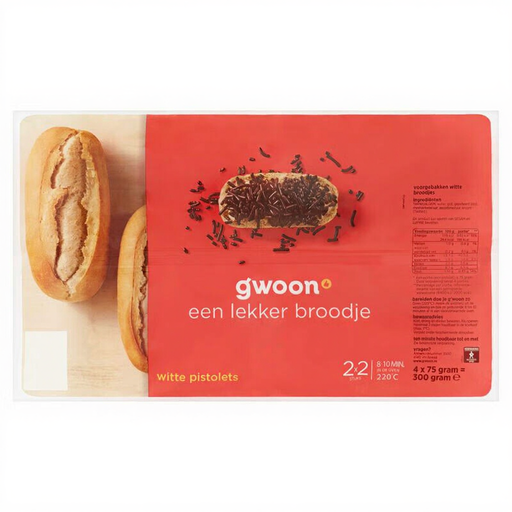
g'woon White Rolls, four white rolls weighing 300 g in total

g'woon White Rolls, 4 pieces (300 g)

Four individual white rolls can be handy if you want to serve portions with coffee.

Check the latest packaging for ingredients and allergens. Compare fibre and salt per 100 g if these are important to your choice, and consider the crust if softness matters.

View at Joybuy

Frequently asked questions

Is a white rustic loaf a good regular choice with coffee?

If you have coffee get-togethers regularly, compare brown and wholemeal bread too. The Netherlands Nutrition Centre recommends replacing white bread with these types as much as possible, and notes that wholemeal bread is particularly rich in fibre, vitamins and minerals. A rustic name doesn’t change the nutritional value of a specific white loaf.

Which bread should I choose if a guest has difficulty chewing or swallowing?

Choose the bread and portions in line with that guest’s individual advice, rather than relying on a product description that says ‘soft’. The Netherlands Nutrition Centre notes that a dry mouth, gum problems and illness, among other things, can affect eating; ordinary bread isn’t automatically suitable for someone with swallowing difficulties.

Where can I find allergen information about bread?

For prepacked bread, check the label. For unpackaged bread, ask how you can get allergen information before buying. According to the Netherlands Food and Consumer Product Safety Authority, this information must be shown on the label for prepacked products and provided to consumers in another way for unpackaged products.

How can I avoid having bread left over after a small coffee get-together?

Choose an amount that suits the number of guests and check whether half a loaf will be enough. If you want to store any bread, follow the instructions on the packaging and freeze suitable portions promptly.
