
If you want to put a loaf on the table
You’re looking for a whole white loaf that you can slice yourself and serve alongside the barbecue dishes. A hearth or rustic loaf is one option to consider; check which variety your shop stocks.


Choose a whole white hearth or rustic loaf if you want to put one loaf on the table and slice it yourself. Part-baked rolls are a better choice for warm, individual portions, as long as you have oven space just before eating; a white baguette is an option if you mainly want to share pieces quickly. Check the ingredients, allergens and preparation instructions for the exact variety.
You’re looking for a whole white loaf that you can slice yourself and serve alongside the barbecue dishes. A hearth or rustic loaf is one option to consider; check which variety your shop stocks.
You want to bake individual portions just before eating. The number of rolls, the instructions on the packaging and the oven space available will determine whether they fit into your plans.
You want to know which ingredients and allergens are listed for the exact bread variety before you buy. For unpackaged bread, you can ask the bakery department for allergen information.
Best for: putting a whole loaf on the table and slicing it yourself.
Bear in mind: you’ll need to slice it just before or while serving; Albert Heijn also describes its white hearth loaf as having a crisp crust and a slightly firmer texture.
Best for: individual rolls served warm just before eating.
Bear in mind: you’ll need oven space and time to prepare your chosen variety. ALDI gives a baking time of 8–12 minutes at 200 °C for its stone-baked rolls.
Best for: a long loaf that you can break up and share at the table.
Bear in mind: the weight and preparation method of the exact variety; the shape of the loaf tells you nothing about its ingredients or nutritional value.
For a summer barbecue, first decide how you want to serve the bread. Then check how much you need and what’s on the label.
| What to consider | What to check when buying | Who it matters to |
|---|---|---|
| Bread to share | Check whether the loaf is sold whole or sliced, and whether its shape is suitable for the slices you want to serve. | If the bread is on display on the table, I want to be able to cut slices that work well with the dishes. This type of sharing bread is a priority for around 31% of consumers. |
| Serving warm | Check the baking time and temperature for your chosen rolls, and make sure you have enough oven space. | I want to serve warm rolls just before eating without their baking time clashing with the rest of the cooking. This is a priority for around 23% of consumers. |
| Quantity and portions | Compare the number of rolls or the weight of a whole loaf with the number of guests. | I want to be able to give everyone enough without having lots of bread left over. Around 23% of consumers prioritise quantity. |
| Label and type of bread | Check the ingredients, allergens and nutritional information for the exact variety; ask about allergens for unpackaged bread. | Before buying, I want to check whether the bread is suitable for what my guests can eat and find out what type of bread it is. This matters most to around 23% of consumers. |
Words such as ‘rustic’ and ‘hearth-baked’ don’t tell you whether a loaf is wholemeal. The Netherlands Nutrition Centre distinguishes between the nutritional value of white bread and that of wholemeal and brown bread.
If this difference matters to you, check the stated type of bread and the nutritional information.
Rolls will only be warm on the table at the right time if the oven is available and baking them fits into your plans. Baking instructions vary by product.
Work out how many rolls you need and check the time and temperature on the packaging before you buy.
You can’t tell which allergens a particular variety contains just by looking at a white loaf. The Netherlands Food and Consumer Product Safety Authority states that allergen information must appear on the label of prepacked bread.
Check the label or ask for allergen information before buying unpackaged bread.
Lidl says its fresh bread range can vary by store. The availability of a particular bread variety at PLUS can also differ between selected stores.
Check whether your local store stocks the variety you want, and think about which other bread shape could work for your barbecue.
AH Whole White Hearth Loaf is an example of a whole white loaf to slice at the table.
The Jumbo range offers different types of white bread to compare.
PLUS Bavarian Whole White Hearth Loaf is a white hearth-baked variety.
ALDI stocks both whole rustic white bread and white stone-baked rolls to bake at home.
Lidl lists several types of white roll in its oven-fresh range.
Dirk stocks long and whole white loaves that you can portion yourself.
These options suit two ways of serving bread: handing out individual white rolls or cutting a white baguette into pieces. If you’re planning to use the oven, check the preparation instructions for the product you choose.
 No image available
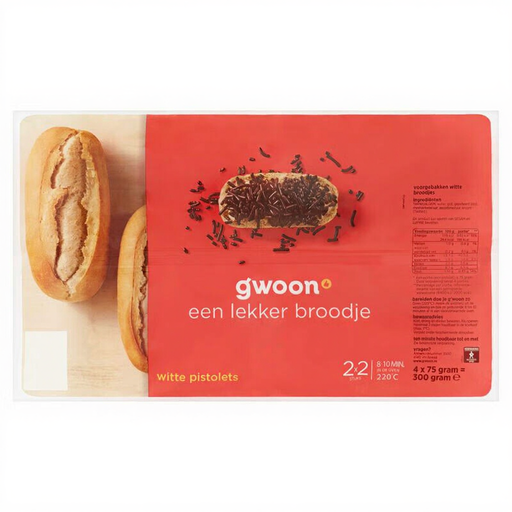
Four individual rolls make it easy to plan how many you’ll need for your group.
Contents: 4 pieces, 300 g. Check the packaging for ingredients, allergens and any serving or preparation instructions.
 No image available
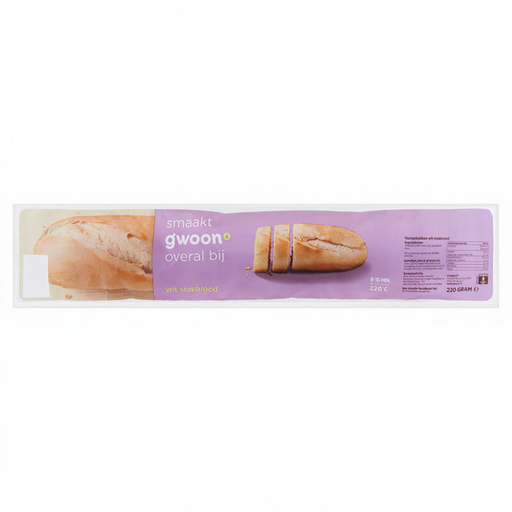
This white baguette is a good choice for a barbecue where you want to cut pieces of bread to share.
Weight: 220 g. Check the packaging for ingredients and allergens. If you want to bake the bread, check the time and temperature instructions beforehand.
No. A premium look or name doesn’t mean that white bread is wholemeal. If you want to compare what’s in it, check the stated type of bread and the nutritional information; the Netherlands Nutrition Centre distinguishes between the nutritional value of white bread and that of wholemeal and brown bread.
Choose part-baked rolls if you want to serve individual portions warm just before eating and have oven space available. Check the instructions on your pack: ALDI gives a baking time of 8–12 minutes at 200 °C for its white stone-baked rolls, but those instructions won’t necessarily apply to other rolls.
Follow the date and storage advice on the packaging for the baguette you’ve bought. The Netherlands Nutrition Centre’s storage guide recommends keeping white baguettes in a kitchen cupboard for 2–4 days or in the freezer for 1–3 months.
For prepacked bread, check the allergen information on the label; the Netherlands Food and Consumer Product Safety Authority says it must be shown there. For unpackaged bread, ask for allergen information for the exact variety before buying rather than judging by how it looks.