
Festival planner on a tight overall budget
You want to buy enough bread for the group without ending up with unnecessary leftovers. So compare the weight and number of usable portions in each pack.


Choose a whole white loaf if you’re making lots of identical sandwiches in advance and can freeze any slices left over. Baguettes are ideal for serving in pieces, while individual rolls make it easier to hand out portions. Match the quantity to the expected number of guests, and check the current label on every type of bread you choose.
You want to buy enough bread for the group without ending up with unnecessary leftovers. So compare the weight and number of usable portions in each pack.
You’re looking for a type of bread that suits your serving plan: sliced bread for sandwiches made in advance, baguettes to share, or individual rolls that guests can help themselves to.
You want to check the ingredients and allergens in your chosen bread, and be able to store unused portions if you’re not sure how many people will come.
First decide how many portions you want to serve, then choose the type of bread. When working out the final quantity, remember to factor in leftovers and check the labels on the products you choose.
| What to consider | What should you check? | Who is it important for? |
|---|---|---|
| Quantity needed | Compare the weight and number of slices or rolls with the number of portions you’re planning to serve. | When I’m buying for a group, I want enough usable bread without a lot left over. This is the top priority for around 31% of consumers. |
| Serving style | Choose between sliced bread for making sandwiches in advance, baguettes to cut into pieces, and individual rolls for serving separately. | When guests need to be able to grab their food quickly, I want a type of bread that suits the way it will be served. This is the main concern for around 25% of consumers. |
| Leftovers | Use a realistic estimate of guest numbers and consider how you could store any unused portions. | If I’m not sure how many people will come, I want to avoid wasting the bread I’ve bought. Around 19% of consumers prioritise managing leftovers. |
| Label | Read the ingredients and allergen information on the pack you choose; if necessary, check whether baker’s salt is listed too. | If guests need to avoid certain ingredients, I want to know exactly which bread I’m serving. Checking the label comes first for around 25% of consumers. |
A whole loaf, a baguette and a pack of individual rolls won’t necessarily provide the same number of portions.
Make a note of the weight and number of slices or rolls for each product. Then work out how many packs you’ll need for the number of portions you plan to serve.
According to the Netherlands Nutrition Centre, baker’s salt is not required in bread. So the type of bread alone won’t tell you whether the product you’ve chosen is made with it.
If you want to check, look for baker’s salt or iodised salt in the ingredients list.
Ingredients and allergens can vary from one product to another. What’s listed on one pack doesn’t tell you exactly what’s in another loaf.
Check every pack you’re actually serving, and provide a suitable separate alternative if you know someone has an allergy.
If fewer guests arrive than expected, some of the bread may go unused.
Match the quantity to a realistic estimate of guest numbers. The Netherlands Nutrition Centre recommends freezing bread you want to keep in portions as soon as you buy it.
AH White Whole Loaf is a sliced white loaf for making sandwiches in advance.
Jumbo offers a range of white bread, including whole and half loaves and white rolls.
Lidl lists an 800 g white loaf as a store product.
ALDI lists a whole white tin loaf, a good choice for making evenly sized sandwiches.
PLUS stocks white bread, including products listed at 800 g.
Dirk lists both a white wheat baguette and a whole white tiger loaf.
These products are suited to serving baguettes in pieces or offering individual rolls. Choose according to the quantity and weight you need. If you’re making sandwiches in advance, a sliced whole loaf is another option.
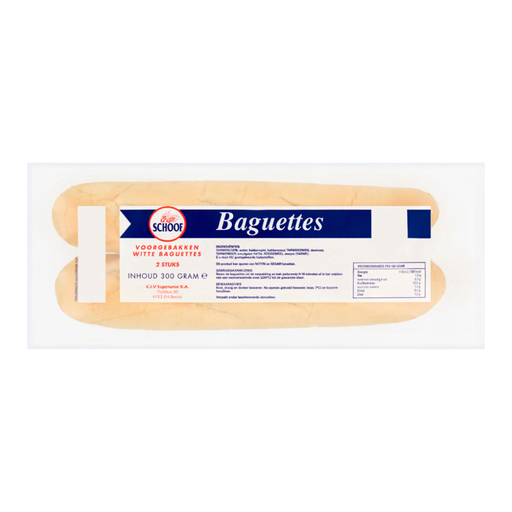 Image unavailable
For serving bread in pieces. The pack contains two white baguettes with a total weight of 300 g. If anyone has an allergy, check the current label.
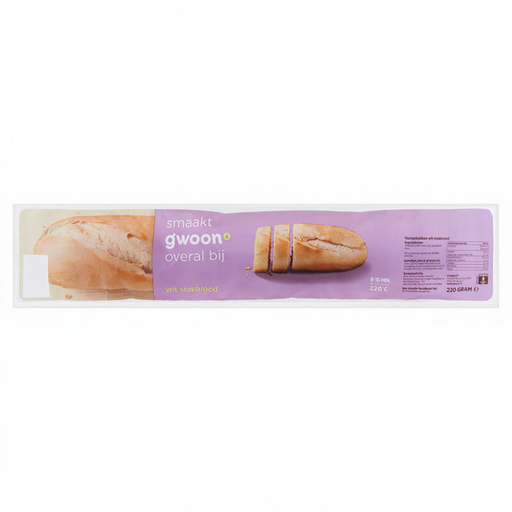 Image unavailable
For serving in pieces rather than as evenly sized slices. This white baguette weighs 220 g. Check the preparation instructions on the pack before planning how to serve it.
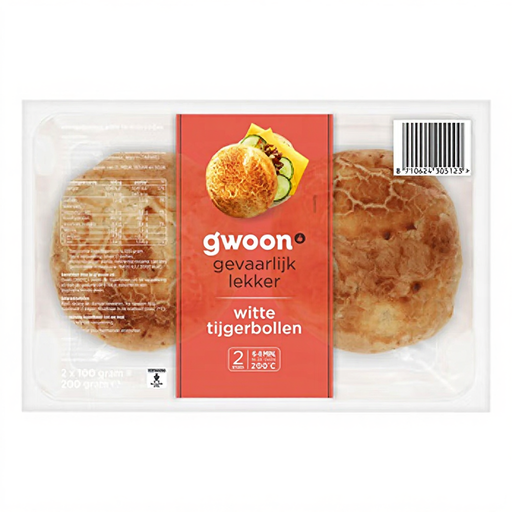 Image unavailable
For serving individual rolls, with one roll per guest. The pack contains two rolls weighing 100 g each. If anyone has an allergy, check the label on the pack you choose.
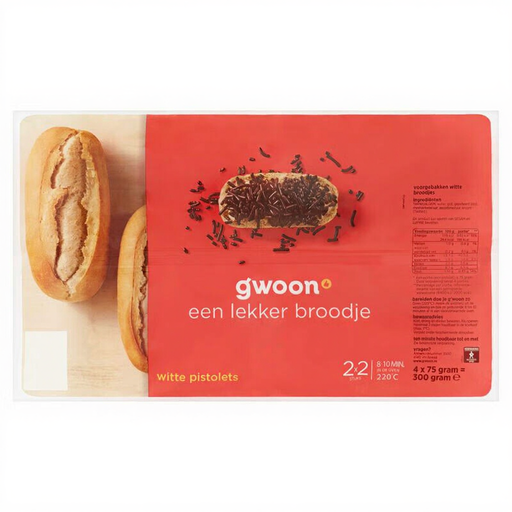 Image unavailable
For a serving plan with individual rolls. The pack contains four white rolls with a total weight of 300 g. Check the ingredients and allergen information on the label.
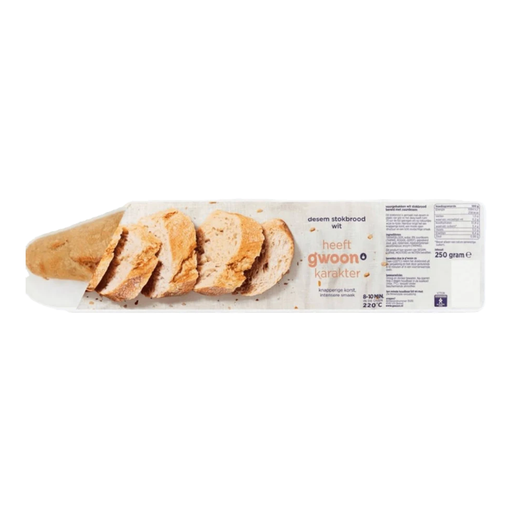 Image unavailable
For sharing or serving in pieces. This white baguette weighs 250 g. If anyone has an allergy, check the packaging before serving it.
No. According to the Netherlands Nutrition Centre, baker’s salt is not required in bread. If you want to know whether baker’s salt or iodised salt has been used, check the ingredients list on the bread you’ve chosen.
The Netherlands Nutrition Centre says bread keeps for 2 to 4 days in a kitchen cupboard and 1 to 3 months in the freezer. If you won’t be using it straight away, it’s best to freeze it in portions as soon as you buy it. Follow the instructions on the packaging too.
First check the allergen information for the exact bread you plan to serve. Ingredients can vary between products, so provide a suitable separate alternative if a guest can’t eat the bread you’ve chosen.
A practical type of bread for an occasional festival isn’t necessarily the best choice for everyday eating. The Netherlands Nutrition Centre recommends replacing white bread with wholemeal or brown bread as often as possible as part of your daily diet.