
If you want to share bread with dips and toppings
You can serve a white hearth loaf or baguette in slices or pieces. Decide whether you’re looking for a pronounced crust or bread that can go straight on the table without using the oven.


Choose a part-baked white loaf if you have oven space shortly before your get-together and want a crust like the one described for that loaf. Choose a ready-to-serve white hearth loaf if saving preparation time matters more. Small white rolls are handy for individual portions. Check the preparation method, ingredients and allergens for each product: the word ‘premium’ won’t tell you whether the bread suits your toppings or guests.
You can serve a white hearth loaf or baguette in slices or pieces. Decide whether you’re looking for a pronounced crust or bread that can go straight on the table without using the oven.
A ready-to-serve white hearth loaf is a good choice if you don’t want to bake bread just before your get-together. Check the preparation method for the specific loaf, though: a rustic name doesn’t tell you how to prepare it.
Read the information for your chosen loaf before serving it to guests. As well as wheat, other cereals containing gluten or allergens may be relevant, depending on the product. For unpackaged bread, you can ask the seller for allergen information.
First, decide when the bread needs to be ready and how much preparation you want to do. Then compare the crust and portion style you’re looking for with your toppings, and check the information your guests need.
| What to consider | What to check when buying | Who it matters to |
|---|---|---|
| Crust and crumb | Check the product description for details of the crust and texture. For part-baked bread, find out how it needs to be prepared. | With dips or generous toppings, I want bread that’s easy to slice and suits the way I’ll serve it. Around 29% of consumers give crust and sturdiness top priority. |
| Preparation and serving time | Check whether the bread is ready to serve or needs baking, and follow the product instructions if it does. | When guests are nearly here, I want to know whether I’ll need oven space and time to prepare the bread. Serving convenience matters most to around 36% of consumers. |
| Ingredients and allergens | Read the latest ingredients and allergen information. For unpackaged bread, ask for it before buying. | If guests need to avoid certain ingredients, I don’t want to rely on the bread’s name alone. Ingredients and allergens come first for around 21% of consumers. |
| Availability | Check whether your chosen bread is available at your shop, and have another type in mind if needed. | For a planned get-together, I don’t want to rely on one type of bread that my local shop may not stock. Around 14% of consumers give the shop they buy from top priority. |
These words don’t tell you how the crust feels, what ingredients the bread contains or whether it needs baking. White breads with similar names can differ in precisely these ways.
Compare the preparation method, ingredients and allergens for the specific bread with your toppings and serving time.
According to NBC / Brood.net Professionals, the use of iodine-containing baker’s salt in the Netherlands is based on an agreement and is not a general legal requirement. You can’t tell whether it’s present just from the type of bread.
If you want to know which salt has been used in a particular loaf, read the ingredients list or ask the seller.
For its Beiers Vloerbrood wit, PLUS lists rye, barley and soya among the ingredients, as well as warnings about other potential allergens, alongside wheat. The ingredients in one hearth loaf don’t apply to all white breads.
Check the allergen information for each product. The Netherlands Food and Consumer Product Safety Authority says customers must also be told about allergens in unpackaged foods.
A loaf shown on a product page may not be available at your local shop. Lidl, for example, says its freshly baked range may vary by store.
Check what your chosen shop has available shortly before your get-together, and think about another type of bread that could serve the same purpose.
Otherwise, you may need to make an extra trip to the shops or change your preparations.
These examples show different types of bread and ways of preparing them; they are not a ranking of quality. Before choosing, check the information for the bread that’s actually available.
AH Robuust vloerbrood wit is an example of a part-baked white hearth loaf made with sourdough.
The La Place version described here shows how a white hearth loaf for baking at home can differ from bread that’s ready to serve.
PLUS Beiers Vloerbrood wit heel is an example of a white hearth loaf made with more than one type of grain.
ALDI describes Bakkersgoud rustiek wit as a whole white loaf.
Lidl lists freshly baked bread and white rolls that are baked in store.
Vloerbrood zonnepit is a white hearth loaf with sunflower seeds, which Dirk describes as available exclusively at Dirk.
These baguettes are options for slicing and sharing, while the white rolls are handy for individual portions. Check the packaging for each product to see whether it needs preparing before you plan when to serve it.
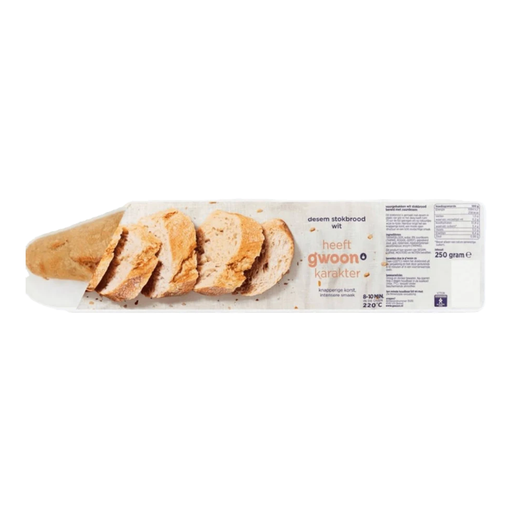 No image available
Serve this white rustic baguette in pieces with nibbles and toppings.
Pack size: 250 g.
Check the packaging for preparation instructions, ingredients and allergens.
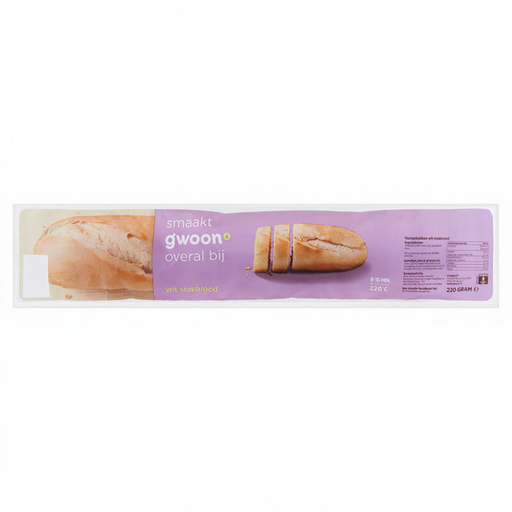 No image available
A white baguette is a good option if you want to serve slices of bread with your nibbles.
Pack size: 220 g.
Read the preparation instructions and allergen information on the packaging before preparing it.
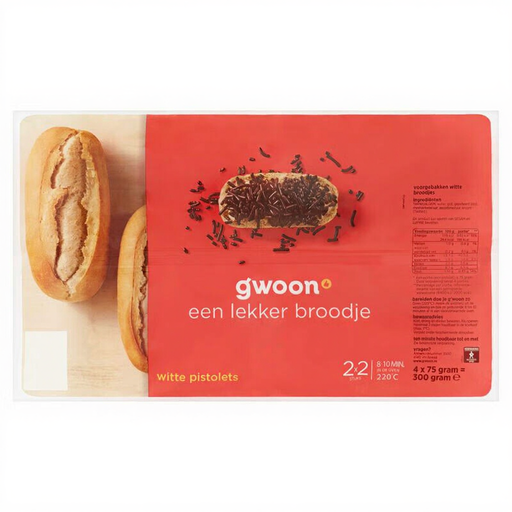 No image available
Serve these white rolls as individual portions with toppings.
Pack: 4 rolls, 300 g in total.
Check the serving instructions and allergen information on the packaging.
Only if the packaging for that loaf says you do. AH gives a baking time of 10–12 minutes at 220°C for its part-baked Robuust vloerbrood wit; follow the specific preparation instructions for other breads.
For prepacked bread, read the latest allergen information. For unpackaged bread, ask for it before buying. The Netherlands Food and Consumer Product Safety Authority sets out this information requirement. Don’t assume all white breads have the same ingredients.
No, there’s no general legal requirement to use iodine-containing baker’s salt. According to NBC / Brood.net Professionals, its use is covered by an agreement between the government and the baking industry. Check the ingredients list if you want to know which salt is used in a particular loaf.
Follow the storage instructions for your chosen bread. PLUS says its Beiers Vloerbrood wit should be stored in a cool, dry, dark place and can be frozen at home on the day of purchase. Don’t automatically apply these product-specific instructions to other bread.