Choose bread that you can bake at home if you want to serve it warm just before coffee time and have the time and oven space. If you want to serve bread without baking it first, look for a ready-to-eat white loaf, tiger bread or another type of white bread. Consider the crust you prefer, the toppings and how much you need. Whichever you choose, check the ingredients, allergen information and storage instructions for the bread you buy.
Who is this for?
If you want to bake the bread just before serving
You have the time and oven space to serve warm bread. Albert Heijn gives baking instructions for its part-baked AH Robuust white loaf; Lidl describes bread that is baked in store. Check what preparation your chosen loaf needs.
If you’re looking for bread to serve with savoury toppings
You want to choose a bread shape and ingredients to go with cheese, cold meats or spreads. Dirk describes a white loaf with sunflower seeds, while PLUS lists rye among the ingredients of its Beiers white loaf. Check the packaging if seeds or other grains matter to your guests.
If you’re buying for a small gathering
You want to choose an amount that suits the number of guests and decide in advance what to do with any leftovers. A smaller loaf or freezing portions in good time may be more practical than buying a whole loaf that goes uneaten.
What should you look for?
First decide whether the bread needs to be ready to serve straight away or whether you want to bake it first. Then compare the shape and packaging information with the toppings, your guests and the amount you need.
| What to consider |
What to check when buying |
Who it matters to |
| When you’re serving it and the crust |
Check whether the bread is ready to eat or needs baking first. For bake-at-home bread, check the instructions; for fresh bread baked in store, check what your local branch offers. |
If the bread needs to be served warm just before coffee, I want to know how much preparation it takes. For around 42% of consumers, this is the top priority. |
| Bread to go with savoury toppings |
Compare the shape, crust and ingredients, such as seeds or other grains. |
With cheese or spreads, I want a type of bread that suits the way I serve the toppings. Around 25% of consumers give this combination the most consideration. |
| Ingredients and allergens |
Read the ingredients list and allergen information. Check the label for baker’s salt or iodised salt, or ask about it if the bread is sold loose. |
When I’m catering for guests’ dietary needs, I don’t want to rely on the name of the bread. Ingredients and allergens are the main consideration for around 25% of consumers. |
| Quantity and storage |
Choose a whole or half loaf to suit your group, and read the storage instructions on the packaging. |
For a small coffee gathering, I want to avoid having lots of bread left over. This is the main consideration for around 8% of consumers. |
Common mistakes
-
Assuming every loaf contains iodised baker’s salt
The type of bread doesn’t tell you what kind of salt was used. The Voedingscentrum says that bakers are not required to use baker’s salt.
Check the ingredients list for baker’s salt or iodised salt. If this affects your choice, ask about it when buying bread that is sold loose.
-
Assuming rustic, sourdough or premium means wholemeal or gluten-free
These words don’t automatically tell you which grains are used or whether the bread is suitable for someone who needs to avoid gluten. For example, the white loaf described by PLUS contains both wheat and rye.
Check the product description, ingredients and allergen information. If you need a gluten-free option, only choose bread that is explicitly labelled gluten-free.
-
Buying a whole loaf without a plan for the leftovers
A whole loaf may be more than you need for coffee time if you’re catering for a small group.
Choose a smaller size if one is available, or freeze any portions you won’t use in good time and follow the storage advice for your chosen bread.
Bread left uneaten can dry out or go mouldy.
-
Assuming online availability means it’s in stock at your local shop
A bread variety shown online won’t necessarily be available at the branch where you want to shop. Product pages from Albert Heijn, Jumbo and PLUS note that availability is limited for certain varieties.
If you need a particular type of bread for your coffee table, check with your shop or delivery area shortly before buying.
Brands to compare
These examples can help you compare types of bread and product information. Check the current range and the label of the variety you choose.
Albert Heijn
A useful place to start if you want to bake a white loaf at home.
- Albert Heijn describes AH Robuust white loaf as part-baked bread with 7% sourdough and provides baking instructions.
- The variety reviewed is listed as discontinued, so check which bake-at-home loaves are currently available.
Jumbo
A place to browse different types of white bread, including tiger bread.
- Jumbo’s white bread range lets you compare several different types.
- A farmhouse tiger loaf described previously is no longer listed as available; check the current range.
Lidl
A good option if you want to buy bread that’s baked in store.
- Lidl describes a range of oven-fresh bread, including white rolls.
- Check which varieties your local branch stocks if you’re looking for a particular type of bread.
ALDI
An option for comparing white loaves, tiger bread and rustic white bread.
- ALDI’s bread range includes products such as luxe white loaf and Bakkersgoud rustic white.
- Compare the ingredients and check what’s available locally; the word ‘rustic’ on its own tells you little about what’s in the bread.
PLUS
A good option if you want to check the ingredients of a white loaf made with other grains.
- PLUS lists wheat and rye among the ingredients of its Beiers white loaf.
- Check availability at your local PLUS and read the packaging for allergen information.
Dirk
A useful place to look for different types of white bread, including a loaf with seeds.
- Dirk describes Bakker van der Akker Vloerbrood zonnepit as a white loaf with sunflower seeds.
- Check the ingredients of the variety you choose; the product name alone doesn’t give you all the allergen information.
Bread option on Joybuy
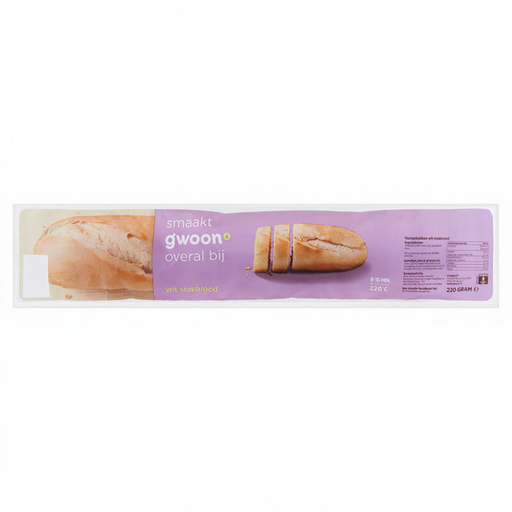
This white baguette is one option to consider for coffee time. Compare its size and product information with the types of bread and serving style you’re looking for.
 No image available
g'woon white baguette 220 g
A white baguette to consider if you’re looking for a 220 g portion for coffee time. Before buying, check the packaging for ingredients, allergens and any preparation instructions.
View on Joybuy
Frequently asked questions
How can I check whether white bread contains iodised salt?
Look for baker’s salt or iodised salt in the ingredients list, or ask if the bread is sold loose. Don’t rely on the type of bread alone: the Voedingscentrum says that bakers are not required to use baker’s salt.
How can I check the allergens in white bread?
Read the ingredients list and allergen information for the bread you’re buying. The Netherlands Food and Consumer Product Safety Authority explains that allergens must be clearly identified in the ingredients list. Also check which gluten-containing grains are listed. A description such as rustic or sourdough doesn’t replace these checks.
How should I store white bread left over after coffee?
Follow the storage advice on the packaging and freeze portions if you won’t use them in time. The Voedingscentrum recommends keeping opened soft white rolls in a kitchen cupboard for two to four days, or in the freezer for one to three months. Don’t assume these times apply to every other type of bread.
Does premium or sourdough mean white bread is wholemeal?
No, these words don’t confirm that a loaf is wholemeal. Check the product description and ingredients list. For your coffee table, also choose a type of bread and serving style that suit your group.


