
Bread on show at the coffee table
If you’re serving the bread whole or in larger pieces, its shape and crust may matter. Rustic hearth-baked bread and tiger bread are two different options to consider.


If you want the bread to be a noticeable part of the spread alongside coffee and cake, rustic hearth-baked bread and tiger bread are options to consider when shape and crust matter most. For small topped bites, soft, even slices of a sliced white loaf are more practical. Check the current packaging for ingredients and allergens for each loaf, and make sure its size and availability suit your coffee break.
If you’re serving the bread whole or in larger pieces, its shape and crust may matter. Rustic hearth-baked bread and tiger bread are two different options to consider.
If you want slices that are easy to spread and cut into even pieces, look for a sliced white loaf. Check that the bread you choose is actually pre-sliced.
If you have allergies or questions about ingredients and baker’s salt, the packaging on the loaf you buy is what counts. The type of bread alone won’t tell you this information.
First decide whether the bread will be on show at the table or used for topped bites. Then compare the size and read the packaging for the specific product.
| What to consider | What to check when buying | Who is this important to? |
|---|---|---|
| Shape and crust | Check whether the shape and crust of the particular hearth-baked or tiger bread suit the way you plan to serve it. | If the bread is going on show alongside cake, I want it to look right on the table. Around 36% of consumers prioritise presentation and crust. |
| Soft slices | Check whether the bread is sliced and whether the slices are suitable for the bites you want to make. | For small topped bites, I want slices that are easy to portion. Soft, even slices are the main concern for around 29% of consumers. |
| Ingredients and labelling | Read the current ingredients and allergen information; check whether baker’s salt is listed if this matters to your choice. | When the bread’s ingredients matter, I don’t want to rely on its name alone. Around 21% of consumers prioritise label information. |
| Quantity and availability | Compare whole and half loaves and check with your chosen shop; follow the product instructions for storage or freezing. | If I only need a little bread to serve alongside cake, I want to be able to buy a suitable quantity. Around 14% of consumers prioritise size and availability. |
Not all white bread is made with baker’s salt, according to the Netherlands Nutrition Centre. The name of the bread alone won’t tell you which type of salt has been used.
Check the ingredients on the current packaging or ask about the ingredients if the bread is sold unwrapped.
Words such as ‘rustic’ and ‘hearth-baked’ don’t indicate a set amount of fibre or other nutrients.
Compare the nutritional information for the individual loaves if their ingredients matter to your choice.
Ingredients and allergens can vary between loaves. Albert Heijn and PLUS also point out that product information can change.
Read the packaging on the loaf you’re actually buying, even if you recognise the product name.
Lidl lists a white loaf as an in-store product, while PLUS may indicate that a product isn’t available at your chosen shop.
Check local availability if you need the bread for guests on a particular day.
Offers various white hearth-baked loaves, including AH Vloerbrood wit and AH Robuust vloerbrood wit.
Offers a range of white breads, including boeren tijger wit, casino wit, rond wit and wit tarwe-maïs.
Lists white bread as an in-store product, including an 800 g loaf.
Offers products including Bakkersgoud rustiek wit and Boeren tijger wit.
Offers white hearth-baked loaves and rustic varieties, with product information such as ingredients, allergens and nutritional values.
Offers products including Bakker van der Akker Boeren tijger wit heel.
These are white baguettes that you can serve alongside coffee and cake. They’re different from the hearth-baked loaves, tiger breads and soft sliced breads above. Focus on the quantity, and check how your chosen bread needs to be prepared and sliced before buying.
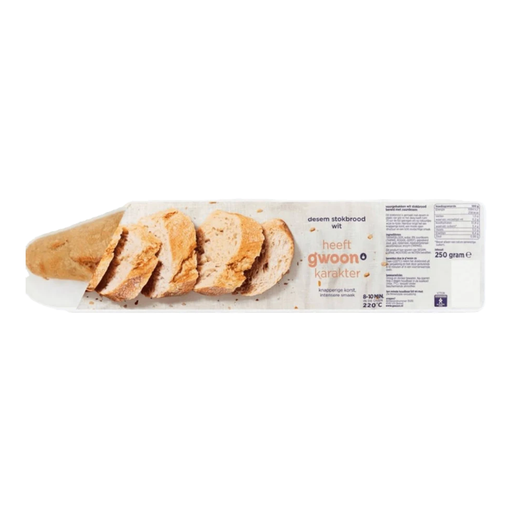 No image available
A white baguette with a rustic product name, for anyone who wants their bread to be a feature on the table. The packaging states 250 g; check the current ingredients, allergens and slicing instructions if these matter to your serving plans.
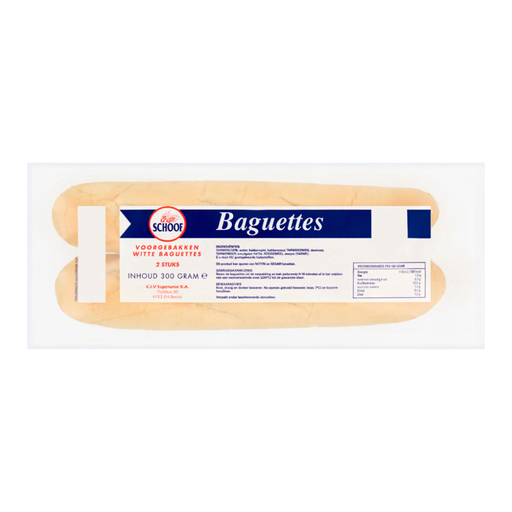 No image available
Two white baguettes for serving the bread in separate portions. The stated total weight is 300 g; check the packaging to see whether they need to be prepared, and read the current ingredients and allergen information.
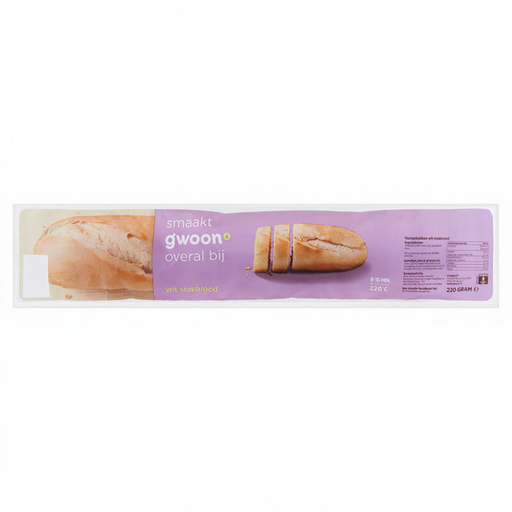 No image available
A white baguette to consider if 220 g is a better fit for the amount of bread you’re planning to serve. Check the preparation and slicing instructions before serving, and read the current allergen information.
Choose according to how you want to serve the bread: rustic hearth-baked bread or tiger bread if shape and crust matter, and soft sliced white bread for evenly sized topped bites. Check the details for the specific loaf; its name alone won’t tell you what it contains.
No. Don’t assume white bread contains baker’s salt based on its name. According to the Netherlands Nutrition Centre, not all bread is made with it; check the current label or ask about the ingredients if the bread is sold unwrapped.
See whether a half loaf or a smaller size would suit your coffee table. If you want to store the bread, follow the instructions for the product you’ve chosen; PLUS says its Beiers Vloerbrood wit can be frozen on the day of purchase.
No. Read the current allergen information for the specific loaf. PLUS lists several grain ingredients and soya for one white hearth-baked loaf, but that doesn’t automatically apply to other white breads.