
Stall planner looking to plan portions
You want to work out in advance how many filled sandwiches or rolls you can serve. Whole and half loaves are only easy to compare if you also take their weight and intended number of portions into account.


Match the amount of white bread to the number of portions you expect to serve, rather than simply counting packs. A whole loaf may be right if demand is reasonably predictable; half loaves or packs of rolls let you start with less if you’re unsure. Only choose bread to bake on site if you can arrange the necessary equipment and preparation, and check the packaging of each variety for ingredients and allergens.
You want to work out in advance how many filled sandwiches or rolls you can serve. Whole and half loaves are only easy to compare if you also take their weight and intended number of portions into account.
You want to be able to start small and top up throughout the day. Half loaves or smaller packs give you more flexibility to adjust the quantity.
If you serve bread to visitors, you need to know exactly which variety you’re using and have up-to-date ingredient and allergen information to hand.
First decide what you want to serve and how many portions you expect to need. Then consider which bread shape and pack size will suit your plan.
| What to consider | What to check | Who it matters to |
|---|---|---|
| Quantity per portion | Compare the weight and intended number of portions for the same type of bread. | If I expect to make lots of filled portions, I want to know how much bread I’ll need. Around 40% of consumers give the usable quantity per portion top priority. |
| When you’ll serve it | Check the bread shape and, if you plan to bake it, the preparation instructions and equipment available. | If I’m serving bread straight after baking, I also need to allow time for preparation and make sure I can schedule a suitable oven. Around 30% of consumers put serving time first. |
| Ingredients and allergens | Read the label for the exact variety; also check for a gluten-free claim or baker’s salt if relevant. | When visitors ask about ingredients, I want information from the packaging of the bread I’m actually serving. Around 20% of consumers put clear information first. |
| Leftovers | Choose an initial quantity that you can top up if visitor numbers fluctuate. | If I’m unsure how busy it’ll be, I’d rather start with less bread than risk having a large amount left over. Minimising leftovers is the most important consideration for around 10% of consumers. |
The pack size alone tells you little about how many filled portions you can make. The shape of the bread also affects your serving plan.
Note the weight of each exact variety and decide how many portions you want to make from it before choosing quantities.
Ingredients vary from product to product. One bread variety listed by PLUS includes wheat, soya and milk, as well as possible traces of other allergens.
Keep the current packaging or product information for every variety you serve unpackaged, and update your information if you switch breads.
For one variety shown by PLUS, the name ‘whole loaf’ didn’t clearly match the description of it as brown wheat bread. The name alone therefore doesn’t confirm that you’re choosing the type of bread you want.
Check the exact product page or packaging for the type of bread, its weight and its ingredients.
Bread may be left over if visitor numbers fluctuate. Voedingscentrum lists bread among the foods that are often wasted.
If demand is uncertain, start with a smaller quantity and top up if needed.
Albert Heijn lists white bread varieties online, including whole white loaves.
Jumbo lists whole and half white loaves, as well as a separately sold gluten-free white loaf.
Lidl lists an 800 g white loaf that is only available in store.
ALDI lists whole white loaves as well as separate white bake-at-home products.
PLUS provides online product information on ingredients, allergens and nutritional values for each item.
Dirk lists, among other options, a half loaf of casino white bread and a whole tiger white loaf.
These baguettes and white rolls come in different weights and pack sizes to help you plan portions. Before serving, check the current packaging for each product for ingredients, allergens and any preparation instructions.
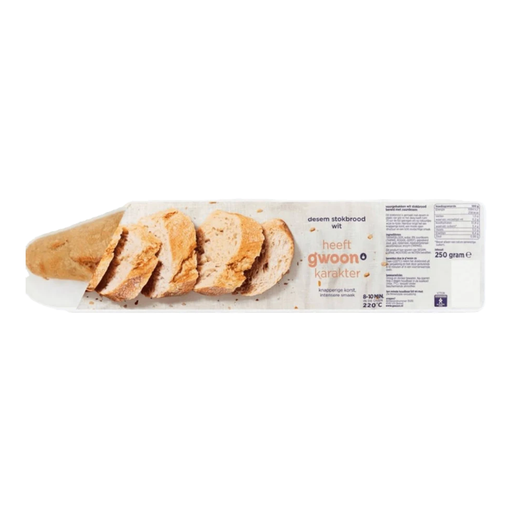 Image unavailable
A white baguette if this is the type of bread you want to serve. The stated weight is 250 g; decide how many portions you want to make from it and read the current packaging before serving.
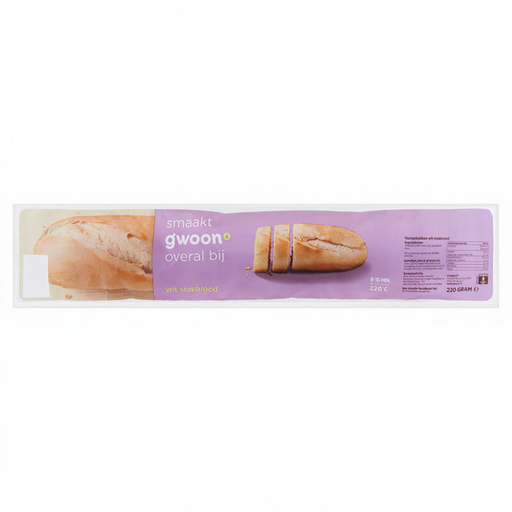 Image unavailable
A white baguette for a serving plan based around baguette portions. The stated weight is 220 g; check the packaging to see how much you’ll need and which preparation instructions apply.
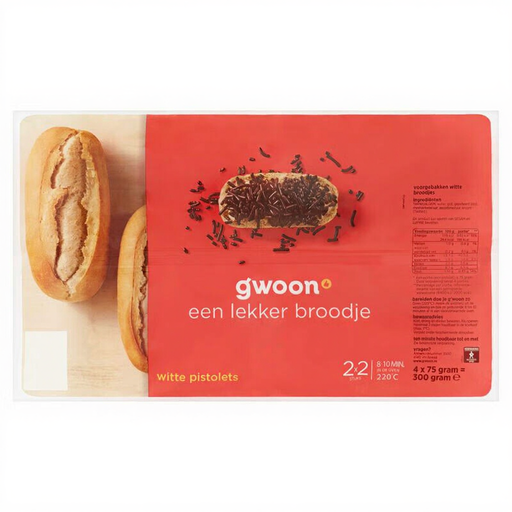 Image unavailable
With four rolls in each pack, it’s easy to include the number of rolls in your serving plan; the total weight is 300 g. Check the current packaging carefully for allergens before giving visitors information about them.
No, using baker’s salt to make bread isn’t compulsory. According to Voedingscentrum, the label states whether a loaf has been made with baker’s salt; check the label if this matters to your choice.
Bread must be prepared, stored and sold safely and hygienically. The Netherlands Food and Consumer Product Safety Authority says this also applies at markets and events when an individual sells food; tailor your approach to what you’re preparing and how you’re serving it.
Make sure you can tell visitors about the allergens in the exact variety you’re serving. The Netherlands Food and Consumer Product Safety Authority highlights the need for allergen information when selling at markets and events; keep the current packaging or product specification to hand, and update the information if you switch breads.