
If you’re serving bread as part of the meal
With soup, a main course or a cheeseboard, you can slice a whole hearth loaf to suit. Albert Heijn describes its white hearth loaf as a whole loaf with a firmer texture and crisp crust.


Choose a whole, ready-to-serve hearth loaf if you want to slice it at the table without needing to use the oven. If you’d like to serve baguettes or small rolls warm just before Christmas dinner, choose a bake-at-home product that fits into your oven schedule. Check the ingredients and allergens for each product before serving it to your guests; the type of salt used also varies between breads.
With soup, a main course or a cheeseboard, you can slice a whole hearth loaf to suit. Albert Heijn describes its white hearth loaf as a whole loaf with a firmer texture and crisp crust.
A bake-at-home baguette or part-baked loaf needs time in the oven just before serving. Compare the instructions for your chosen product with the cooking times for your other Christmas dishes before finalising the menu.
Check the allergens in the exact bread you’re buying, not just the type of bread. The white breads we looked at vary in their ingredients and in the information they provide about possible allergens.
First decide whether you want to slice the bread without using the oven or bake it just before serving. Then choose the shape and quantity that suit the role of bread in your dinner.
| What to consider | What to check before buying | Who it matters to |
|---|---|---|
| Presentation and crust | Compare the shape of the bread and check whether you can slice a whole loaf yourself. | If the bread will be on display at the table, I want to slice it to suit the dishes. Presentation and crust are the top priorities for around 33% of consumers. |
| When to serve it | For bake-at-home bread, check the temperature and cooking time on the packaging, and set aside oven space. | I want to serve the bread warm, but I also need the oven for other dishes. Timing is the top priority for around 27% of consumers. |
| Ingredients and allergens | Read the current label or ask about allergens if the bread is unpackaged. Check the ingredients if the use of iodised salt matters to you. | When I’m buying for guests with an allergy, I need to know which ingredients and allergens are relevant to them. This is the main priority for around 20% of consumers. |
| Size and portions | Compare the weight and number of pieces with the number of guests and the role of bread in the menu. | If bread is a side dish, I want to choose how much to serve at a time. Size is the deciding factor for around 20% of consumers. |
Words such as ‘rustic’, ‘sourdough’ and ‘fresh from the oven’ don’t tell you by themselves how the bread should be served or what ingredients it contains.
First choose between a whole, ready-to-serve loaf and a bake-at-home product. Then compare the product information that matters for your dinner.
Baking the bread needs to fit around the other dishes that require the oven close to serving time.
Plan around the temperature and cooking time on the packaging of your chosen bread. If the oven won’t be available, consider a ready-to-serve loaf instead.
According to the Netherlands Nutrition Centre, bread doesn’t have to be made with baker’s salt. The type of bread alone won’t tell you which salt has been used.
Read the ingredients list or, for unpackaged bread, ask which salt the baker uses.
Product information may also list other ingredients or mention the possible presence of allergens. This varies between breads.
Check the up-to-date allergen information for the exact product every time you buy it, and ask your guests what information they need.
Worth considering if you want to slice a whole white hearth loaf or are looking for a part-baked hearth loaf.
Worth considering for bake-at-home baguettes and individual rolls.
Worth considering if you’d like to pick up freshly baked bread in store without having to schedule oven time at home.
Worth considering for white baguettes to bake at home and bread baked in store.
Worth considering if you want to compare white sourdough baguettes with whole white hearth loaves.
Worth considering for white baguettes and rustic white bake-at-home baguettes to serve with a meal.
These white baguettes and loaves are options to serve at Christmas dinner. Check whether your chosen product is ready to serve or needs baking, and only schedule any oven time once you’ve checked the instructions on the packaging.
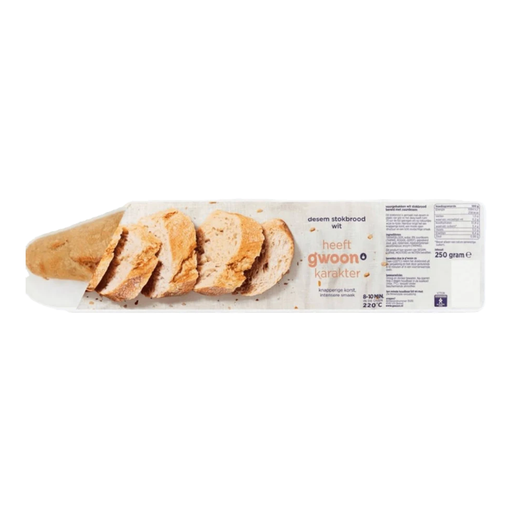 Image unavailable
A baguette-style loaf for serving with a meal. Before planning your dinner, check whether it needs baking and read the allergen information on the packaging.
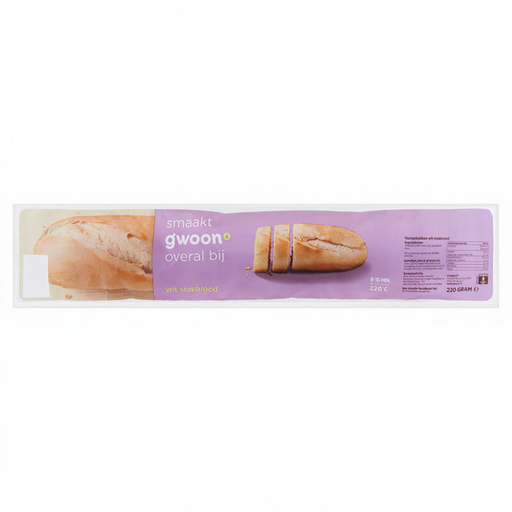 Image unavailable
A white baguette to serve with a meal. Check the packaging to see how it should be prepared, and check the allergens before buying it for guests.
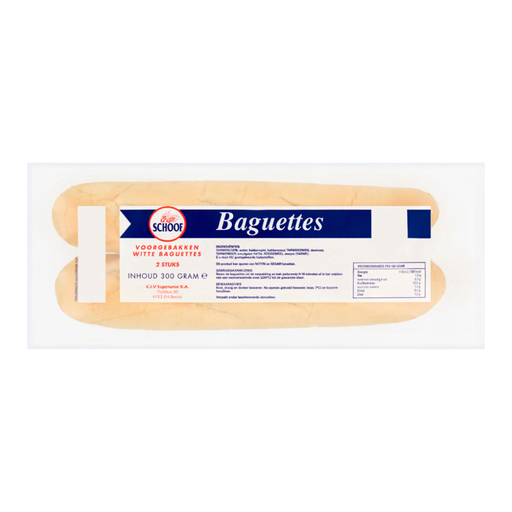 Image unavailable
Two individual baguettes with a total weight of 300 g, handy if you’d like to serve the bread in two portions. Check the cooking instructions and allergen information on the packaging.
No. According to the Netherlands Nutrition Centre, bread doesn’t have to be made with baker’s salt. Check the ingredients list or, for unpackaged bread, ask which salt has been used.
Check the allergen information for the exact product before buying it. According to the Netherlands Food and Consumer Product Safety Authority, this information is on the label of prepacked products; for unpackaged bread, ask what allergen information is available.
Set aside time in the oven according to the instructions for the bread you buy. Albert Heijn listed 8–10 minutes at 200 °C for its part-baked white pavé, while PLUS lists 8–10 minutes at 220 °C for its white sourdough baguette. So don’t use the settings for one loaf for another.
Nutritional value doesn’t tell you how the bread will fit into your dinner. The Netherlands Nutrition Centre says that white bread contains fewer nutrients than wholemeal bread and isn’t included in the Netherlands’ Wheel of Five. If nutritional value is a factor in your choice, compare the nutritional information per 100 g on the packaging.