
Canteen buyer planning portions
Needs bread with a clear weight and a practical portion size to match the daily lunch service to expected attendance.


For daily canteen lunches, white bread is a good fit when its weight, the number of usable portions and storage method match the expected turnout. If numbers vary, freezing bread in portions can help reduce waste. Also check the label of each bread you choose for ingredients and allergens. The Netherlands Nutrition Centre recommends replacing white bread with brown or wholemeal bread as often as possible, so consider offering one of these alternatives alongside white bread.
Needs bread with a clear weight and a practical portion size to match the daily lunch service to expected attendance.
Wants to cater for busy days without throwing away unnecessary bread on quieter ones. The Netherlands Nutrition Centre recommends freezing bread in portions soon after purchase and taking out only what you need each time.
Checks the ingredients, allergens and nutritional information for each bread, and considers whether to offer brown or wholemeal bread alongside white bread.
Start with the number of lunch portions you need and the expected turnout. Then consider which type of bread suits your serving setup and check the label of the exact product.
| What to consider | What to check | Who is it important for? |
|---|---|---|
| Weight and portions | Check the net weight and how many usable lunch portions the exact bread provides. | If I prepare filled lunches every day, I want to know how many loaves I need for the expected turnout. Portion planning is the top priority for around 25% of consumers. |
| Stock and waste | Match the quantity to expected attendance and check the storage instructions. Freeze spare bread in portions if needed. | On quieter days, I don’t want to be left with too much opened bread, but there still needs to be enough on busy days. Around 25% of consumers give stock management the highest priority. |
| Type of bread for lunch | Consider whether sliced bread, a whole loaf, a baguette or individual rolls best suits the way you serve lunch. | When lunches need to be filled or handed out quickly, I want to know whether the bread needs to be sliced on site. This practical consideration matters most to around 25% of consumers. |
| Label and nutritional information | Check the ingredients, allergens, fibre and salt per 100 g. Check separately whether baker’s salt is listed. | If I offer bread to a range of staff, I need to be able to check the ingredients and allergens on the label. For around 25% of consumers, this is their main concern. |
Two whole loaves won’t necessarily provide the same number of lunch portions. Weight, shape and slicing all affect how many portions you can serve.
Note the net weight of each exact product and work out how many usable portions it provides before placing a larger order.
Lidl lists the white bread mentioned as available in store only. An online product listing therefore doesn’t necessarily mean the bread will be at your chosen branch when you need it.
Check availability at your chosen shop before planning your lunch service around that bread.
Ingredients, allergens and nutritional values relate to a specific product and can change. The Netherlands Nutrition Centre also points out that bakers aren’t required to use baker’s salt.
Check the current packaging of each loaf individually, even if you switch to a different variety or supplier.
When attendance varies, opened bread can be left over before it’s used.
Divide spare bread into portions soon after purchase and, following the storage advice, take out only what you need for lunch.
Albert Heijn has an online white bread category with a range of varieties.
Jumbo’s online range includes half a loaf of white tin bread and other types of white bread.
Lidl lists an 800 g white loaf that is available in store only.
ALDI describes a whole white tin loaf with a soft crumb.
PLUS has an online white bread category with listings that include whole 800 g loaves.
Dirk lists products including Bakker van der Akker Rond white whole loaf.
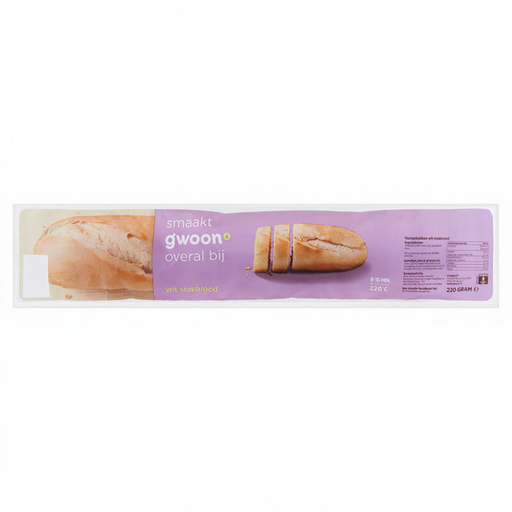
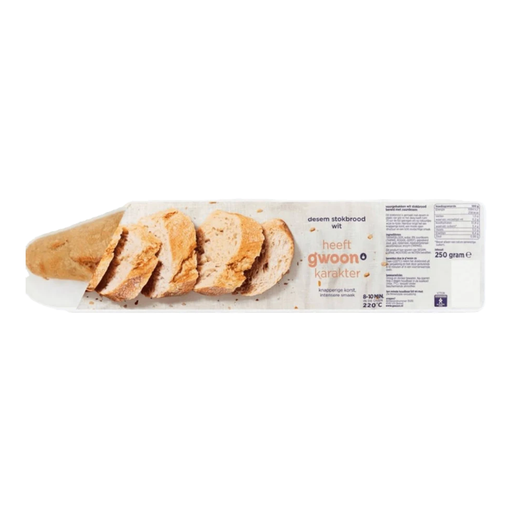
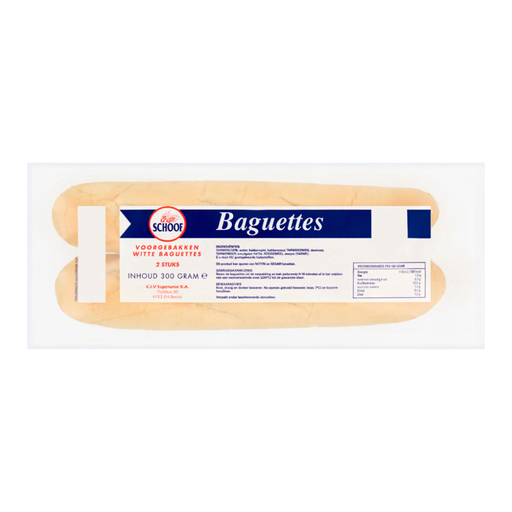
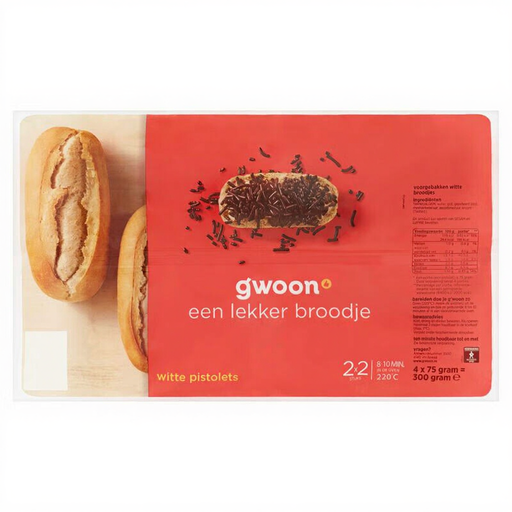
These baguettes and individual rolls are options for canteen lunches where baguette portions or individual rolls work well for serving. Before placing a larger order, check how many lunch portions the pack you choose will provide for your setup.
 No image available
A baguette to consider for filled lunches or as bread to serve with soup.
The stated weight is 220 g. Check the preparation instructions, allergens and usable portions on the packaging.
 No image available
A baguette to consider as the base for filled lunch portions.
The stated weight is 250 g. Work out how many portions you can get from it and check the current allergen and storage information on the packaging.
 No image available
A pack of two baguettes may suit a lunch service where bread is offered whole or in portions.
The stated total weight is 300 g. Check the slicing method you need, the number of usable portions and the current label.
 No image available
Individual rolls are a good option when your lunch service calls for single portions.
The pack contains four rolls with a stated total weight of 300 g. Check that their size and the current label suit your planned lunches.
Freeze spare bread in portions soon after purchase and take out only what you need each time. This follows the storage advice from the Netherlands Nutrition Centre. Also follow the instructions on the packaging of the bread you choose.
Always check the ingredients and allergens on the current packaging of the exact bread. Jumbo lists wheat and gluten for Casino White Bread Half; information may differ for other breads.
No. Check the ingredients list or ask about the exact bread. According to the Netherlands Nutrition Centre, baker’s salt contains iodine, but bakers aren’t required to use it.
If you want to give staff a choice, it’s best to offer brown or wholemeal bread too. The Netherlands Nutrition Centre recommends replacing white bread with brown or wholemeal bread as often as possible, because white bread contains fewer nutrients.