
Campers planning a special bread-based meal
For a leisurely breakfast, lunch or bread to serve with soup, you might be looking for a rustic white loaf, sourdough or a seeded loaf. Lidl, ALDI and Dirk describe these types of bread in their ranges.


For a special camping meal, choose a ready-to-eat rustic white loaf if you can’t rely on having an oven. Part-baked bread is only suitable if you can follow the preparation and storage instructions. Before you set off, also check availability and the latest packaging information. A rustic name or sourdough recipe doesn’t automatically make white bread a different everyday dietary choice.
For a leisurely breakfast, lunch or bread to serve with soup, you might be looking for a rustic white loaf, sourdough or a seeded loaf. Lidl, ALDI and Dirk describe these types of bread in their ranges.
If you can’t bake bread at your campsite, it’s important to choose a loaf that’s ready to eat. Also think about how to store bread for later meals; the Netherlands Nutrition Centre advises freezing it in portions soon after purchase if needed.
If you have a food allergy, check the ingredients and allergens for the specific loaf, not just the name on the shelf. If you’re choosing white bread for a special meal and considering a different type for everyday use, compare the nutritional information too.
First, decide whether you need to serve the bread without an oven. Then consider the meal, storage options and the label.
| What to consider | What to check when buying | Who it matters most to |
|---|---|---|
| Flavour and presentation | Check whether it’s sourdough, a rustic loaf or seeded bread, and make sure it’s ready to eat. | For a special lunch or bread to serve with soup, I want a type of bread that suits the meal. Around 36% of consumers would put flavour and presentation first. |
| Storage and taking it with you | Check the storage instructions and date on the packaging; freeze the bread in portions after buying if needed. | If I’m away for several days, I don’t want to have to use all the bread at once. For around 29% of consumers, storage would be the main concern. |
| Preparation | Check whether the bread needs baking and whether you can use the specified oven setting. | Without a suitable oven, the bread needs to be ready to eat when you arrive. Ease of preparation would be the main concern for around 21% of consumers. |
| Ingredients and nutritional information | Read the latest ingredients and allergen information, and compare the nutritional information if needed. | If I have an allergy or am making a considered choice between types of bread, I want to know exactly what’s in it. Around 14% of consumers would make checking the label their first priority. |
A rustic or sourdough description doesn’t tell you whether a loaf has been fully baked. For example, Albert Heijn says its part-baked AH Robuust vloerbrood wit needs 10–12 minutes in the oven at 220 °C.
Read the preparation instructions before you set off. If you don’t have a suitable oven, choose bread that the packaging says is ready to eat.
White loaves can contain ingredients or allergens other than wheat. The Netherlands Nutrition Centre stresses that allergens must be listed on the label.
Check the latest packaging for the specific loaf, including any warnings about traces of allergens.
Kitchen and refrigeration facilities can be limited at campsites. According to the Netherlands Nutrition Centre, food that spoils quickly should be kept in a fridge at 4 °C.
Choose perishable fillings to suit the refrigeration you actually have, and don’t bring more than you can use under the stated storage conditions.
You can’t tell from the name ‘white bread’ whether baker’s salt has been used in a particular loaf.
If the presence of iodised salt matters to your choice, check the ingredients of the bread you’re buying.
Albert Heijn’s own bread range includes, among other options, part-baked white loaves made with sourdough.
The La Place Vloerbrood Wit described by Jumbo is an example of white sourdough bread to bake at home.
Lidl describes Rustiek wit desembrood as white wheat sourdough bread.
ALDI lists Bakkersgoud rustiek wit in its range of freshly baked bread.
PLUS describes Korenlanders Mais vloerbrood heel as white wheat and maize bread that can be eaten as it is or frozen.
Dirk describes Bakker van der Akker Vloerbrood zonnepit as a white loaf with sunflower seeds, suitable for breakfast or lunch.
These white baguettes are options for lunch or to serve with soup at the campsite. For both products, check the preparation instructions on the packaging before deciding whether they’re suitable for your cooking facilities.
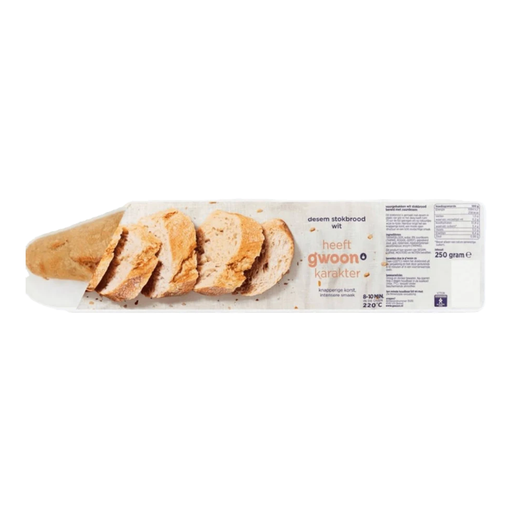 Image unavailable
A rustic white baguette to consider for a special lunch. Check the packaging to see whether it needs baking, and read the latest label if you have any allergies.
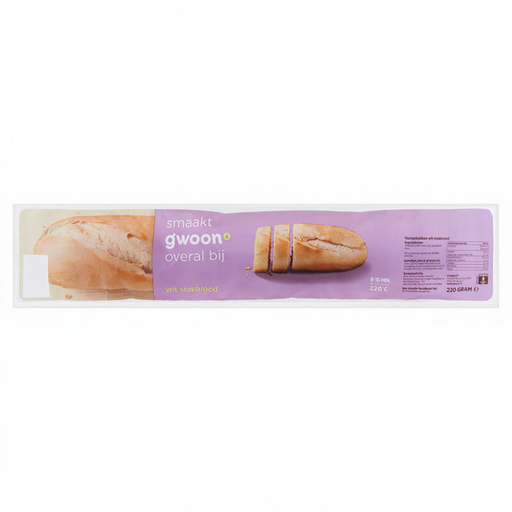 Image unavailable
A white baguette for a bread-based meal, such as a soup lunch. Only plan to take it if the preparation instructions on the packaging suit your facilities, and check the latest label if you have any allergies.
Choose ready-to-eat bread if you don’t have an oven that meets the preparation instructions. With part-baked bread, you’ll also need to follow the storage instructions. For example, Albert Heijn says AH Robuust vloerbrood wit needs 10–12 minutes in the oven at 220 °C.
If you want to use bread over several days, the Netherlands Nutrition Centre advises freezing it in portions soon after purchase if needed. Store fillings that spoil quickly according to the instructions on the packaging; for fridge storage, the Netherlands Nutrition Centre recommends 4 °C.
No. The name doesn’t give you a complete list of ingredients and allergens. Before buying, read the latest label for the specific loaf, including any warnings about traces of allergens.
Not just because it’s described as ‘rustic’ or ‘sourdough’: compare the nutritional information for the loaves themselves. For everyday bread, the Netherlands Nutrition Centre advises replacing white bread with wholemeal or brown bread as much as possible.