
Shoppers looking to avoid waste
You don’t eat the same amount of bread every morning and want to avoid a whole loaf going stale. The size, number of slices and whether you can freeze portions all affect what’s practical for you.


For a quick breakfast, choose a loaf size you can finish before it goes stale, or one that the packaging says you can freeze. Half a loaf is suitable for a few breakfasts; a whole loaf is practical if several people will eat it or if you freeze it in portions on the day you buy it. Also check whether the bread is sliced, and read the ingredients, allergen and nutritional information on packaged bread.
You don’t eat the same amount of bread every morning and want to avoid a whole loaf going stale. The size, number of slices and whether you can freeze portions all affect what’s practical for you.
You want to be able to make sandwiches straight away and take them with you. In that case, whether the bread is sliced matters, as does whether you can buy it along your usual route.
You choose white bread but want to check the ingredients, allergens and fibre per 100 g before buying. You can also check the label to see whether baker’s salt or iodised salt has been used.
First, work out how much bread you’ll use for the next few breakfasts. Then check whether you can make sandwiches straight away and which label information matters to you.
| What to consider | What to check | Who it matters to |
|---|---|---|
| Size and food waste | Compare the weight and number of slices in half and whole loaves. Check the freezing advice if you won’t eat it all soon. | If I only eat a few breakfasts at home, I don’t want to be left with stale bread; reducing waste is the top priority for around 36% of consumers. |
| Ready to make sandwiches | Check whether the bread is sliced and whether the product information says it needs any preparation. | On a busy morning, I want to make sandwiches and take them with me without any extra preparation. Being ready to use straight away matters most to around 29% of consumers. |
| Ingredients and nutritional information | Check the allergens, fibre per 100 g and ingredients list for baker’s salt or iodised salt. | If I eat white bread often, I want to know what’s in my usual breakfast; around 21% of consumers say checking the label is their top priority. |
| Shopping route and availability | Check whether your preferred variety is available at your shop and whether the range varies between branches. | If I pick up bread while I’m out, my preferred variety needs to be available along my route at the time. That’s the first consideration for around 14% of consumers. |
A half loaf is easier to finish if you only use a few slices. With a whole loaf, consider whether you’ll eat it in time or whether the packaging says you can freeze it.
Compare the weight, then choose the amount that suits your breakfast habits.
A whole loaf takes up freezer space, and you may need time to divide it into portions on the day you buy it.
According to the Netherlands Nutrition Centre, using baker’s salt when baking bread isn’t compulsory. This means the amount of iodine can vary from one loaf to another.
Check the ingredients list to see whether baker’s salt or iodised salt is listed.
Ingredients and allergens vary by product. The stated fibre content also applies to that specific variety, not to white bread as a whole category.
Read the current packaging, especially if you need to avoid certain ingredients or are comparing the nutritional value of two loaves.
A useful point of comparison for a whole white loaf with online product information.
A useful point of comparison if you’re choosing between half and whole white loaves and different loaf shapes.
A handy option if you’re looking for oven-fresh bread during an early shopping trip.
A useful point of comparison for a whole white tin loaf.
A useful point of comparison for a whole white loaf with product and storage information.
A useful point of comparison for different types of white bread, including tin loaves.
This selection includes white baguettes and rolls, rather than sliced half or whole loaves. For a breakfast you want to prepare straight away, pay particular attention to the pack size and whether any slicing or preparation is needed.
 No image available
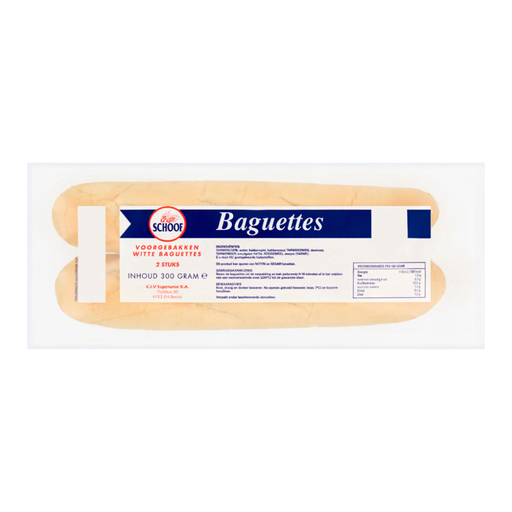
For anyone looking to use white baguettes as the basis for a quick breakfast; check whether you need to slice or prepare them first.
The pack contains 2 pieces, with a total weight of 300 g.
 No image available
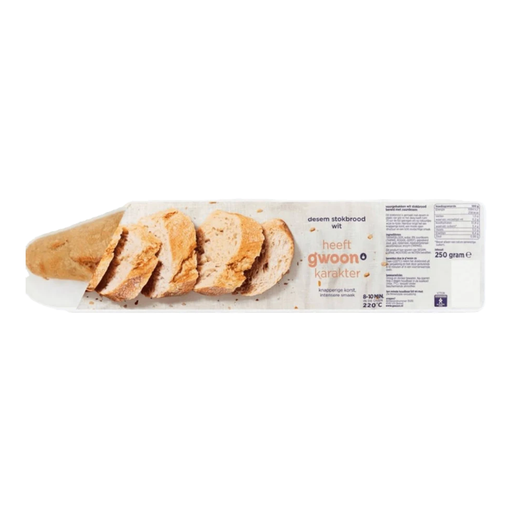
A white baguette to use as the basis for a filled sandwich; before buying, check whether you’ll need to slice it or prepare it further as part of your morning routine.
The stated weight is 250 g.
 No image available
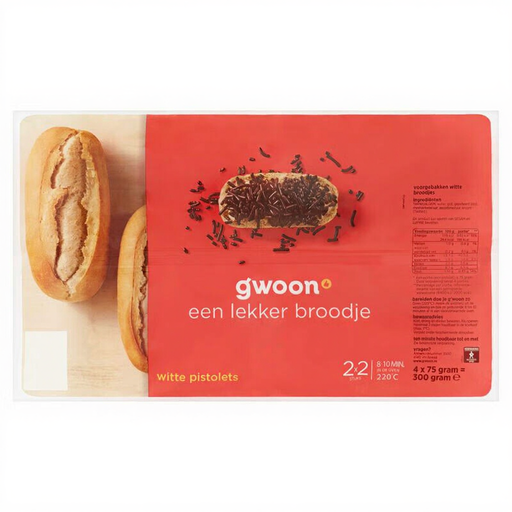
Four white rolls for anyone looking for individual portions for a few breakfasts; check the packaging if you want to store or freeze them.
The pack contains 4 pieces, with a total weight of 300 g.
No. According to the Netherlands Nutrition Centre, bread doesn’t have to be baked with baker’s salt. Check the ingredients list on the loaf you choose to see whether baker’s salt or iodised salt is listed.
Freeze portions if the packaging recommends it and you have enough room. Albert Heijn lists this as an option for AH Wit heel, as does PLUS for PLUS Boeren wit heel. Follow the storage instructions for the loaf you buy.
No. Compare the fibre per 100 g on the nutritional information table for the specific variety. For example, AH Wit heel lists 1,6 g of fibre per 100 g. The Netherlands Nutrition Centre recommends replacing white bread with wholemeal or brown bread as much as possible.
Check whether the bread is sliced and whether it needs any preparation before you can use it. A baguette or roll is a different shape from pre-sliced sandwich bread, so choose whichever suits the time you have in the morning.