
Parents offering bread for the first time
If you want to check whether your baby can sit upright and swallow and chew well before offering larger pieces. The Netherlands Nutrition Centre recommends staying with your baby while they eat.


Don’t choose white bread because it has a premium label. Instead, consider whether your baby is ready for pieces of food and whether the texture is suitable. From 6 months, the Netherlands Nutrition Centre recommends starting with brown or wheat bread without seeds, then gradually moving on to wholemeal bread. Always check the latest label for salt and allergens.
If you want to check whether your baby can sit upright and swallow and chew well before offering larger pieces. The Netherlands Nutrition Centre recommends staying with your baby while they eat.
If you see white bread as a stepping stone and want to know when brown or wheat bread, or a gradual move to wholemeal, can fit into the introduction of solid foods.
For families where coeliac disease, a diagnosed food allergy or childcare rules affect the choice. In these cases, check the ingredients, allergen information and any warnings on the current packaging.
Start with what your baby can already eat. Then compare the type of bread and, finally, check the information on the packaging of the bread you want to buy.
| What to consider | What to check when buying | Who it matters to |
|---|---|---|
| Eating skills and texture | Assess the crust and crumb; choose a shape that suits how well your baby can sit, swallow and chew. Stay with them while they eat. | If my baby is still getting used to pieces of food, I want to offer bread in a form that suits their eating skills. This is the main concern for around 46% of consumers. |
| Type of bread | Check whether it is white, brown, wheat or wholemeal bread, and whether it contains seeds. A name such as ‘rustic’ doesn’t tell you what type of bread it is. | I want to know when I can alternate white bread with brown bread and introduce wholemeal later. This is the main concern for around 36% of consumers. |
| Allergens and labelling | Read the current ingredients and allergen information, including any ‘may contain’ warnings. Also compare the salt content per 100 g. | If my child has a diagnosed allergy or there are childcare rules to follow, I need to know exactly what is in the bread before packing it for them. Checking allergens is the main concern for around 18% of consumers. |
‘Sourdough’ or ‘rustic’ won’t tell you whether the crust and crumb are suitable for your baby’s eating skills. According to the Netherlands Nutrition Centre, babies need to be able to sit upright and swallow and chew well before having larger pieces.
Assess the texture and how you’ll offer the bread before judging it by its name.
From 6 months, the Netherlands Nutrition Centre recommends starting with brown or wheat bread without seeds. It advises replacing white bread with brown or wholemeal bread as much as possible.
Check the type of bread next time you shop and gradually move towards wholemeal.
Ingredients and product information can change. Jumbo also says that cross-contamination cannot be ruled out for some products.
Check the current packaging and ask the specific school or childcare provider about its rules before packing bread.
A mention of baker’s salt or iodised salt doesn’t tell you how much salt there is in 100 g of bread. This varies by product.
Read the ingredients and nutritional information separately. The Netherlands Nutrition Centre advises avoiding giving babies food containing salt.
The product information for AH whole white loaf lists ingredients, allergens and nutritional values.
Jumbo provides product information for its white bread, as well as separate allergen information.
The information for PLUS farmhouse-style whole white loaf includes ingredients, allergens and nutritional values.
Dirk lists Bakker van der Akker Casino whole white loaf as part of its own range.
Lidl lists an 800 g white loaf and provides an ingredients and allergen overview for its oven-fresh range.
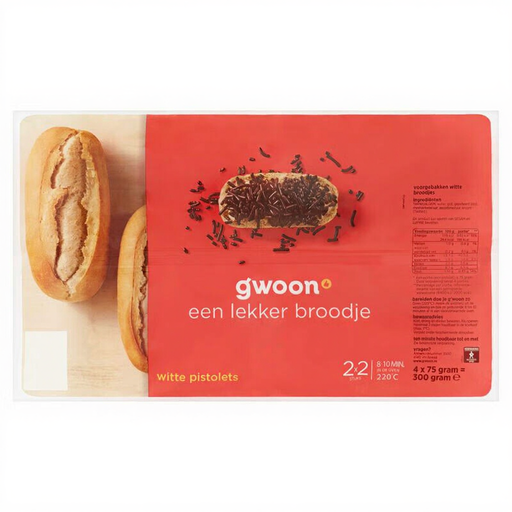
These white bread rolls are an option to consider if you want to offer white bread for a short time. You’ll need to judge whether the crust and crumb are suitable for your baby. Also check the label against your requirements for salt and allergens.
 No image available
If you want to offer white bread rolls for a short time, first check whether the crust and crumb are suitable for your baby’s eating skills.
The pack contains 4 rolls, weighing 300 g in total. The product description lists iodised salt. Check the current packaging for the salt content per 100 g and allergen information, particularly the mention of sesame.
First, check whether your baby is ready for pieces of food. For larger pieces as part of baby-led weaning, the Netherlands Nutrition Centre says your baby needs to be able to sit upright and swallow and chew well. Stay with them while they eat. From 6 months, it recommends starting with brown or wheat bread without seeds.
The Netherlands Nutrition Centre advises replacing white bread with brown or wholemeal bread as much as possible. From 6 months, it recommends starting with brown or wheat bread without seeds, then gradually moving on to wholemeal bread.
Compare the amount of salt per 100 g in the latest nutritional information on the packaging. AH lists 0.9 g per 100 g for AH whole white loaf; Jumbo lists 1.1 g per 100 g for Jumbo white bread. These figures apply to those products, not to every loaf from the same shop.
Regular bread containing gluten isn’t suitable for someone with coeliac disease. Check the packaging of the specific product for ingredients, allergens and any ‘may contain’ statements. Thuisarts advises contacting your GP if you suspect your child is reacting to food. Before packing bread, also ask the school or childcare provider about its own rules.