
Families who regularly prepare snacks
If you have several snack times each week, it helps to work out in advance how many slices you’ll use and whether you can freeze the rest.


For after-school snacks, choose an amount of white bread you can use before any slices are left over, or that you can freeze in portions according to the packaging. A whole loaf works well if you use bread regularly; if you get through less, a smaller size may be more practical. Always check the latest allergen information and the school’s guidelines before packing.
If you have several snack times each week, it helps to work out in advance how many slices you’ll use and whether you can freeze the rest.
A smaller size may better match how much you use. The Netherlands Nutrition Centre lists bread as one of the foods that is often wasted.
Before packing, check the latest packaging and your school’s guidelines. Standard white wheat bread is not gluten-free.
Start by thinking about how much you expect to use: a whole loaf is most practical if you’ll use all the slices or can store them according to the packaging. Then check the allergens and nutritional information for the specific product.
| What to consider | What to check | Who is this important for? |
|---|---|---|
| Making good use of what you buy | Compare the same type of bread and check the weight and number of usable portions. | If I often prepare a snack, I want to make sure the amount of bread I choose will actually be used. Making good use of what they buy is the top priority for around 40% of consumers. |
| Avoiding leftovers | Choose a size that suits how much you use and read the storage instructions if you may want to freeze it. | If I only use a few slices, I don’t want to be left with a large amount. Avoiding waste is a priority for around 30% of consumers. |
| Allergens and school guidelines | Read the latest ingredient and allergen information and check the school’s guidelines. | If the bread is going to school and allergens are a concern, I need to know whether this specific product and the way it is packed meet the agreed guidelines. This is the main concern for around 20% of consumers. |
| Nutritional information | Check the fibre per 100 g and the ingredient list of the bread you choose. | If white bread is a regular part of my snack routine, I want to take its nutritional information into account when making my choice. This is the top priority for around 10% of consumers. |
A size that doesn’t match how much you use makes it more likely that slices will be left over. The Netherlands Nutrition Centre lists bread as a food that is often wasted.
Think about how much bread you use and follow the product-specific instructions if you want to freeze portions.
Allergen information varies from product to product. For AH Wit heel, Albert Heijn lists soya and possible traces of other allergens, as well as wheat and cereals containing gluten.
Always read the latest packaging, especially if the bread is going to school or a child has an allergy.
According to the Netherlands Nutrition Centre, using baker’s salt when baking bread is not compulsory.
Check the ingredient list if you want to know whether baker’s salt or iodised salt has been used in the bread you choose.
Albert Heijn offers products including AH Wit heel, a whole white wheat loaf.
The online white bread range includes different types, such as whole and half loaves, tin loaves and tiger bread.
Lidl lists an 800 g white loaf as a shop product.
ALDI offers both soft white bread and freshly baked bread in its bakery range.
PLUS Boeren wit heel is an 800 g whole loaf, with ingredient, allergen and storage information available online.
Dirk’s search results include whole white loaves and white rolls.
This selection includes white baguettes and rolls for after-school snacks, not whole or half sliced loaves. For each product, check the pack weight, the latest allergen information and whether the size suits how much you use.
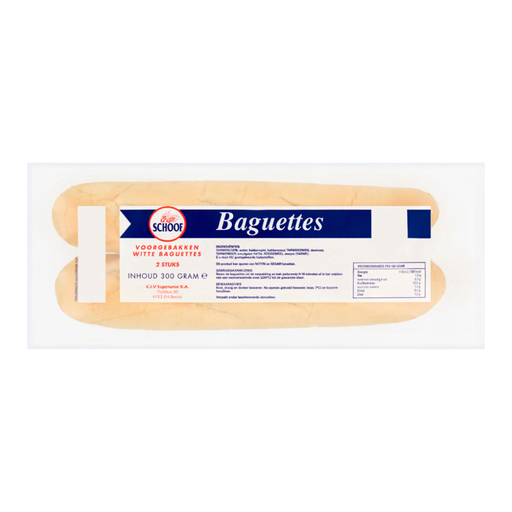 Image unavailable
A pack of two baguettes, if this type of bread suits the snacks you have planned.
Before packing, check the allergen information on the packaging and read the storage instructions if you want to keep a baguette for later.
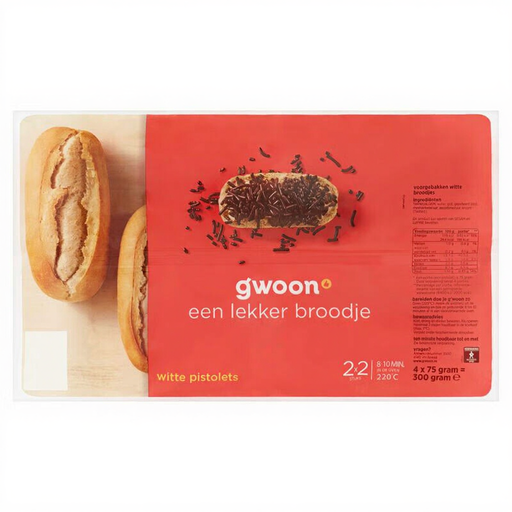 Image unavailable
Four individual rolls may be a good fit if you want to use one roll for each snack time.
Check the latest allergen information and storage instructions on the packaging.
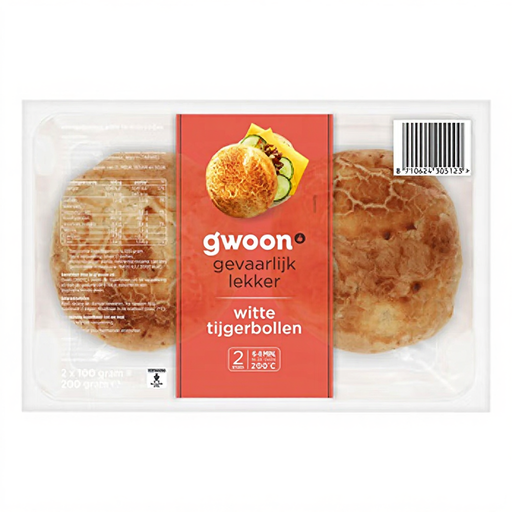 Image unavailable
The pack contains two rolls and may suit you if you’re looking for a small number of individual rolls.
Check the exact type of bread on the packaging: the available product information also refers to Kaiser rolls. Be sure to read the latest allergen information too.
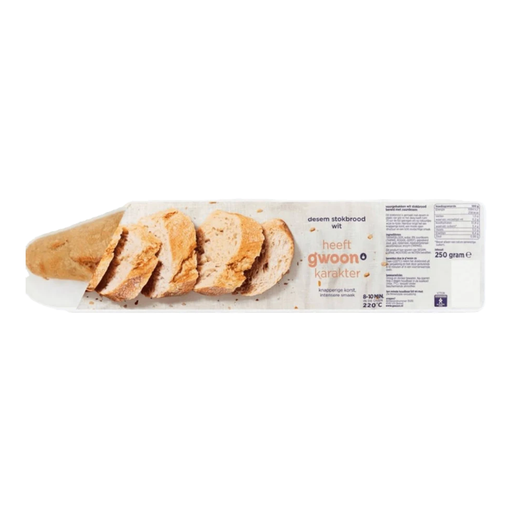 Image unavailable
A baguette for anyone who wants to use this type of bread as the base for a filled snack.
The pack weighs 250 g. Read the latest ingredient and allergen information before packing.
A half loaf may be more practical if you only use a few slices and don’t want any left over. If you use bread regularly or can freeze portions according to the packaging, a whole loaf may also be a good choice.
The product pages for AH Wit heel and PLUS Boeren wit heel say the bread can be frozen at home on the day of purchase. Follow the latest instructions on the packaging of the bread you buy.
No, standard white wheat bread is not gluten-free. The Netherlands Nutrition Centre highlights the importance of avoiding gluten if you have coeliac disease, a wheat allergy or gluten sensitivity. If you need a gluten-free option, check the label and allergen information for the specific alternative, and bear in mind the risk of cross-contamination.
No. According to the Netherlands Nutrition Centre, using baker’s salt when baking is not compulsory. Check the ingredient list of the bread you choose if you want to know whether it has been used.