
Time-pressed, pan-first cook
Your soup is already cooked and you want to blend it without transferring it, so you can get things tidied away quickly.


If your white bean soup is already cooked and you want to serve it quickly, a hand blender is the most direct option: blend it in the pan, with no need to transfer it. A jug blender could be a good choice if a smooth texture is your priority, while a soup maker or heated blender makes most sense if you also want to cook the soup in the same appliance. For every jug, check the temperature guidance and usable filling capacity for the exact model.
Your soup is already cooked and you want to blend it without transferring it, so you can get things tidied away quickly.
You prioritise a smooth texture and want to check in advance that your chosen jug is suitable for the temperature of your soup.
You’re weighing up the portion size against the option of cooking and blending in one appliance, or making soup in several batches.
Choose this option: if the soup is already cooked and you want to blend it straight in the pan.
Bear in mind: the grip, reach and operating time of your chosen model. Also check that the texture it can achieve suits you.
Choose this option: if a smooth texture matters and the quantity is within the jug’s usage limits.
Bear in mind: transferring the soup and cleaning the jug; guidance on hot ingredients varies by model. Philips advises cooling some jugs to below 60 °C, while other models mentioned are only suitable for cold or room-temperature ingredients.
Choose this option: if you also want to heat and blend ingredients in the same appliance.
Bear in mind: the jug capacity and filling limit for the programme you choose. The stated total capacity is not necessarily the permitted amount for every hot preparation.
| What to consider | What should you check? | Who is this important for? |
|---|---|---|
| Blending straight in the pan | Check the hand blender’s grip, reach and operating time for your pan and the quantity you’re making. | If my soup is already cooked, I don’t want to transfer it first and waste time; around 40% of consumers prioritise blending straight in the pan as their main purchase requirement. |
| Texture and temperature | Check the temperature guidance and permitted filling quantity for the exact jug model. | If I want a smooth texture, the method also needs to suit the temperature of my soup; around 30% of consumers prioritise texture and suitable temperature guidance. |
| Portions and cooking programmes | Compare the number of portions you need with the capacity and filling limit for your chosen programme. Philips lists the refurbished HR2204/80R1 as having a 1.2-litre capacity for four portions; Tefal lists programmes for smooth and chunky soup for the BL83SD30. | If I’m cooking for a group, I want to know whether one batch will be enough or if I’ll need to start again; around 20% of consumers make portion size or automatic cooking their main purchase requirement. |
| Cleaning and storage | Check which parts can be detached, how they can be cleaned and whether you’ll need the accessories. | If guests are about to arrive, I want to tidy up quickly after blending and avoid storing unnecessary parts; around 10% of consumers prioritise easy cleaning and compact storage. |
Temperature guidance can vary even between different jug models. If you get this wrong, you may have to let the soup cool before you can carry on.
Check the instructions for the exact model before transferring hot soup, and don’t rely on guidance for a different appliance.
The stated capacity or number of portions doesn’t necessarily tell you how much soup you can safely make on every programme. A lower usable capacity may mean you need to make several batches.
Compare the fill markings and programme instructions with the number of portions you want to serve.
The product information for the Braun MQ50236M lists both 1000 W in the description and 750 W in the technical specifications. Wattage alone also won’t tell you what texture you’ll get with white bean soup.
Check the details for the exact version, and focus on whether the appliance suits your pan, the temperature and the way you want to clean it.
ErgoMixx hand blenders include models for blending in the pan, with differences in controls and included accessories.
MultiQuick models pair a hand blender with various accessories, depending on the version.
The Viva SoupMaker HR2204/80R1 reviewed here is a refurbished model that combines cooking and blending in one jug.
The Perfectmix Cook BL83SD30 is a heated blender for anyone who wants to make hot dishes as well as blend ingredients in the same appliance.
The products below are hand blenders for blending already-cooked soup in a suitable pan or bowl. Check the guidance on hot ingredients and the permitted operating time for each model.
 No image available
A hand blender set for anyone who wants to blend soup in a suitable pan or bowl without transferring it to a blender jug first.
The product description lists a chopper and whisk. For hot ingredients, it recommends using a heat-resistant bowl and working in small batches.
 No image available
A hand blender for blending prepared soup; before use, check the temperature guidance for the ingredients and your pan or bowl.
800 W is stated in the product name.
 No image available
A hand blender for soup in a suitable pan or bowl. For shorter blending sessions, bear in mind the stated rest period.
The product name lists up to 1200 W, 15000 rpm, a 700 ml measuring beaker, a 500 ml chopper and a whisk. The product description specifies a maximum of 1 minute of continuous use, followed by 1 minute of rest.
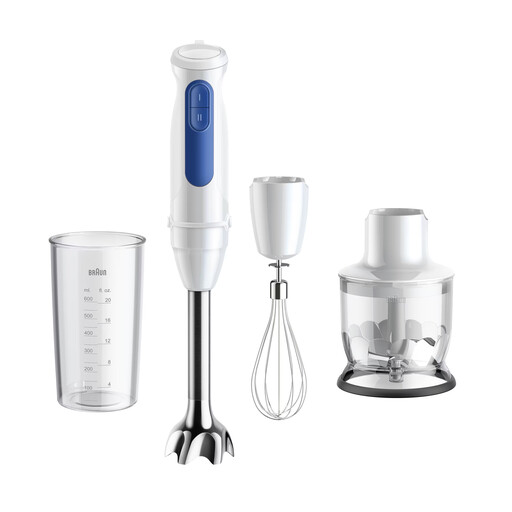 No image available
A hand blender for blending soup without transferring it to a separate blender jug first.
According to the product description, the appliance can be used for a maximum of 1 minute at a time; let it cool down afterwards.
 No image available
A hand blender for finishing soup in the pan. Check the temperature guidance before processing boiling ingredients.
The product description warns against processing boiling liquids.
No, it depends on the exact model. For some of the jugs mentioned, Philips advises cooling ingredients to below 60 °C first; other models are only suitable for cold or room-temperature ingredients. Follow the instructions for your jug and don’t apply guidance for a different model.
Follow the instructions for each individual part. Unplug the appliance before cleaning, don’t immerse the motor unit and take care around the blades.
According to the Netherlands Nutrition Centre, cool leftovers quickly and store them covered in the fridge, ideally at 4 °C. Don’t leave soup out of the fridge for more than two hours, and keep covered leftovers in the fridge for no more than two days.
If a product is faulty, the seller in the Netherlands must provide a solution; there is no fixed statutory guarantee period. For a typical online purchase from a business, you will also usually have a 14-day cooling-off period, although exceptions apply.
Yes, the Dutch government lists electrical appliances as products that require a CE marking in the EU. The marking alone doesn’t tell you whether a specific model is suitable for your pan, ingredients or intended use.