For a small amount of already-cooked white bean soup, a hand blender is often a practical choice, as you can blend it in the pan or in a suitable narrow jug. A compact blender may also work if your portion size is compatible with the model’s instructions for hot ingredients. A soup maker is most relevant if you also want to cook automatically and make enough soup to reach its minimum fill mark. A larger jug or higher wattage alone is no guarantee that an appliance will handle a small portion well.
Which option is right for you?
Cook making small portions of soup
You want to blend a bowl of cooked white bean soup without filling a large jug. Pay attention to the size of the blending foot and jug. The Dutch Consumers’ Association lists blending as one of the uses of a hand blender.
Cook blending hot soup straight away
You want to avoid transferring hot soup more than necessary. Check the instructions for hot preparations for the exact appliance you’re considering, and take care to avoid splashes. Braun describes its hand blenders as suitable for use in a pan or another bowl.
Cook who also wants to make soup
As well as blending, you want to cook ingredients in the appliance. Compare your usual portion size with the soup maker’s fill marks. Philips says the contents must stay between the minimum and maximum marks.
What should you look for when choosing?
Hand blender in a pan or jug
Best for: blending small portions of already-cooked soup with minimal transferring.
Bear in mind: you hold the appliance yourself. Check that the jug and blending foot suit the amount you’re making and how you plan to use them.
Compact jug or personal blender
Best for: anyone who prefers blending in a jug and can follow the portion-size and temperature instructions for the exact model.
Bear in mind: you’ll need to transfer the soup, and instructions for hot liquids vary between models.
Soup maker
Best for: anyone who wants to cook and blend ingredients in one appliance and usually makes enough soup to fill it.
Bear in mind: your portion must fall between the minimum and maximum fill marks for the model you choose.
| What to consider |
What to check before buying |
Who is this important for? |
| Blending a small portion |
Compare the size of the blending foot and jug with your portion. For a soup maker, check the minimum fill mark. |
If you usually make one bowl, you’ll want to know whether the blade can reach the small amount. Around 36% of consumers put portion size first. |
| Blending hot soup |
Read the temperature and usage instructions for the exact model, and check whether blending in the pan is permitted. |
If you want to blend soup while it’s hot, you’ll want to avoid transferring it unnecessarily and know whether the appliance is designed for this. Around 29% of consumers prioritise handling hot food. |
| Cooking and blending |
Check the programmes and the soup maker’s minimum and maximum fill marks. |
If you also want to make the soup in the appliance, the permitted quantity will determine how well it suits your needs. Around 21% of consumers prioritise cooking and blending. |
| Cleaning and accessories |
Check which parts can be removed and which attachments you actually need. |
If you mainly make one bowl of soup, you won’t want to use or clean unnecessary attachments every time. Around 14% of consumers prioritise simplicity and maintenance. |
Common buying mistakes
-
Assuming a large jug means it will blend one bowl well
The stated capacity doesn’t tell you the minimum amount needed for effective blending. Philips describes the SoupMaker HR2204/80R1 as a 1.2-litre jug for four portions; this capacity doesn’t indicate the minimum working quantity.
Before buying, check the minimum fill mark for the exact model and compare it with your usual portion size.
A soup maker may mean making more soup than you need at the time.
-
Assuming every blender jug can handle hot soup
Temperature guidance depends on the model. For the blender jug covered by a specific support page, Philips advises allowing ingredients to cool to below 60 °C first. This guidance doesn’t automatically apply to other appliances.
Follow only the temperature and fill instructions for your model, and allow the soup to cool if necessary.
-
Thinking you need a large accessory set just for soup
Chopping and whisking are different tasks from blending soup, so you don’t automatically need a chopper or whisk to make soup.
First decide whether you’ll use those extra functions. Attachments you don’t need mean more parts to store and clean.
Brands to consider
Braun
Braun offers hand blenders and also describes a separate mini blending foot for small quantities.
- For the MQ10.201M WH, Braun lists one speed, a metal blending foot, a measuring beaker and a 350 ml chopper.
- The separately described mini blending foot with a 250 ml beaker isn’t automatically included in that set. Braun mentions this accessory for small dips and baby food, not as proof that it can be used with hot soup.
Bosch
The ErgoMixx MSM66120 is a hand blender with a measuring beaker and adjustable speed.
- Bosch specifies 600 W, 12 settings, a removable metal blending foot and a 140 cm cord for this model.
Tefal
The Blend Up BL19H4F0 is a compact personal blender that Tefal describes as suitable for cold soup, among other things.
- Tefal lists 400 and 700 ml bottles, removable blades and a self-cleaning setting.
- The mention of cold soup doesn’t show that this model is suitable for hot white bean soup; follow the model’s instructions.
Philips
The SoupMaker HR2204/80R1 combines cooking and blending for anyone making a sufficiently large quantity.
- Philips describes six programmes and a 1.2-litre jug for four portions.
- For a small batch, check the minimum fill mark. Temperature guidance for other Philips blenders doesn’t automatically apply to this soup maker.
Hand blenders at Joybuy
The products below are hand blenders for blending soup. For small portions that may still be hot, pay particular attention to the measuring beaker, adjustable speeds and usage instructions for the exact model.
 No image available
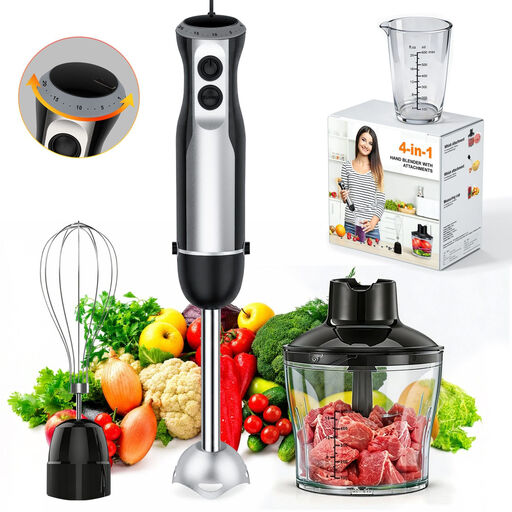
1000 W 4-in-1 Hand Blender
An option to compare if you want to blend soup and adjust the speed.
The product description lists 20 speeds, a turbo function and a 600 ml measuring beaker.
View at Joybuy
 No image available
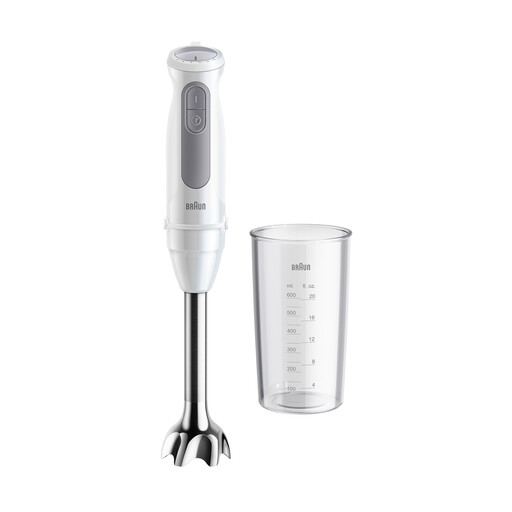
Braun MultiQuick 5 MQ50001
An option to compare if you want to blend small quantities of soup.
The product description lists a blending beaker for small portions, 21 adjustable speeds and dishwasher-safe parts.
View at Joybuy
 No image available
Ochama 600 W 4-in-1 Hand Blender
An option to compare if you want to blend soup and use the other listed attachments too.
The product name lists two speeds, a 500 ml chopper bowl and an 800 ml measuring beaker.
View at Joybuy
 No image available
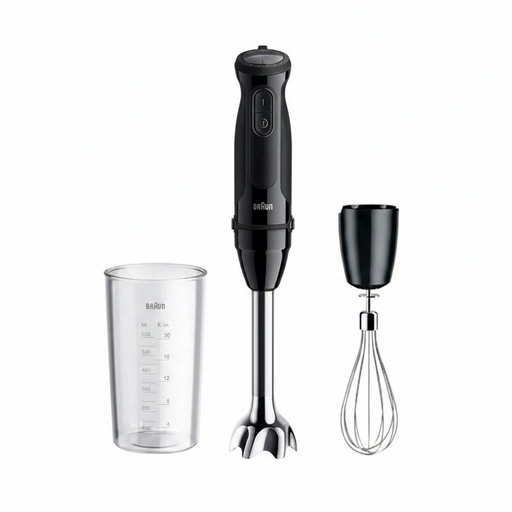
Braun MQ50051M MultiQuick
An option to compare if you want to blend soup and adjust the speed.
The product description lists a 1000 W motor and 21 adjustable speeds.
View at Joybuy
 No image available
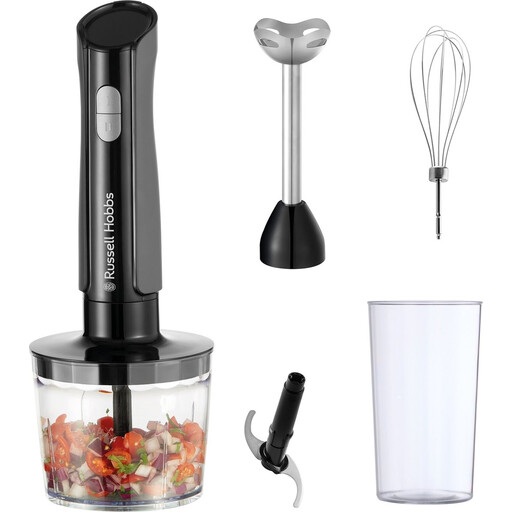
Russell Hobbs 24702-56 3-in-1 Desire
An option to compare if you want to blend soup and use a blending beaker.
The product description lists two speeds and a 600 ml blending jug.
View at Joybuy
Frequently asked questions
Should white bean soup cool before you use a blender?
It depends on the exact model. For the blender jug covered by a specific support page, Philips advises allowing ingredients to cool to below 60 °C first. For the vacuum blenders mentioned separately, Philips specifies cold or room-temperature ingredients. Don’t treat this guidance as a general temperature limit for all blenders.
How can you tell if a soup maker can handle one small portion?
Compare the amount you’re making with the minimum and maximum fill marks for the model you’ve chosen. The 1.2-litre capacity that Philips lists for four portions in the HR2204/80R1 doesn’t tell you the minimum working quantity.
What should you clean after use?
Follow your model’s manual and check which removable parts are dishwasher-safe. For certain hand blenders, Philips describes cleaning the blending foot in a beaker of warm water and washing-up liquid, then detaching and rinsing it. This guidance is model-specific.
Who can help if a blender you bought online breaks, and do you need an extended warranty?
According to the Dutch government, the seller must provide a solution if a product is faulty. There is no fixed statutory warranty period in the Netherlands; an extended warranty may only be relevant if it provides additional rights. In many cases, purchases made remotely from a business also come with a 14-day cooling-off period.
Which product safety rules apply when buying in the Netherlands?
CE marking is required for product groups covered by harmonised EU rules. According to the European Union, the mark is the manufacturer’s declaration of conformity, not an independent quality test. Check the product information and usage instructions for the appliance you’re considering.


