
The cook who blends in the pan
You make soup on the hob and want to blend it straight in the pan, without transferring it elsewhere. The Consumers’ Association (Consumentenbond) describes blending in the pan as a practical use for a hand blender.


If you’re making white bean soup in a pan and don’t want to transfer it, a hand blender suits the way you cook. A jug blender may be a good fit if you want to blend a liquid soup for several people, but check that the specific model allows hot ingredients. If you want to heat the soup in the appliance too, compare the usable capacity and cleaning requirements of a heated blender or soup maker with the amount you’re serving.
You make soup on the hob and want to blend it straight in the pan, without transferring it elsewhere. The Consumers’ Association (Consumentenbond) describes blending in the pan as a practical use for a hand blender.
You want enough soup for everyone in one blending round, with a smooth texture. Compare the usable capacity with the amount you want to serve, and check whether the manufacturer says the jug is suitable for the soup’s temperature.
You’re looking for an appliance with a heating programme and want to know in advance whether its permitted capacity and cleaning requirements suit your evening meal. Philips and Tefal list soup-heating programmes for specific models.
Suitable when: the soup is already in the pan and you want to blend it without transferring it.
Consider: a very thick mixture can be harder to blend evenly; follow the instructions for blending hot soup.
Suitable when: you want to blend liquid soup in a jug and the model allows soup at that temperature.
Consider: you’ll need to transfer the soup; a large jug capacity doesn’t automatically mean it can hold the same amount of hot soup.
Suitable when: you want to heat the soup in the appliance too, and its permitted capacity suits the number of people you’re serving.
Consider: check the fill line, the programme for your preferred soup texture and the cleaning instructions.
| What to consider | What should you look for? | Which consumers is it for? |
|---|---|---|
| Blending straight in the pan | Check whether the blending foot is detachable and what the instructions say about blending hot soup. | If I don’t want to transfer the soup and would rather blend it in the pan, this method suits me. Around 36% of consumers prioritise blending in the pan. |
| Portions and texture | Compare the permitted soup fill level with the amount you want to serve; also check the jug’s temperature limit. | If I want to blend soup for several people in one go, I look at the usable capacity and the texture I want. Around 29% of consumers prioritise portions and a smooth blend. |
| Heating in the appliance | Check the soup-heating programme, the maximum fill line and the cleaning instructions for the specific model. | If I want to heat the soup in the same appliance too, I compare its capacity with the number of bowls I want to fill. Around 21% of consumers prioritise automatic heating. |
| Cleaning and storage | Check which parts can be removed and which are dishwasher-safe according to the instructions; only choose accessories you’ll use. | If I want fewer parts to clean and store, I look beyond the blending function alone. Around 14% of consumers prioritise easy cleaning. |
Permitted temperatures and fill levels vary by model. A serving size indication also doesn’t tell you how large the bowls for your group will be.
Before choosing a jug blender or soup maker, check the instructions for hot ingredients and the maximum fill line.
Philips says that the parts of the HR2203/80 are not dishwasher-safe; this does not automatically apply to other models.
Check which parts of the specific model can be removed for cleaning and which cleaning methods are permitted.
A chopper and whisk are designed for other tasks, such as chopping and whisking.
Start with the blending function and only choose extra parts if you’ll also use them for other dishes.
ErgoMixx hand blenders are worth considering if you want to blend soup straight in the pan. For the Bosch MSM66110, Bosch Netherlands lists 600 W, two speed settings and a detachable metal blending foot.
MultiQuick hand blenders are an option if you want to blend soup in the pan. Braun offers models with a PowerBell Plus blending foot.
The Viva Collection SoupMaker HR2203/80 is designed for making soup in the appliance. Philips lists a 1.2-litre jug and five preset programmes.
The Perfectmix Cook BL83SD30 is a heated jug blender with programmes for smooth and chunky soup. Tefal lists a jug capacity of 1.75 litres.
These product picks are for blending soup in a jug or straight in the pan. If you’re considering a jug blender, always check the temperature and filling instructions for the specific model.
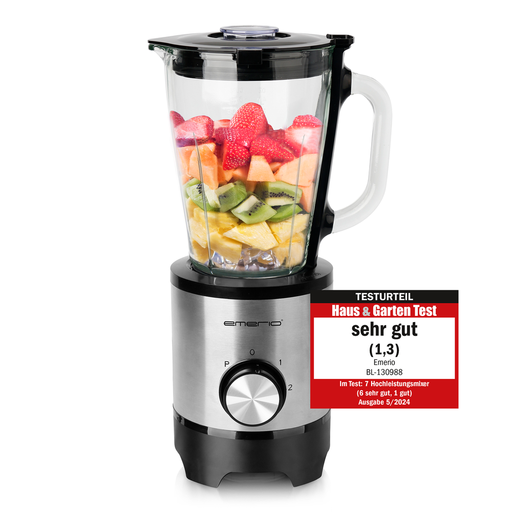 No image available
Suited to anyone who wants to blend soup in a jug for a meal with others; the product name lists a 1.5-litre glass jug.
Do not use liquids hotter than 60 °C in the jug.
 No image available
A jug blender to consider if you want to blend soup in a jug; the product name lists a 1.5-litre capacity and 1200 W.
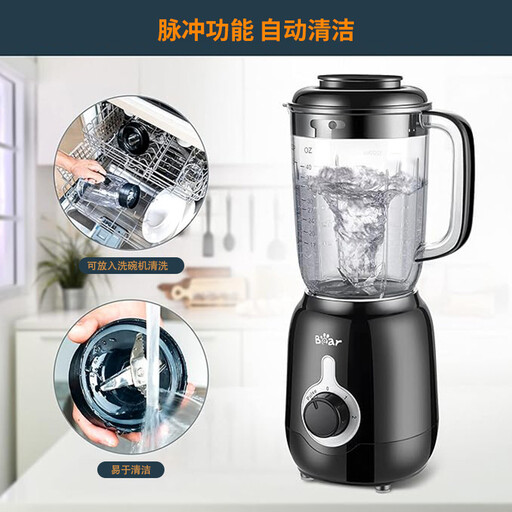 No image available
Suited to anyone who wants to blend soup in a jug for a meal with others; the product name lists a 1.2-litre capacity.
Add at least 300 ml of liquid during use.
 No image available
Suited to anyone who wants to blend soup straight in the pan, without transferring it to a blender jug.
Do not process boiling liquids.
 No image available
A jug blender to compare if you want to blend soup in a jug; the product name lists a 1.4-litre glass jug.
The product name lists five speeds and an ice-crushing function.
No. Only use hot soup if the instructions for the specific model say it’s suitable. The Consumers’ Association (Consumentenbond) says a heat-resistant jug is essential for blending soup. Philips Support advises letting soup cool to below 60 °C first when using the HR2512/90, HR2511/90 and HR2510/90; for the HR3756/00, HR3752/00 and HR3868/00, Philips specifies cold or room-temperature liquids only.
Cook firm ingredients until tender first, and add a little liquid if the mixture is dry or very thick. The Consumers’ Association (Consumentenbond) recommends this practical approach; you can then blend the soup straight in the pan with a hand blender.
According to the Netherlands Nutrition Centre (Voedingscentrum), put leftovers in the fridge or freezer within two hours of cooking. You can keep leftovers in the fridge for up to two days.