
Cooking soup in a pan
You cook the white bean soup in a pan first and want to blend it there without pouring it into another container. Consumentenbond describes puréeing soup as a use for a hand blender.


If your white bean soup is already in a pan, a hand blender is usually the practical choice: you can blend it without transferring it first. If you want to cook the soup in the appliance, compare soup makers and heated blenders by usable capacity and programmes. Only use a standard blender jug for hot soup if the instructions for that exact model say it is safe.
You cook the white bean soup in a pan first and want to blend it there without pouring it into another container. Consumentenbond describes puréeing soup as a use for a hand blender.
You want blending and cleaning between batches to be manageable. Consider how much soup you’ll process per batch and what the instructions recommend.
You’re looking for an appliance with a heating function or soup programme, rather than just a blender for soup that’s already cooked. Compare the usable capacity with the number of portions you need per batch.
The key decision is whether you want to blend cooked soup in the pan or make it in a jug or soup maker.
This is right for you if: the ingredients are already cooked and you want to blend them in the cooking pan.
Bear in mind: you’ll need to hold the blender, and take care to avoid splashes when working with hot soup. Place the blending foot in the soup before switching it on, as Consumentenbond advises.
This is right for you if: transferring the soup and blending it in batches suit your setup, and the instructions allow you to process the ingredients at their temperature.
Bear in mind: you’ll need to transfer the soup from the pan to the jug. Suitability for hot soup varies by model; Philips advises against using hot ingredients with the HR3756/00, HR3752/00 and HR3868/00.
This is right for you if: you want to cook the soup in the appliance and its usable capacity suits the number of portions needed per workshop batch. Philips lists soup programmes for the HR2203/80; Tefal lists a heating function for the BL5768.
Bear in mind: the usable capacity limits how much you can make per batch. This option is less suited to soup that’s already ready in a large pan and just needs blending.
| What to consider | What to look for when buying | Which consumers does this matter more to? |
|---|---|---|
| Blending in the pan | Check that the blending foot is suitable for your pan and that the cord reaches your work area. | I want to blend the cooked soup without transferring it. Consumers who prioritise blending in the pan make up around 33% of consumers choosing for this workshop. |
| Splashes and hot soup | Follow the instructions for the exact model. When using a hand blender, place the blending foot in the soup before switching it on. | When working with hot soup, I want to know the operating instructions and temperature limits in advance. Consumers who prioritise manageable blending of hot soup make up around 27% of consumers choosing for this workshop. |
| Portions per batch | Compare your portion size with the usable capacity, not just the jug’s total capacity. For the Tefal BL5768, Tefal lists a usable capacity of 1.5 litres, compared with a total capacity of 2 litres. | I want to know whether one batch will make enough soup for the group. Consumers who prioritise the amount per batch make up around 20% of consumers choosing for this workshop. |
| Cleaning between batches | Check which parts can be removed and which are dishwasher-safe according to the instructions; choose attachments based on the workshop recipes. | If the group needs to move on to the next batch quickly, I want to know how the parts are cleaned. Consumers who consider cleaning between batches their main priority make up around 20% of consumers choosing for this workshop. |
A jug with a total capacity of 2 litres may have less room for soup per batch. For the Tefal BL5768, the manufacturer lists a usable capacity of 1.5 litres out of a total of 2 litres.
Compare your planned portion with the usable capacity of the exact model.
Permitted temperatures vary by model. Philips advises against using hot ingredients with the HR3756/00, HR3752/00 and HR3868/00.
Before buying or using a jug, read the temperature instructions. If the soup is already in the pan, consider a hand blender whose instructions suit the way you plan to use it.
A chopper or whisk is designed for additional tasks, such as chopping or whisking; you don’t automatically need these functions just to blend soup.
Choose attachments based on the other recipes you’ll make during the workshop.
The MultiQuick 5 Pro range includes hand blenders for blending in the pan; the parts supplied may vary between versions.
The ErgoMaster MSM4B610 is a hand blender to consider if you want to blend soup in the pan.
The SoupMaker HR2203/80 represents the option of cooking soup in the appliance.
The Blendforce Cook BL5768 is a heated blender to consider if you want to make soup in a heated jug.
These Joybuy product picks are hand blenders for puréeing soup, including options with removable blending feet or additional attachments. When working with hot soup, always check the instructions for the exact model.
 No image available
The description lists a removable stainless steel blending foot for soup and detachable parts.
The product information warns against processing boiling liquids. For hot liquids, it recommends small quantities and a heat-resistant beaker; follow the instructions for the model.
 No image available
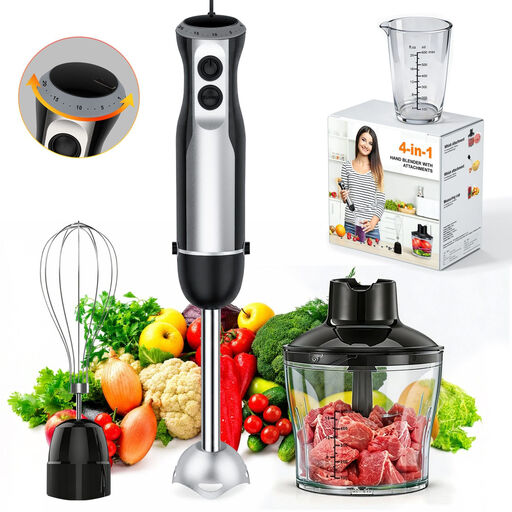
The description lists a blending foot for soup and purée, plus additional parts for other workshop tasks.
Listed features include 1000 W, 20 speeds, a turbo function, whisk, chopper and measuring beaker.
 No image available
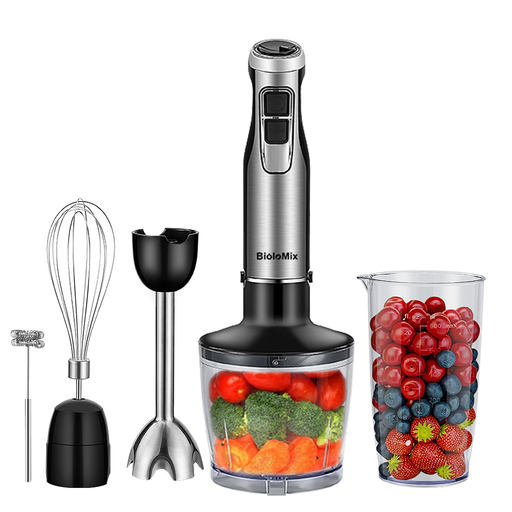
The description lists blending soup and a removable foot that the product information says is dishwasher-safe.
The product title lists six speeds and 1200 W. It also mentions an anti-splash system; this does not guarantee splash-free use.
 No image available
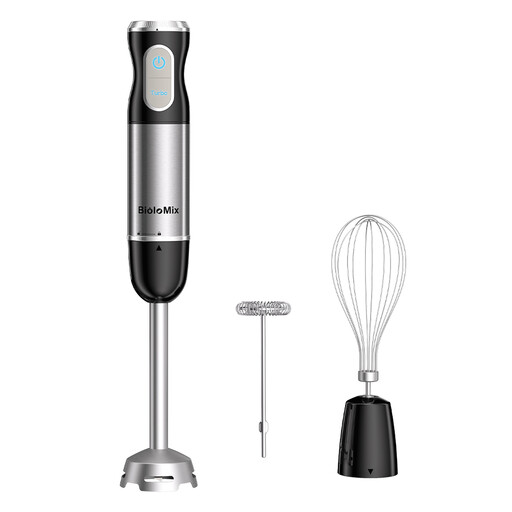
The description mentions blending soup and a removable design for easy cleaning.
The product information lists a turbo function and a splash-resistant design. Check the instructions for the model you choose before use.
 No image available
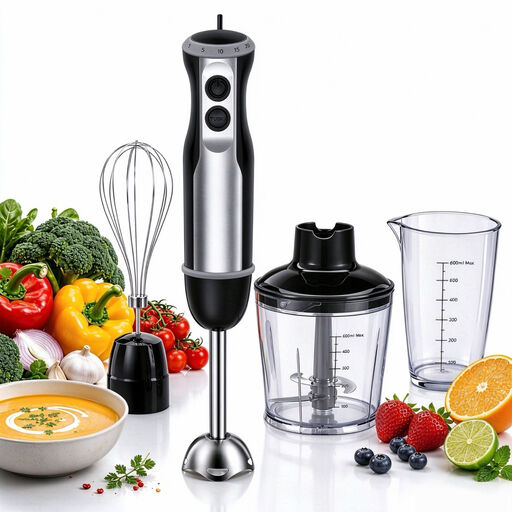
The description lists a stainless steel hand blender for smooth soup.
The product information lists six speeds, a turbo function, a whisk and a chopper. Check which parts are included with the version you choose.
No, don’t assume you can. Philips advises against using hot ingredients with the HR3756/00, HR3752/00 and HR3868/00. Check the instructions for the jug you plan to use before transferring hot soup into it.
Consumentenbond advises placing the blending foot in the pan or bowl first, then switching the blender on. Follow the instructions when removing and cleaning the parts too.
Voedingscentrum advises cooling leftovers quickly, storing them covered in the fridge or freezer, and not leaving them out of the fridge for more than two hours. The storage guidance given is for thick soup with meat and vegetables; don’t automatically apply these storage times to a different recipe.
You don’t need an extra warranty to have rights when buying as a consumer. According to the Dutch government, a product must meet expectations and the seller must provide a solution if something is wrong; there is no fixed statutory warranty period in the Netherlands. Different contractual terms may apply to business purchases.
According to the NVWA, electrical products must carry the CE mark, and parts that come into contact with food must meet the applicable food-contact requirements. A CE mark on its own doesn’t mean a model is suitable for hot soup; the instructions remain the deciding factor.