
Cooking for a crowd
You want to make enough for everyone without overfilling the bowl, so you’ll first check the usable capacity and whether you can work in batches.


A mini chopper may be enough for a small portion of white bean dip; for a sharing bowl, a larger food processor or working in batches makes more sense. Compare the processing capacity with your recipe, check whether a purée blade is included, and consider which parts you’ll need to clean afterwards.
You want to make enough for everyone without overfilling the bowl, so you’ll first check the usable capacity and whether you can work in batches.
You usually make smaller portions and want a compact appliance that can chop and purée ingredients.
You’d like to use the same appliance to slice or grate ingredients after making the dip, so you’ll look at the accessories included.
Compare the quantity in your recipe with the processing capacity and usage guidance for the specific model, rather than relying on the bowl’s total capacity alone.
| What to consider | What should you check? | Who should prioritise this? |
|---|---|---|
| Quantity per batch | Compare the recipe quantity with the stated processing capacity and filling instructions. | If I’m making a sharing bowl, I want to know whether my recipe will fit in one go, so I don’t unexpectedly have to work in batches. Around 36% of consumers say batch size is their top purchasing priority. |
| Control over texture | Check whether a purée blade is included and which settings the model offers. | If I want to purée the dip to suit my taste, I’ll focus on the blade and controls. Around 29% of consumers prioritise control over texture. |
| Cleaning | Check the cleaning instructions for each part and whether it’s dishwasher-safe. | After cooking for guests, I want to know which parts I’ll need to wash up. Easy cleaning is the top priority for around 21% of consumers. |
| Storage space and future use | Measure your storage space and compare the blades and discs included with what you plan to prepare in future. | If I want to use the appliance for other dishes too, I’ll weigh up its features against the space it takes up. Around 14% of consumers put storage space and use after the party meal first. |
According to the manufacturer, the Magimix CS 3200 XL has a total bowl capacity of 2.6 litres and a separately stated processing capacity of 1 litre. These figures don’t mean the same thing.
For the model you’re considering, compare its processing capacity with your recipe and check the instructions for thick mixtures.
KitchenAid describes the 5KFC3516 as an appliance for small quantities; this doesn’t confirm that it can process a full sharing bowl in one go.
First decide how much dip you want to make and whether it’s practical to work in several batches.
Bosch says the MCM3501M’s accessories are generally dishwasher-safe, but that doesn’t necessarily apply to every part.
Check the cleaning instructions for the bowl, lid, blade and discs separately, and follow the guidance for handling the blade.
KitchenAid offers a mini chopper for small portions and a food processor with extra accessories for anyone who also wants to slice or grate.
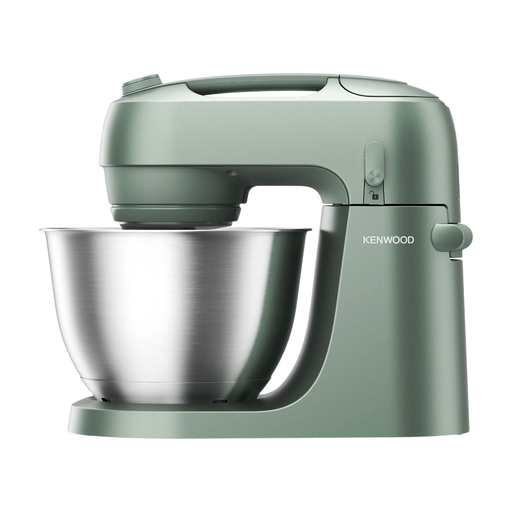
According to Kenwood, the MultiPro Go FDP22.140GY combines a compact design with puréeing, slicing and grating functions.
The MultiTalent 3 MCM3501M is a food processor to consider if you want to compare slicing and grating accessories as well as puréeing functions.
According to Magimix, the CS 3200 XL is designed for preparing different quantities and comes with three bowls.
This selection includes compact food processors for puréeing and other kitchen tasks, as well as a mini chopper for smaller quantities.
 No image available
The product description says it can chop and purée ingredients for dips; check that the bowl suits the quantity in your recipe.
The title specifies 750 W and a 1.8 L bowl. The description also mentions blending; don’t process liquids hotter than 60 °C, and limit continuous blending to 60 seconds per cycle.
 No image available
The description lists purées and cooked ingredients among its uses; compare the bowl capacity with the portion you want to make.
The stated bowl capacities are 2.5, 2.2 and 1.8 L. The description specifies two speeds with pulse control and recommends pulsing for up to 30 seconds per cycle.
 No image available
The description mentions puréeing with an S-blade; check that the capacity suits the amount of white bean dip you want to make.
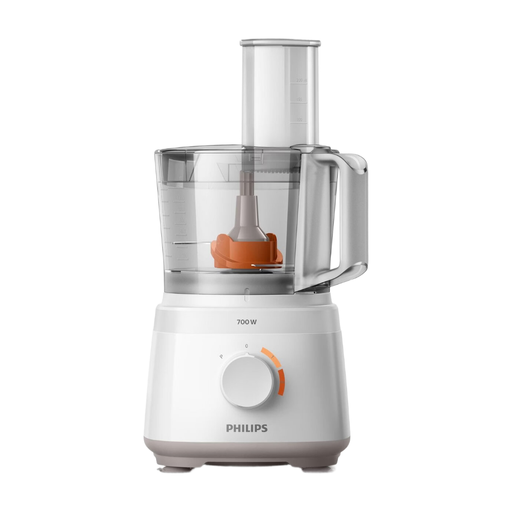
The title specifies a 700 W power rating and a 1.5 L bowl. The description also mentions a reversible disc and a kneading accessory.
 No image available
This mini chopper is worth considering for smaller quantities; for a larger party portion, plan to work in several batches if needed.
The title specifies a 0.5 L bowl capacity and a removable blade.
 No image available
The description mentions puréeing and chopping, as well as slicing and grating other ingredients.
The description specifies a 1.3 L bowl, seven speed settings, slicing and grating discs, and a 600 ml blender cup.
You may be able to use a food processor or stick blender you already own. The Voedingscentrum mentions both appliances in a recipe for puréed chickpea dip; this isn’t a test of every stick blender with white beans. Follow the usage limits for your appliance.
Compare the quantity in your recipe with the permitted processing capacity of the exact model, not just the bowl’s total capacity. For example, Magimix lists a total capacity of 2.6 litres and a processing capacity of 1 litre for the CS 3200 XL.
Cover the dip and store it in the fridge. The Voedingscentrum recommends a fridge temperature of 4 °C and advises not leaving perishable food out of the fridge for more than 2 hours. For homemade plain hummus, the Voedingscentrum gives a fridge life of 1–3 days; this isn’t an established shelf life for every white bean recipe.
According to the Dutch government, you’re entitled to a product that works properly and should contact the retailer if there’s a problem. There’s no fixed statutory guarantee period for all products; a manufacturer’s guarantee is in addition to your statutory rights.
Yes. The Netherlands Food and Consumer Product Safety Authority states that CE marking is required for electrical products sold on the Dutch market. This marking isn’t an independent assessment of the quality of a particular dip.