
Last-minute maker of small batches
You want to blend a small amount of bean dip just before guests arrive, without putting more equipment on the worktop than necessary.


For a small, thick batch of white bean dip made just before guests arrive, a stick blender with a suitable beaker is a practical option. The Netherlands Nutrition Centre also recommends a food processor for white bean purée. A food processor is worth considering if you’re making larger batches or processing other ingredients too, while a jug blender is better suited to anyone who regularly makes wetter blends as well. Compare the usable capacity, included attachments and cleaning instructions for the specific model.
You want to blend a small amount of bean dip just before guests arrive, without putting more equipment on the worktop than necessary.
You care about the texture you want and don’t want to add more liquid than your recipe calls for. The Netherlands Nutrition Centre notes that water can be added to make the texture smoother.
You’re weighing up how much you can process at a time against the space the appliance and its attachments will take up.
Best for: a small batch that you want to blend directly in a suitable beaker, with minimal storage space needed and less washing up.
Bear in mind: a very thick mixture may take more work to blend. Check whether the required beaker or chopper is included with the model.
Best for: anyone who makes larger quantities of wetter blends as well as dips, and has space for a jug.
Bear in mind: according to the Consumentenbond, jug blenders are less suited to small batches and thick or dry ingredients. Adding extra liquid may change the consistency you want.
Best for: anyone who processes other ingredients or prepares different batch sizes too. The Netherlands Nutrition Centre recommends a food processor as an alternative for white bean purée.
Bear in mind: compare the processing capacity and the bowl and blades included. Extra attachments need storage space and cleaning.
| What to consider | What to look for | Which shoppers? |
|---|---|---|
| Making a small batch quickly | Check whether the set includes a suitable beaker or small bowl, and compare its processing capacity with your recipe. | If I want to make a small batch just before guests arrive, a straightforward preparation with minimal equipment matters. Around 37% of shoppers prioritise speed when making a small batch. |
| Blending a thick dip | Check the stated uses and blades. If it suits the texture you want, add liquid gradually as needed. | If I want to keep my dip thick, I don’t want to add extra water without realising it just to get it to blend. Around 27% of shoppers give their preferred texture top priority. |
| Making enough in one go | Compare the processing capacity of the bowl you’ve chosen with the quantity of beans and other ingredients. | If I’m making dip for several guests, I want to know whether one batch will be enough or whether I’ll need to work in batches. Around 18% of shoppers prioritise the quantity they can make at a time. |
| Less washing up and storage space | Check which attachments you’ll use for the dip and follow the cleaning instructions for each one. | If I have little time or space to tidy up, I don’t want to use more accessories than necessary. Around 18% of shoppers prioritise washing up and storage. |
The Consumentenbond says blenders are less suited to small batches and thick or dry ingredients. A large jug can also take up more space and require more cleaning for a small quantity.
First, work out your usual batch size and preferred thickness, then compare a stick blender, a small bowl and a jug blender.
A jug blender may need extra liquid to process the mixture, which can change the dip’s consistency.
Magimix lists a total capacity of 1.7 l and a processing capacity of 600 ml for the Mini Plus. These figures are not the same.
Check the processing capacity of the specific bowl and model, and compare it with the quantity in your recipe.
A smaller usable capacity per batch may mean you’ll need to make several batches for a group.
Braun’s product page lists both 1000 W in the main text and 750 W in the technical specifications for the MQ 5235 BK. Wattage alone doesn’t tell you how an appliance will process your dip.
Before buying, check the exact model and its manual. Base your choice on the batch size, ingredients and attachments included too.
The CleverMixx MSM2650B is a useful benchmark for a stick blender with a detachable foot, chopper and whisk.
The MultiQuick 5 Vario MQ 5235 BK is a stick blender set to compare if you’re looking for variable speed control and a chopper.
The Mini Plus is a food processor to compare if you process other ingredients as well as making dips.
The 5000 Series HR2685/00 is another stick blender range to compare by model and included attachments.
This selection includes stick blenders and a mini chopper for small preparations. The NVWA states that CE marking is required for electrical products placed on the market in the Netherlands; check the marking on the item offered. CE marking alone does not prove that a product has been independently tested.
 No image available
A stick blender set to consider if you want to use a chopper alongside the blending foot. Check which attachments are included with this model.
The product information limits continuous use to a maximum of 1 minute. Do not immerse the motor unit in water, and detach accessories before cleaning.
 No image available
This set is worth comparing if you’re looking for a stick blender with a beaker and chopper for preparing small batches.
The product name lists a 700 ml beaker and a 500 ml chopper. Use the blender for no more than 1 minute at a time, then let it rest for 1 minute. According to the product information, the accessories are dishwasher-safe up to 60 °C.
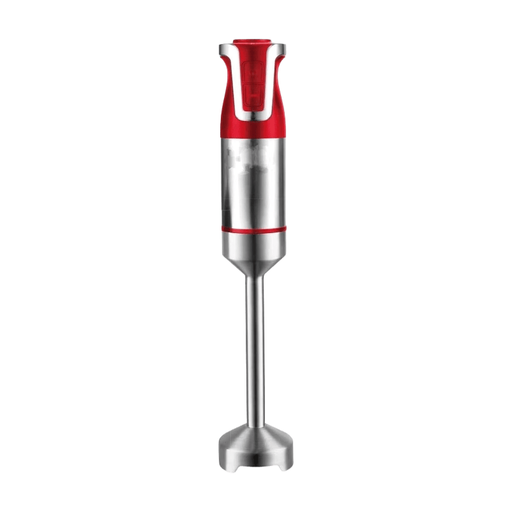 No image available
A stick blender to compare if you want to weigh up different speed settings for different preparations. The product information also mentions a turbo function.
The product name lists 20 speeds. Don’t judge whether it’s suitable for your dip based on wattage or the number of settings alone.
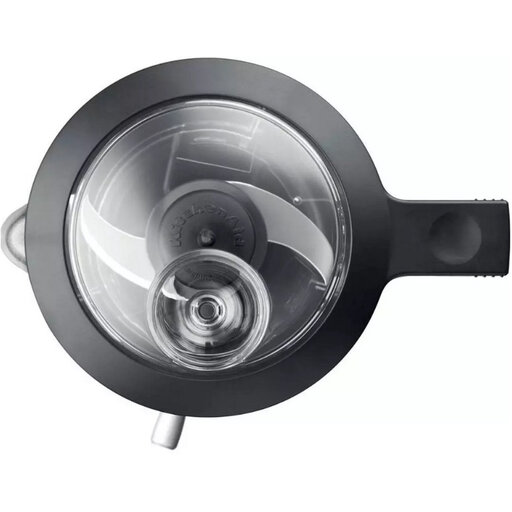 No image available
The product information says it can purée cooked beans and be used for hummus, making this model worth comparing for small batches.
The listed bowl capacity is 830 ml. Cut larger ingredients into pieces no bigger than 2.5 cm before processing.
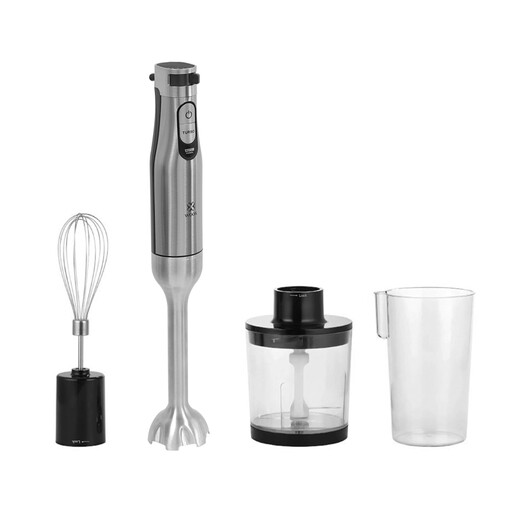 No image available
A set to consider if you want to compare separate attachments for blending and chopping small batches.
The product information lists variable speed, a 500 ml chopper and a 600 ml measuring beaker. Check which accessories are included with the exact model.
Yes. The Netherlands Nutrition Centre recommends both a stick blender and a food processor for white bean purée. If you want a smoother dip, add a little water gradually as needed. The amount depends on the ingredients and the consistency you want.
Compare the included beaker, bowl, blades and accessories with the manual for your model. Sets within the same product range can differ, so follow the cleaning instructions for each attachment.
Cover any leftovers and store them in the fridge. The Netherlands Nutrition Centre advises refrigerating them within 2 hours of preparation and recommends a fridge temperature of 4 °C. The storage time for plain hummus is not automatically a guarantee of how long white bean dip made with other ingredients will keep.
Yes. The NVWA states that CE marking is required for electrical products placed on the market in the Netherlands. The marking alone does not prove that a particular item has been independently tested.
No. According to the Dutch government, the Netherlands has no fixed statutory warranty period. You’re entitled to a product that works as it should, and its expected lifespan depends on the circumstances. If there’s a problem, contact the retailer; a manufacturer’s warranty is an additional benefit.