
Small-portion blender
You usually make a small quantity of dip and want to blend the ingredients without adding lots of liquid first. The Consumers’ Association notes that blender jugs may be less suitable for small or thick portions.


For a small, thick portion of white bean dip, a hand blender used in a suitable beaker or a mini chopper is a better choice than a blender jug. The right option depends on the quantity and texture you want. A hand blender lets you blend directly in a beaker, while a mini chopper has a separate bowl and offers speed or pulse controls. A blender jug is better suited to larger or wetter mixtures. With any model, check the minimum usable quantity and which accessories are included.
You usually make a small quantity of dip and want to blend the ingredients without adding lots of liquid first. The Consumers’ Association notes that blender jugs may be less suitable for small or thick portions.
You want to be able to stop when you have a coarse spread, or keep blending for a smoother dip. Speed settings and pulse controls can help you adjust the consistency as you go. Check which functions the exact model offers.
You want to make sauces or wetter mixtures as well as white bean dip, and are happy to use a larger bowl or wash a few extra parts. KitchenAid and Philips list dips as a use for their choppers.
Best if: you want to blend a small portion directly in a beaker.
Trade-off: a very thick portion can be harder to blend; check that the blender foot stays beneath the mixture. The Consumers’ Association considers hand blenders suitable for small portions, but notes that very thick ingredients can be challenging.
Best if: you want to make the dip in a separate bowl and adjust the texture while chopping or blending.
Trade-off: the stated bowl capacity doesn’t tell you the minimum quantity it will process effectively, and the bowl and blades also need cleaning. KitchenAid lists dips and hummus among the suggested uses for its 830ml model.
Best if: you also regularly make larger or wetter mixtures.
Trade-off: the Consumers’ Association considers a blender less suitable for small or thick portions. A large maximum jug capacity doesn’t prove that it will process a small quantity effectively.
When making small portions of white bean dip, consumers can broadly group their top buying priorities as follows:
| What to consider | What should you check? | Who is this important for? |
|---|---|---|
| Processing a small, thick portion | Ask about the minimum usable quantity and check the shape of the bowl or beaker and the position of the blades. | If you usually make a small, thick portion, you won’t want to add unnecessary liquid just to bring the ingredients into contact with the blades. Around 36% of consumers put having a suitable portion size first. |
| Getting the texture you want | Check whether the appliance has speed settings or a pulse function, and what the manufacturer says about blending. | If you want to choose between a coarse spread and a smoother dip, being able to control the process is important. Around 28% of consumers make texture choice their top priority. |
| Quick cleaning | Check which parts can be removed and which are dishwasher-safe according to the manual for that specific model. | After making one portion, you may want to wash as few parts as possible without making your chosen method impractical. An estimated 18% of consumers prioritise easy cleaning. |
| Making other recipes too | Check which beaker and chopper are included with the exact version, and what you actually want to use them for. | If you want to use the appliance for other recipes too, weigh up that extra versatility against the accessories you’ll need. Around 18% of consumers prioritise versatility and avoiding unnecessary spending. |
For appliances covered by the relevant regulations, check that the product information is consistent with Dutch requirements for electrical products and materials that come into contact with food. The Dutch Food and Consumer Product Safety Authority (NVWA) outlines these requirements; this alone doesn’t confirm that a specific model complies with them.
A large bowl or jug doesn’t tell you whether the blades will reach a small, thick portion. The Consumers’ Association considers blender jugs less suitable for small, thick mixtures.
Ask about the smallest quantity the exact model can process effectively and compare it with the portion you usually make.
Accessories can vary by model, even within the same product range. A description of a range doesn’t automatically tell you what’s in the box you choose.
Check the full model code and which beaker, chopper and other accessories are included.
If the set doesn’t include a beaker or chopper you need, you may have to buy the accessory separately.
The Dutch Government states that statutory warranty in the Netherlands has no fixed time limit and is separate from any additional manufacturer’s warranty.
Keep your proof of purchase and contact the retailer if the product is faulty.
KitchenAid describes the 5KFC3516EER as a mini chopper with an 830 ml bowl, two speeds and a pulse function, designed for uses including dips and hummus.
Philips lists a 1-litre chopper bowl, two settings and dip preparation among the features of the HR1501/00.
According to Braun, the MultiQuick 7 MQ7020WH combines a hand blender with an included 350 ml chopper.
Bosch lists the ErgoMixx MSM66120 as a hand blender with a chopper, a beaker for small quantities, twelve settings and a turbo button.
This selection includes hand blender sets with a beaker or chopper, and mini choppers for blending or chopping small quantities. Check the accessories included with each model and the portion you want to make.
 No image available
The hand blender and separate chopper give you the option of blending ingredients or preparing them more coarsely.
The set includes a 700 ml measuring beaker and a 500 ml chopper.
 No image available
This set combines blending with a hand blender and texture control using the included chopper.
The product information lists 25 speeds and a turbo setting for the hand blender, plus three texture settings for the chopper.
The product information says the parts are dishwasher-safe; check the manual for details of the relevant parts.
 No image available
The product information lists a beaker for small portions, including dips, so you can use the hand blender in a beaker.
According to the product information, this version has 21 speeds.
The product information lists dishwasher-safe parts; refer to the manual for details.
 No image available
The set combines a hand blender for blending with a separate chopper for chopping.
The product name lists a 500 ml chopper and a 500 ml measuring beaker, plus a standard setting and a turbo setting.
The product information lists dishwasher-safe parts; check the manual for details of the relevant parts.
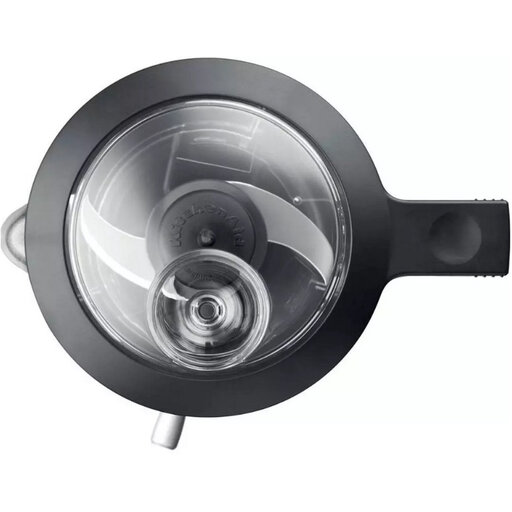 No image available
The product information lists cooked beans and blending among the suggested uses; the pulse function can help you adjust the texture as you prepare your food.
The bowl has a capacity of 830 ml, and the chopper has two speeds and a pulse function.
According to the product information, the parts are not dishwasher-safe.
There’s no set amount: the Consumers’ Association suggests that adding liquid can help when blending dry or hard ingredients. Add it as needed so you can keep the dip as thick as you like.
Follow the manufacturer’s cleaning instructions for the appliance. The Netherlands Nutrition Centre advises covering leftovers and refrigerating them within two hours of preparation; it recommends a fridge temperature of 4 °C. Also check the storage advice for the ingredients you use.
No. The Dutch Government states that statutory warranty in the Netherlands has no fixed time limit; what you can reasonably expect from the product is taken into account. A manufacturer’s warranty is additional. If the product is faulty, contact the retailer.
The Dutch Government says that, in many cases, a 14-day cooling-off period applies when you buy from a business at a distance. There are exceptions, so check the terms for the specific purchase.
The NVWA says CE marking is mandatory for electrical products covered by the relevant regulations. Parts that come into contact with food must also meet the requirements for food contact materials. These general product requirements don’t confirm that a specific model complies with them.