For white bean dip at a dinner party, choose your appliance based on the consistency you want and the quantity you plan to make. A jug blender is suited to liquid or semi-solid mixtures, while recipes for white bean dip also use a food processor. A hand blender may be suitable if you want to blend the ingredients in a suitable tall container. Compare the usable capacity and how easy it is to adjust the mixture as you blend and clean up afterwards; motor power alone won’t tell you which option is right for your dip.
Which option is right for you?
Fan of thick dips
You want to adjust the texture without adding more liquid than necessary. The Consumers' Association describes a blender jug as suitable for liquid or semi-solid preparations; recipes from Love and Lemons and The Clever Meal mention using a food processor or blender for white bean dip.
Cooking for a group
You want to make the planned quantity in manageable batches. So compare the usable or stated processing capacity, not just the total capacity shown for the jug. Philips Netherlands and Magimix list different total and usable capacities for the models mentioned.
Short on time for washing up
Consider which parts need washing after blending and how easily they detach. Braun Household Netherlands describes a detachable blending shaft for the MQ10.001MWH; check the cleaning instructions for your exact model.
What should you look for when choosing?
| What to consider |
What to look for |
Who is this important for? |
| Dip consistency |
Compare how each appliance handles semi-solid mixtures and whether you can scrape ingredients back into the mixture as you go. Don’t add extra liquid just because of the appliance you’re using. |
I want to blend a thick dip and adjust how smooth it is; around 36% of consumers prioritise control over texture. |
| Batch size |
First work out how much dip you need, then compare the usable or stated processing capacity. If necessary, plan to make several batches. |
For a dinner party, I want to make the required quantity in manageable portions; around 29% of consumers prioritise batch size. |
| Cleaning |
Check which parts can be detached and follow the cleaning instructions for the exact model. |
If I want to keep washing up to a minimum after the dinner party, I look for parts that are easy to reach; around 21% of consumers prioritise easy clean-up. |
| Use for other preparations |
Check which functions and attachments come with the model and whether you’ll want to use them for other dishes too. |
I want to use the appliance for other preparations after making the dip; around 14% of consumers particularly value versatility. |
How to avoid common buying mistakes
-
Assuming the jug’s full capacity is the same as its usable batch size
An appliance’s total capacity may be greater than the quantity it can effectively process. Philips lists a maximum capacity of 1.9 litres and a usable capacity of 1 litre for the HR2041/00; Magimix gives a total capacity of 1.7 litres and a processing capacity of 600 ml for the Mini Plus.
Compare the relevant capacity of the exact model with your recipe, and allow for extra batches if it won’t hold enough.
A smaller processing capacity may mean you need to make more than one batch for your dinner party.
-
Assuming more watts or an old award means better dip
The Consumers' Association says power isn’t the only measure of performance and assesses different preparations separately. An award from a different time or for a different use doesn’t automatically tell you how well an appliance will make white bean dip.
Compare the method, usable capacity and controls. Keep manufacturers’ claims separate from independent test results.
-
Choosing accessories without considering how you’ll use and clean them
A food processor with several bowls or attachments may mean more parts to store and clean. Magimix gives the Mini Plus a processing capacity of 600 ml.
Only choose extra attachments if you’ll use them after the dinner party too, and check which parts are included with the model you’re considering.
More parts can mean extra cleaning and storage; a smaller processing capacity may also mean making several batches.
Brands to consider
Philips
The 3000 Series HR2041/00 is a jug blender for liquid or semi-solid mixtures.
- Philips lists 450 W, a pulse setting and a usable capacity of 1 litre, compared with a maximum capacity of 1.9 litres.
- The maximum capacity isn’t a guaranteed quantity of white bean dip; these specifications aren’t based on an independent dip test.
Braun
The MultiQuick 1 MQ10.001MWH is a hand blender for anyone who wants to blend ingredients in a separate, suitable bowl.
- Braun lists a detachable blending shaft and one speed.
- Check the exact model and its cleaning instructions; the specifications don’t show an independently tested result for white bean dip.
Tefal
The Blendforce II BL420838 is a jug blender for anyone who also wants to use it for other blending tasks.
- Tefal lists a 2-litre plastic jug, two speeds, a pulse setting and a removable blade holder.
- There’s no evidence that the jug’s capacity is the usable quantity for white bean dip.
Magimix
The Mini Plus represents the food processor option for anyone who wants a bowl and additional kitchen functions.
- Magimix lists a 0.5-litre mini bowl, a 1.7-litre main bowl and a processing capacity of 600 ml.
- The specifications aren’t based on a comparative dip test; check which parts are included with the model you choose.
Bosch
The MSM66130 is a hand blender option for anyone who values adjustable speed.
- Bosch lists 12 speed settings, a turbo setting, a whisk and a splash guard for this model.
- These product specifications don’t prove that it performs better with white bean dip.
Products at Joybuy
This selection includes blenders, a food processor and a chopper for anyone looking for an appliance to make white bean dip or a similar purée.
 No image available
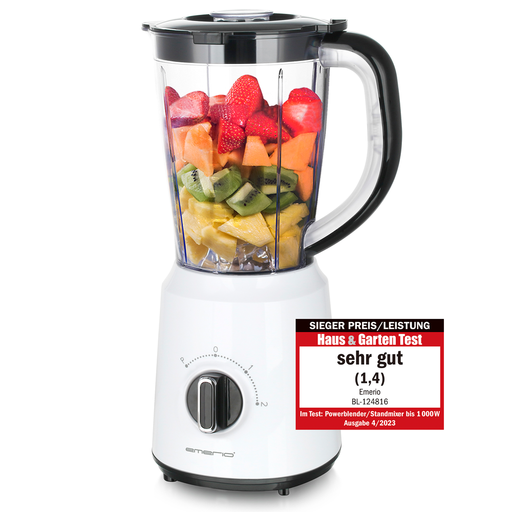
Emerio BL-124816.7 blender, 1.5 l
Could be suitable if you’re looking for a blender that, according to the product information, can also be used for puréeing and making sauces.
The product name lists a capacity of 1.5 l and two speeds.
View at Joybuy
 No image available
Ochama food processor, 750 W, 1.8 l
Could be suitable if you want to process white bean dip in a bowl and are looking for a food processor that, according to the product information, can also blend and chop.
The product name lists 750 W and a capacity of 1.8 l. The instructions limit continuous blending to 60 seconds per cycle and recommend letting the appliance cool between demanding tasks; don’t process boiling liquids.
View at Joybuy
 No image available
Ochama multifunction blender, 600 W, 1.5 l
Could be suitable if you’re looking for a blender whose product information mentions puréeing.
The product name lists 600 W, a capacity of 1.5 l and three speeds.
View at Joybuy
 No image available
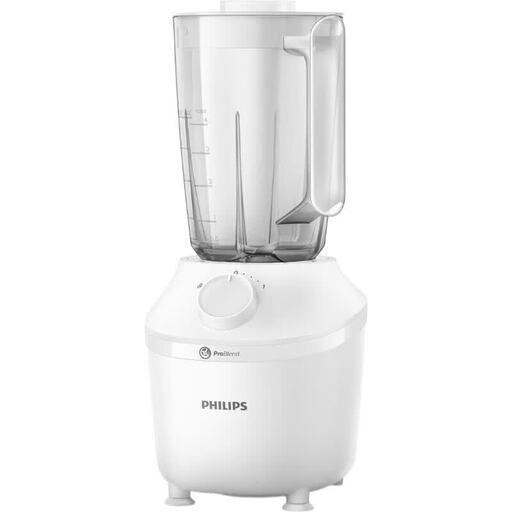
Philips 3000 Series Blender HR2041/00
Could be suitable if you’re looking for a jug blender and its usable capacity matches your recipe.
Philips lists a usable capacity of 1 litre compared with a maximum capacity of 1.9 litres, 450 W, one speed and a pulse setting. Don’t process ingredients hotter than 60 °C, and don’t run the appliance for more than two minutes at a time.
View at Joybuy
 No image available
Bear Chopper QSJ-D03W5, 2 l, 300 W
Could be suitable if you’re looking for a chopper with a clear bowl for dips or purées.
The product name lists 2 l, 300 W and stainless steel blades; the product information mentions a glass bowl and two speeds. Use short pulses and don’t run the appliance for more than 30 seconds at a time.
View at Joybuy
Frequently asked questions
Do I need a powerful blender with an ice crusher for white bean dip?
Not just for this dip. The Consumers' Association says a standard blender is suitable for mixing and puréeing when you don’t need special functions. For a thick dip, focus on the method and the texture you want.
How can I make a thick dip more even without simply adding liquid?
Switch off the appliance before opening the bowl, then scrape the ingredients from the sides back into the mixture. A white bean dip recipe from The Clever Meal describes doing this when using a blender or food processor; also follow your appliance’s safety instructions.
How long can I leave white bean dip out for guests?
The Netherlands Nutrition Centre advises that leftovers should not be left out of the fridge for more than 2 hours. Its general advice is to keep leftovers in the fridge for 2 days; follow stricter guidance if other ingredients require it.
Who should I contact if my blender develops a fault after purchase?
According to the Dutch government, if there’s a problem with a product, the seller—not the manufacturer—must provide a solution. If your appliance develops a fault, contact the seller and explain the problem.


