
Vandaag of morgen in huis

Kwaliteit gegarandeerd

Welkomstaanbiedingen ontgrendelen: GRATIS bezorging | Tot 80% korting | Gratis 30 dagen JoyPlus-proefperiode
Download de app
A wheeled trolley can make it much easier to move shopping, boxes, crates and household items. However, not every model is suitable for every surface or load. A lightweight shopping trolley for trips to the supermarket needs different features from a transport trolley for boxes or a warehouse trolley for regular, heavy-duty use.
Here are some common pitfalls to look out for when comparing trolleys:
Don’t just look at the maximum weight. Check which mode that rating applies to, as well as the size of the loading surface. A folding sack truck is handy for boxes and crates, but a narrow loading surface means you’ll need to position the load carefully to keep it stable.
With a 2-in-1 model, the load limits may differ between modes. For example, a transport trolley might carry 80 kg in sack-truck mode and 150 kg in platform mode. Don’t exceed the stated limit, and distribute heavy items as evenly as possible. A heavy-duty transport trolley isn’t automatically suitable for stairs, slopes or very uneven surfaces.
For everyday use on typical residential streets, wheel material and diameter are worth considering. According to product descriptions, EVA or TPR wheels may roll more quietly than hard plastic wheels. Larger wheels are generally more practical for kerbs and cobbles, but can make the folded trolley bulkier.
Also look out for:
A brake won’t stop a loaded trolley from tipping over. Put heavy items at the bottom, and don’t use the trolley on a steep slope if the instructions advise against it.
An aluminium trolley is often relatively lightweight. Steel can provide a sturdier frame, but it also adds to the trolley’s own weight. So check the balance between its weight, load capacity and folded dimensions.
If you’re considering a folding trolley, it’s useful to measure these spaces in advance:
For a shopping bag, capacity and weather protection are important. Water-repellent fabric can help in light rain, but it isn’t the same as a fully waterproof design. Also check whether you need zipped pockets, flaps or side pockets.
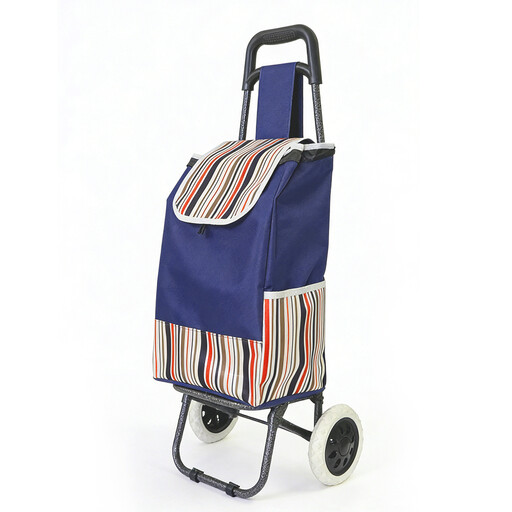
Why it suits this type of shopper: The removable bag makes this model suitable for shopping, as well as occasionally transporting boxes or crates.
The product description specifies both the bag’s 30-litre capacity and the 25 kg load limit in hand-truck mode.
30L Oxford bag, steel frame, EVA wheels and a flat-folding design.
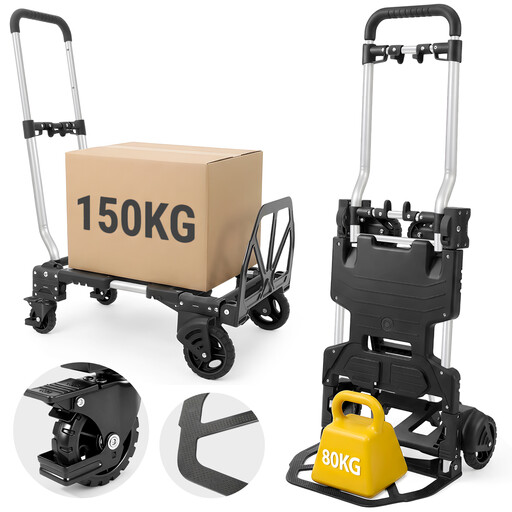
Why it suits this type of shopper: This model combines a sack truck and platform trolley, making it a versatile choice for moving different types of loads.
The product details distinguish between 80 kg in sack-truck mode and 150 kg in platform mode, making the load limits easier to assess.
Aluminium frame, adjustable handle, TPR wheels with double bearings and an integrated parking brake.
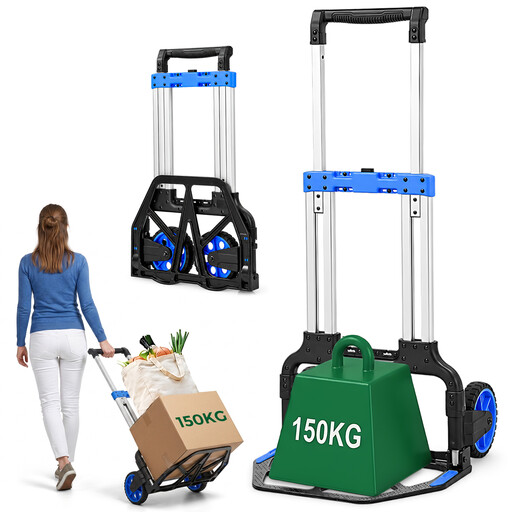
Why it suits this type of shopper: A good option for moving house, warehouse work, garden supplies or heavier boxes when you still want a compact design.
The stated load capacity, adjustable heights and safety warning about even weight distribution are listed separately.
Aluminium frame, non-slip loading surface, TPR wheels and a handle that adjusts to 77 or 107 cm.
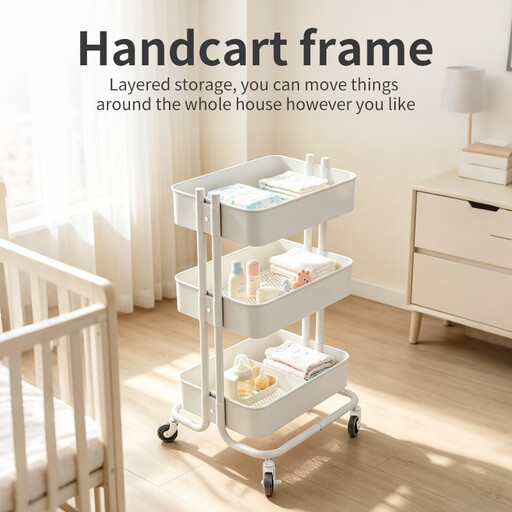
Why it suits this type of shopper: This household trolley is designed for mobile storage in the kitchen, bathroom, bedroom, study or salon.
The shelves have an open design, and the product information states a maximum load of 7 kg per tier. This makes it easy to see what the trolley is suited to.
Three mesh tiers, six-centimetre swivel wheels and two lockable brakes.
We’ve put together a complete, up-to-date list of products that meet these strict selection criteria and current European safety regulations.
It depends on the model and the mode you’re using. A shopping trolley might carry 25 kg, while an aluminium hand truck may be rated for 80 or 150 kg, according to its product specifications. Always check whether the stated weight applies to sack-truck mode, platform mode or the bag.
Not every trolley is designed for stairs. Wheels with extra grip or a larger diameter may make it easier to get over kerbs and uneven paving, but a loaded trolley can become unstable on stairs. Check the instructions and, where necessary, lift the trolley over the steps.
Remove dirt from the wheels and folding joints, check the screws and axles regularly, and dry the metal parts after they come into contact with moisture. Some fabric bags can be hand-washed; follow the care instructions provided. When not in use, it’s best to store a storage trolley or transport trolley somewhere dry and folded away.
