
Vandaag of morgen in huis

Kwaliteit gegarandeerd

Welkomstaanbiedingen ontgrendelen: GRATIS bezorging | Tot 80% korting | Gratis 30 dagen JoyPlus-proefperiode
Download de app
Wet food can be useful for cats that drink very little, enjoy variety or struggle with hard biscuits. However, attractive packaging does not automatically mean that a product is right for your cat. The difference often comes down to life stage, nutritional status and moisture content.
As a Joybuy Product Recommendation Officer, I therefore focus mainly on verifiable information on the label: complete or complementary cat food, ingredients, moisture content, portion size and texture. This helps you avoid paying for packaging that does not suit your cat’s everyday needs.
Words such as “chicken”, “salmon” or “tuna” on the front of the pack do not always mean that the food mainly consists of that animal species. Check the ingredients list and the legally defined product type. Complete cat food is intended as daily nutrition for the stated life stage. Complementary cat food or a treat is not suitable as a complete meal.
For example, Purina One Hydralife with chicken or salmon flavour is complementary wet food for adult cats. According to Purina’s product information, it is intended as a source of additional water and can be mixed with dry food. It therefore does not replace a complete main meal.
Wet food generally contains more moisture than dry food, but the amount varies from recipe to recipe. For example, the product information lists a moisture content of 82% for Felix in jelly, 84.5% for Whiskas Senior and 86% for INABA Churu. These are verifiable values, but they do not mean that a product treats medical problems.
Always make sure your cat has access to fresh drinking water. If you notice ongoing changes in drinking, eating or urination, advice from a vet is more appropriate than switching products because of a marketing claim.
A cat food multipack may seem like good value, but pay attention to the number of grams in each pouch or tin. According to the packaging, an adult cat weighing around 4 kg may receive up to 3 to 4 85-gram pouches of some Felix products per day. With a large pack of 44 × 85 grams, it is therefore important to calculate how many days it will last.
Once opened, wet food should be covered and kept in the fridge, then used within the period stated on the label. This period may vary from product to product. A large tin is not always practical for one cat; individual cat food pouches can help reduce waste.
First, choose between:
Also check the feeding guidelines for your cat’s weight, activity level and whether they have been neutered or spayed. The guidance on the packaging is a starting point; individual requirements may vary.
Compare the analytical constituents of each product. Pay particular attention to:
A fish recipe may appeal to cats that enjoy fish-based cat food, but check the ingredients if your cat reacts sensitively to fish. The same applies to chicken-based cat food and other poultry varieties.
The texture often determines whether a cat accepts the food:
It is best to introduce a new texture gradually. You can mix a small amount with your cat’s familiar food and monitor their appetite and stools.
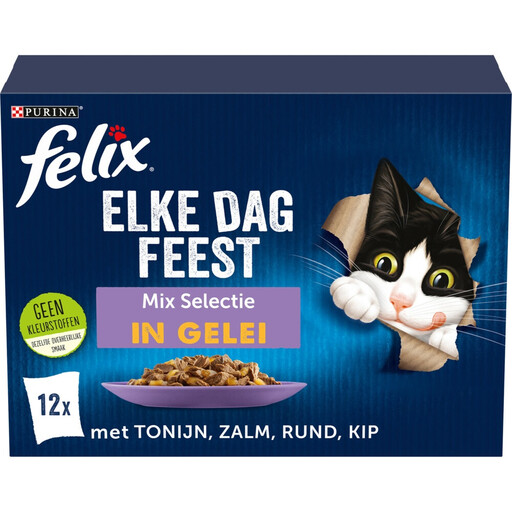
Why it suits this profile: A multipack containing 12 portioned 85-gram pouches offers several flavours and a manageable amount per meal.
The packaging states that this is complete food for adult cats. The portions make it easier to limit leftovers.
Variety in jelly, 82% moisture according to the product information and individual pouches for easy storage.
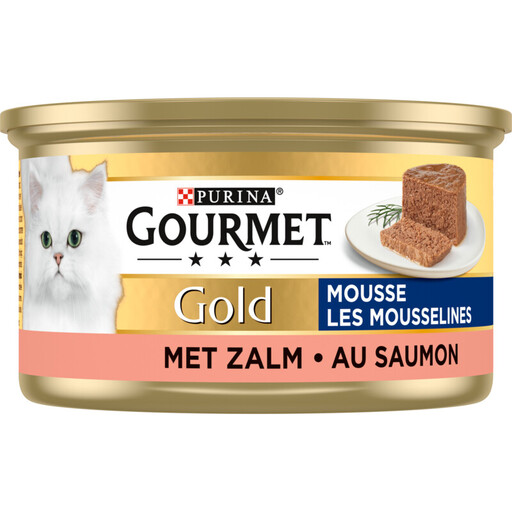
Why it suits this profile: The soft mousse texture is suitable for adult cats that prefer smooth food to pieces in jelly.
The product information clearly states the life stage and type: complete food for adult cats in mousse form.
85 grams per pack, 77.5% moisture and 10.5% protein according to the available product data.
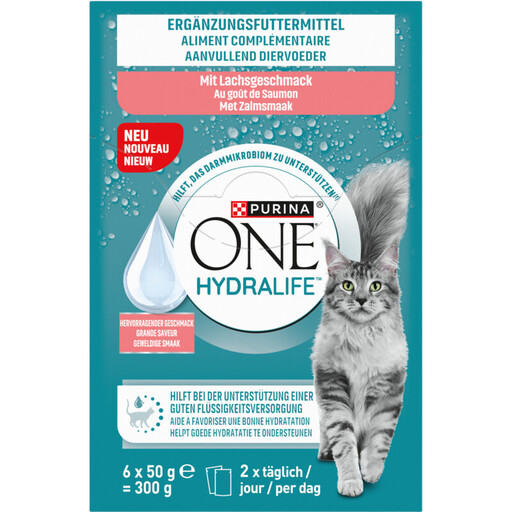
Why it suits this profile: For adult cats whose owners want to provide extra moisture alongside their main food.
The packaging explicitly describes it as complementary food. This makes it clear that it is not intended to replace complete cat food.
Salmon flavour, suitable for serving on its own or mixing with dry food, and intended as a daily source of additional water.
We have put together a complete, up-to-date list of products that fully meet these strict selection criteria and the applicable European safety regulations.
Yes, provided the label states that it is complete food for the correct life stage. A complementary product, mousse treat or Hydralife-style water supplement must not replace the full meal. Follow the feeding guidelines and adjust the amount according to your cat’s weight and activity level.
Keep leftovers covered in the fridge. Many product packs recommend using them within 24 to 48 hours; always check the product’s own label. Do not leave food at room temperature for extended periods and preferably serve an appropriate portion.
That depends on your cat’s preference. Jelly contains soft pieces and has a different texture from mousse. Also consider the nutritional status, moisture content, ingredients and portion size. When changing over, give your cat time to get used to the new texture.
