
Vandaag of morgen in huis

Kwaliteit gegarandeerd

Welkomstaanbiedingen ontgrendelen: GRATIS bezorging | Tot 80% korting | Gratis 30 dagen JoyPlus-proefperiode
Download de app
A wet and dry vacuum cleaner can tackle crumbs, hair and spilled liquids in one pass. However, not every model is right for every home. A cordless wet and dry vacuum cleaner for hard floors works differently from a robot vacuum with a mopping function or a large carpet cleaner.
As Joybuy Product Recommendation Officer, I focus on the product details that matter in practice. This helps you see which specifications are genuinely useful and which marketing claims are worth checking before you buy.
A high figure in Pa, such as 16,000 or 23,000 Pa, sounds impressive. But this figure alone doesn’t tell you how well a vacuum will perform day to day. The brush, airflow, water distribution, floor clearance and filtration all matter too. What’s more, Pa ratings aren’t always directly comparable between brands.
Look at the combination of suction power, brush design and floor suitability. A hard-floor cleaner, for example, doesn’t need the same features as a carpet vacuum.
A self-cleaning floor cleaner can rinse its brush automatically. That doesn’t mean there’s nothing left for you to do. You’ll usually need to empty the dirty water tank after every cleaning session, and rinse and dry the filters thoroughly.
Some models also dry the brush with warm air. Always check how long this takes, how noisy it is and whether you still need to check the appliance by hand.
A quoted run time often applies to a specific mode. The battery may run out faster in turbo mode. Check the charging time and the capacity of the clean and dirty water tanks too. For a flat, 25 to 30 minutes may be enough, while a large house may need a longer run time or a robot model with a charging station.
First, check whether the appliance is designed for:
Many stick vacuums with a mopping function are designed for hard floors and may be less suitable for rough surfaces. Don’t assume you can use a wet and dry model on untreated wood or carpet. Always follow the product manual.
For cordless models, these figures are useful to check:
A lightweight model weighing around 4 kg is easier to use every day. A larger tank means fewer interruptions, but often makes the appliance heavier.
If you have pets, look for an anti-tangle brush, easy disassembly and good reach along skirting boards. A 180° flat design is useful for cleaning under furniture. Check the appliance’s height when reclined too.
Automatic mop washing or a self-cleaning programme is handy, but check whether the system also dries the mop. A roller left wet can start to smell unpleasant more quickly. Only use cleaning solution if the manufacturer allows it. Tineco, for example, warns against using strongly foaming liquids in appliances that aren’t designed for them.
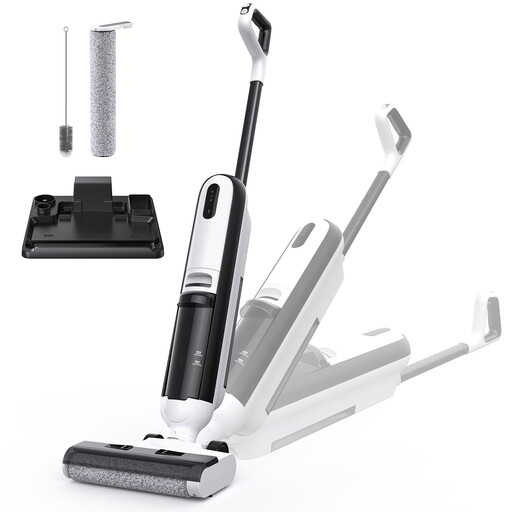
Why it suits this profile: A compact cordless model for everyday cleaning on hard floors, with a quoted run time of 30 minutes and a weight of 4 kg.
The specifications list a 540 ml clean water tank and a 460 ml dirty water tank. The self-cleaning programme doesn’t replace emptying and cleaning the appliance after use.
16,000 Pa according to the product information, cordless operation and separate clean and dirty water tanks.

Why it suits this profile: A robot solution for households that want to schedule cleaning through an app and spend less time vacuuming and mopping by hand.
The OMNI station functions are clearly described: emptying dust, washing the mop with 75 °C water and drying it with warm air. The tanks and dust bag still need regular attention.
20,000 Pa according to the product description, automatic mop cleaning, map-based navigation and carpet detection.
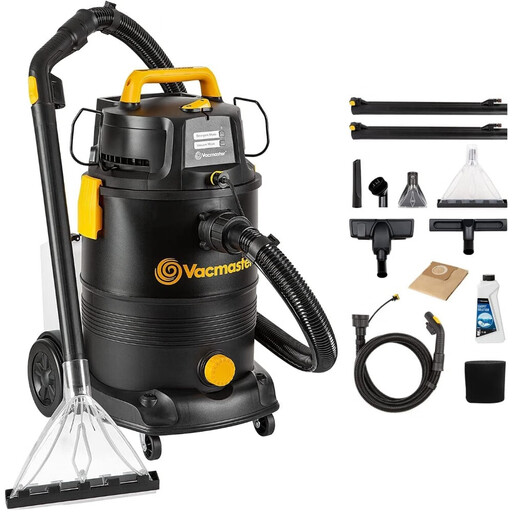
Why it suits this profile: Designed for bigger cleaning jobs, carpets, car upholstery and furniture. This is a corded model, so it doesn’t offer cordless freedom of movement.
It does more than clean floors: the description covers wet and dry vacuuming as well as carpet cleaning. The large tanks mean fewer interruptions, but you’ll need to empty and maintain the appliance after use.
1,300 W motor, 30-litre collection tank, 6-litre cleaning solution tank and HEPA exhaust filter, according to the product specifications.
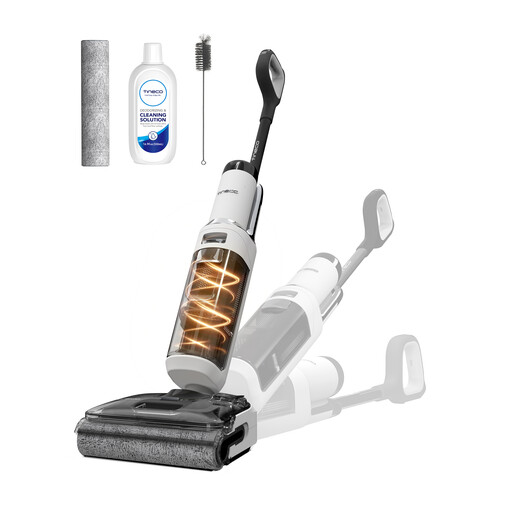
Why it suits this profile: For anyone who wants to clean quickly every day and reach under lower furniture without using a separate mop and vacuum cleaner.
According to the product information, the 180° design has a height of 13 cm when laid flat. The quoted run time is 40 minutes, so plan how you’ll tackle larger spaces based on the mode you choose.
180° flat design, three-sided edge cleaning and a 5-minute FlashDry self-cleaning programme, according to the product details.
We’ve put together a complete, up-to-date list of products that meet these strict selection criteria and current European safety requirements.
That depends on the model and the type of laminate. Choose an appliance with adjustable water flow and check whether the manufacturer lists laminate or sealed wood as a suitable surface. Don’t use too much water or leave liquid on the floor.
Its lifespan depends on how you use it, as well as the battery, brush and maintenance. Empty the dirty water tank after every cleaning session, rinse parts according to the manual and only put filters back once they’re completely dry. Also check whether replacement rollers, filters and batteries are available.
As well as the purchase price, you’ll need to factor in electricity, cleaning solution, filters, brushes and any dust bags. A robot with an automatic emptying station can save time, but uses replaceable dust bags. A manual model often has lower running costs, but you’ll need to do more of the maintenance yourself. So look at the total cost of ownership, not just the price at the time of purchase.
