
Vandaag of morgen in huis

Kwaliteit gegarandeerd

Welkomstaanbiedingen ontgrendelen: GRATIS bezorging | Tot 80% korting | Gratis 30 dagen JoyPlus-proefperiode
Download de app
A wet and dry vacuum cleaner can tackle dust, pet hair, spilled liquids and sometimes stains too. However, these appliances vary considerably in how they are used. A cordless floor cleaner for everyday maintenance is not the same as a wet and dry vacuum cleaner for the garage, while a carpet cleaner works differently again from a vacuum cleaner with a mopping function.
Choosing the wrong model often results in an appliance that is barely used after a few months. So do not focus only on terms such as “powerful suction” or “multifunctional”. Above all, consider the type of surface, capacity, maintenance requirements and accessories.
A floor cleaner with a rotating brush and water tank is generally intended for sealed hard floors, such as tiles, laminate, vinyl or treated wood. Its performance may be disappointing on deep-pile carpet. A traditional wet and dry vacuum cleaner with a suitable floor nozzle is more suitable for coarser dirt, workshops and garages.
Always check the stated surface recommendation. If it only says “hard floors”, do not automatically use the appliance as a vacuum cleaner for both carpets and hard floors.
A figure in kPa or Pa tells you something about negative pressure, but not everything about practical cleaning performance. The brush, airflow, filter and nozzle all help determine how much dirt is picked up. With a spot cleaner, the spray function and the extraction of dirty water are also important.
So do not compare only 15, 17 or 22 kPa. Also consider the type of brush, water distribution, filtration system and available accessories.
A self-cleaning vacuum cleaner usually rinses the brush or internal tube. You still need to empty and clean the dirty-water tank afterwards. Filters and other parts must be allowed to dry completely according to the instructions. Neglected maintenance can lead to unpleasant odours, reduced airflow and lower suction performance.
An appliance with an automatic cleaning programme is therefore convenient, but it is not maintenance-free.
First, choose the appliance based on its main purpose:
Pay attention to the manufacturer’s instructions when cleaning wooden floors. Not every floor is suitable for large amounts of moisture.
A small appliance is lightweight and easy to manoeuvre, but it needs emptying or refilling more often. For a flat, a clean-water tank holding a few hundred millilitres may be sufficient. Larger tanks are more practical for bigger areas or several rooms.
With cordless models, run time is more important than battery capacity alone. Check whether the stated run time applies to the low or maximum setting. A model offering 40 to 50 minutes of use may be suitable for everyday maintenance, while a corded model will continue working for as long as a power socket is available.
A wet and dry vacuum cleaner must use the correct filter for the selected mode. Some models use a foam filter for liquids and a cartridge or dust-bag filter for dry dirt. Only refit filters once they are completely dry.
Do not vacuum up flammable liquids, hot ash, sharp objects or hazardous chemicals. Always follow the instructions and use only cleaning products approved for the appliance. According to Tineco’s product information, for example, the Floor One Switch S6 Stretch must not be used with strongly foaming products unless they are specifically intended for Tineco appliances.
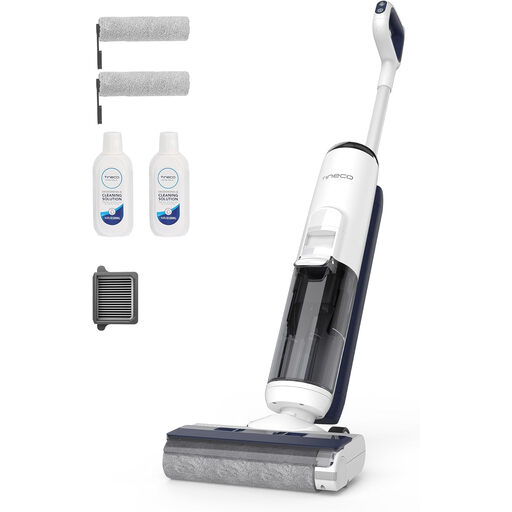
Why it suits this profile: This cordless model is designed for everyday cleaning of indoor hard floors, such as tiles, laminate and sealed wood. According to the product information, it weighs 4.3 kg.
The product description clearly limits its use to hard floors. This means you will not buy it expecting it to also be a full-size carpet cleaner.
Cordless design, self-cleaning, two additional roller brushes and cleaning solution included.
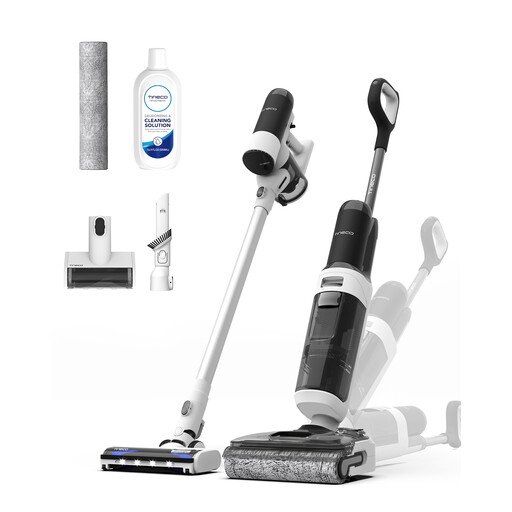
Why it suits this profile: The combination of floor cleaning and a 180° flat design is ideal for households that want to clean hard floors and reach awkward spaces beneath furniture.
The instructions specify limits for the dirty-water level and foaming products. This makes it clear that correct use and maintenance are part of achieving the best performance.
Up to 65 minutes of run time according to the product listing, 180° flat-lay cleaning and edge cleaning on both sides.
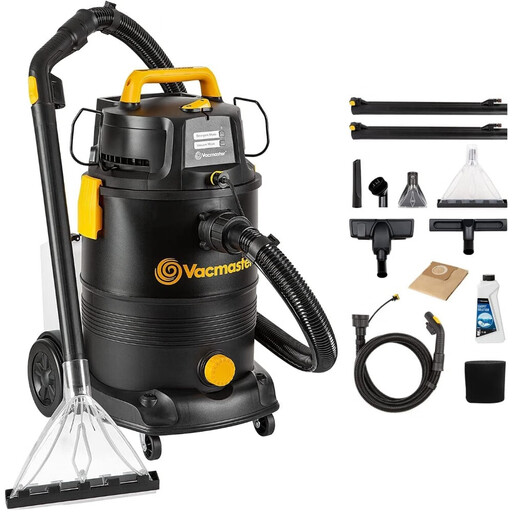
Why it suits this profile: This corded model is designed for carpets, upholstery, car interiors and larger cleaning tasks. Its tank capacity allows for longer cleaning sessions.
The wet, dry and carpet-cleaning modes use different filters. This prevents the assumption that one universal setting is suitable for every type of dirt.
1300 W motor, 30-litre collection tank, 6-litre cleaning-solution tank and a multi-layer filtration system with HEPA exhaust filter, according to the product information.
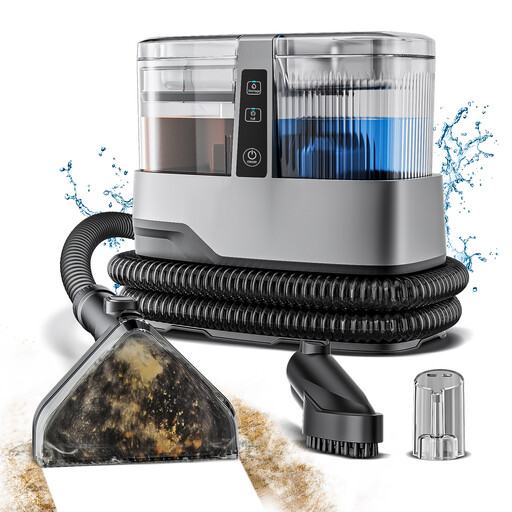
Why it suits this profile: This handheld spot cleaner is practical for spilled drinks, pet accidents, furniture, stair treads and car seats.
The appliance is designed for spot cleaning rather than entire floors. Its function is therefore suited to stains on textiles instead of everyday vacuuming.
600 W power, stated suction power of 17 kPa, dual tanks and a 5-metre cord, according to the product description.
We have put together a complete, up-to-date list of products that fully meet these strict selection criteria and the applicable European safety regulations.
That depends on the model. A carpet cleaner with a spray and extraction function is designed for textiles. According to the product instructions, a floor cleaner for hard floors often must not be used on rough or soft surfaces. Always check the surface recommendation.
In addition to the purchase price, electricity, cleaning solution, filters, dust bags and replacement brushes may all add to the cost. A corded model uses electricity while cleaning, while a cordless model needs charging and may require a new battery after some time. Regular maintenance helps prevent unnecessary loss of suction power.
Its service life depends on how often it is used, maintenance, storage and workload. An appliance used for daily mopping is subjected to different demands from a model used occasionally for stains or workshop dirt. Empty tanks immediately, avoid overloading the appliance and store it in a dry place in accordance with the manufacturer’s instructions.
