
Vandaag of morgen in huis

Kwaliteit gegarandeerd

Welkomstaanbiedingen ontgrendelen: GRATIS bezorging | Tot 80% korting | Gratis 30 dagen JoyPlus-proefperiode
Download de app
A wet and dry vacuum cleaner might seem like a handy replacement for both your vacuum cleaner and mop. One cordless appliance can tackle dry dirt, hair and spills. However, not every model is designed for the same floors or cleaning tasks. A model that works well on tiles may be less suitable for carpets, wooden floors or larger areas.
As Joybuy Product Recommendation Officer, I review the key specifications of popular models. This helps you see which features make a practical difference, and which marketing claims are best checked against the technical details.
Manufacturers use different units of measurement, such as Pa, kPa, watts or Air Watts. These values are not directly comparable. What’s more, a high Pa rating doesn’t automatically tell you how well a brush picks up hair or how dry the floor will be afterwards.
So, also look at:
The stated runtime is usually the maximum under certain conditions. In an intensive or turbo mode, it may be shorter. Check the charging time too. Four hours of charging for 30 minutes of use calls for different planning than a model with a longer runtime.
For a flat, 25 to 35 minutes may be enough. In a multi-storey home or a household with pets, a longer runtime, a replaceable battery or an extra charging option can be more practical.
A self-cleaning floor washer can flush the brush and internal pipes after use. However, you’ll still need to empty and dry the dirty water tank, filters and brush. Stagnant dirty water can cause unpleasant smells.
So, check whether the product:
A vacuum cleaner and mop in one is mainly designed for hard, water-resistant floors such as tiles, vinyl, properly finished laminate and sealed wood. Check the manual before using a floor cleaner with a mopping function on delicate wooden floors.
Look out for the difference between:
A stick vacuum with a mopping function can be handy for crumbs and small spills, but it won’t always replace a traditional vacuum cleaner for deep-pile carpets.
A larger clean water tank means less frequent refilling. A large dirty water tank means fewer interruptions, but it often makes the appliance heavier. Consider the balance between capacity and weight.
Examples from the range:
Always check whether a stated tank capacity refers to clean water, dirty water or dry dirt.
A wet and dry floor cleaner contains water, so it’s often heavier than a regular stick vacuum cleaner. A weight of around 4 to 5 kilos can be easy to handle on one floor, but you’ll notice it on the stairs.
Noise figures should also be read carefully. For example, the Dreame H14 Dual lists a noise level of 55 dB in its product specifications, while some sources state a maximum level of 81 dB. Check the conditions under which the measurement was taken.
A model with a 180° recline can reach under low furniture. The Tineco Floor One Stretch S6 lists a reclined cleaning mode with a height of 13 cm. That’s handy for cleaning under sofas, but check the clearance beneath your furniture first.
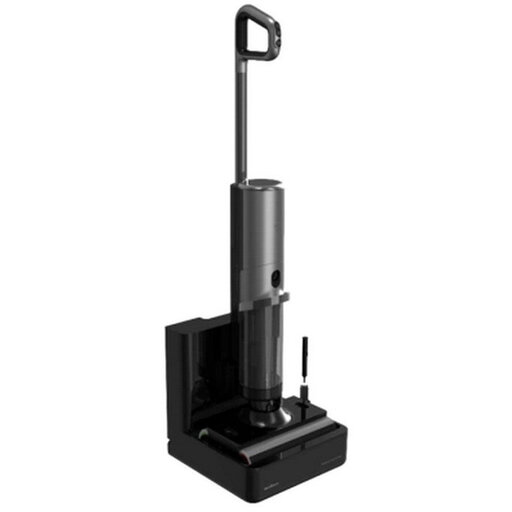
Why it suits this profile: This model combines cordless vacuuming and mopping for everyday cleaning on hard floors. It’s listed as weighing 2.3 kg, with a runtime of up to 40 minutes.
The product specifications clearly state a tank capacity of 0.6 litres, a runtime of up to 40 minutes and a noise level of 74 dB. This lets you weigh up capacity, coverage and noise before you buy.
Cordless design, bagless dust container, and a combination of vacuuming and mopping.
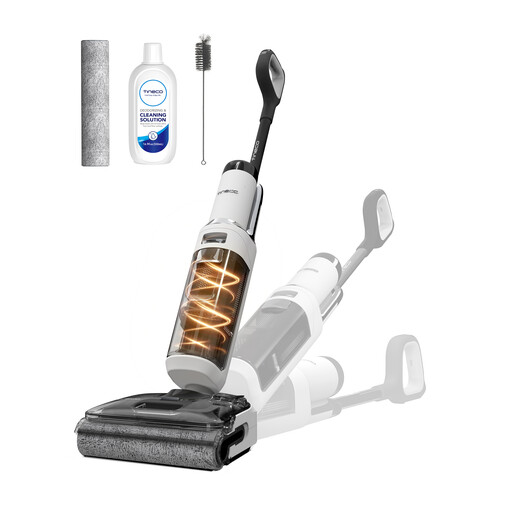
Why it suits this profile: The 180° recline, cordless operation and self-cleaning function make it a good fit for homes with lots of hard floors and low furniture.
The product information gives specific details, including a 40-minute runtime, a weight of 4.5 kg, three-sided edge cleaning, and a drying and charging station.
Designed for hard floors, with a replacement brush, drying filter, cleaning accessories and cleaning solution.
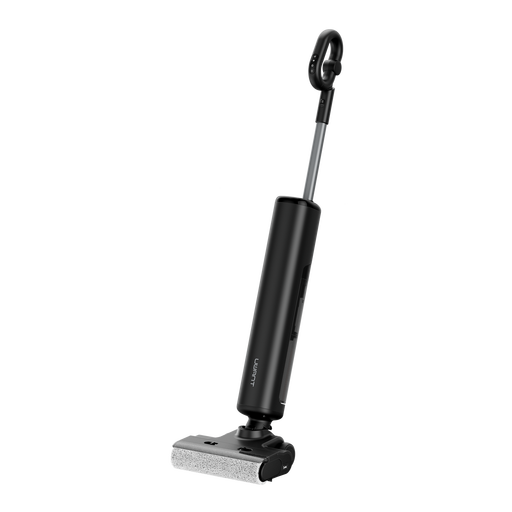
Why it suits this profile: This model is designed for large hard floors, hard-to-reach spots and more intensive everyday use. The product information lists 23,000 Pa suction power, a 180° recline and double-edge cleaning.
The stated specifications include three water levels, automatic self-cleaning and hot-air drying. This gives you a clearer idea of the maintenance routine than a general hygiene claim alone.
180° recline, double-edge cleaning, hot-air self-cleaning, and automatic adjustment of suction power and water flow according to the product description.
We’ve put together a complete, up-to-date list of products that meet these strict selection criteria and the applicable European safety regulations.
A wet and dry vacuum cleaner will keep working well for longer if you follow a simple routine after every cleaning session:
Also check which floors the appliance is suitable for. Many models are designed for hard floors, not untreated wood, deep-pile carpets or surfaces that can’t withstand moisture.
It depends on your floors. For tiles, vinyl and sealed laminate, a wet and dry floor cleaner can combine many everyday tasks. For carpets, stairs and furniture, a regular vacuum cleaner or handheld vacuum is often more practical.
As well as the purchase price, you’ll need to factor in electricity, cleaning solution, filters and replacement rollers. A bagless model doesn’t use dust bags, but filters and brushes are still wear-and-tear parts. So, check the availability and price of replacement parts.
Its lifespan depends on charging cycles, maintenance, how often you use it, and whether batteries and parts are available. You mustn’t open or replace a built-in lithium-ion battery yourself. Follow the maintenance instructions and store the appliance dry and empty on its charging station.
