
Vandaag of morgen in huis

Kwaliteit gegarandeerd

Welkomstaanbiedingen ontgrendelen: GRATIS bezorging | Tot 80% korting | Gratis 30 dagen JoyPlus-proefperiode
Download de app
When you’re looking for wet food for dogs and cats, you’ll quickly come across terms like “natural”, “premium” and “complete nutrition”. On their own, these words don’t tell you much. The real difference usually lies in the animal species, life stage, composition, portion size, and whether the food is complete or complementary.
A wrong choice can lead to waste, a difficult transition, or a product that doesn’t fit your dog or cat’s daily diet. With these checkpoints, you can compare dog food, cat food, wet dog food and wet cat food on practical grounds.
A pack labelled as fish, beef or chicken might sound tempting, but always check the legal description. If the label says complete and balanced food or “complete nutrition”, it’s intended as a daily main meal for the stated animal species and life stage. If it says complementary cat food, treat or soup, it’s not designed to cover all daily nutritional needs on its own.
For example, Felix Soup Fish is described in the product information as complementary food for adult cats. The recommended amount is one pouch per 4 kg of body weight per day, as a supplement to a complete food.
Dog food and cat food are not automatically interchangeable. What’s more, puppies, kittens, adult animals and senior dogs all have different nutritional guidelines. So check before you buy:
Puppy food and kitten food are specifically formulated for young animals. For an older dog, a product like senior dog food with a soft texture can be more practical, but always follow the feeding guidelines on the packaging.
A big bag or tin might seem good value, but once opened, wet food usually needs to be refrigerated and used within the stated time. For a single-cat household, smaller portions can help reduce waste. A multipack of pet food is handy when you regularly use the same varieties or feed several animals.
Also pay attention to the net weight per pouch or tin. A 50 g portion, like Gourmet Mon Petit, works differently in your daily planning than a 405 g tin.
This is the first thing to check. Choose complete food when the product needs to replace a main meal. Complementary cat food, such as a soup or liquid treat, should be given alongside a complete base diet.
Also check the analytical constituents, such as protein, fat, crude fibre, crude ash and moisture. These values make products easier to compare, but they don’t alone tell you whether a food suits your pet. Weight, age, activity and any sensitivities remain important.
Don’t just look at the flavour name on the front. Read the ingredients list. “With beef” or “with chicken” doesn’t always mean that ingredient makes up the largest part of the recipe. With Whiskas Junior Classic Selection, for example, each variant states a specific percentage of beef, chicken, lamb or poultry.
For Herrmann’s Manufaktur Pure Goat Meat Dog Food, the product information lists a composition of 100% goat: muscle meat, lung and heart. The analytical data includes 10.4% crude protein, 5% crude fat and 79.9% moisture. Information about organic quality and production in Germany comes from the brand’s product description; always check the label for current details.
Dog pâté and cat pâté are soft and smooth. That can be useful for animals that prefer not to eat large chunks. Food in sauce or jelly often contains pieces and is suitable when your pet accepts that texture. Examples include dog food in sauce, cat food in sauce and fish varieties.
Once opened, the general rule is: cover, refrigerate and use within 48 hours, unless the label says otherwise. Serve wet food at room temperature and always provide fresh drinking water.
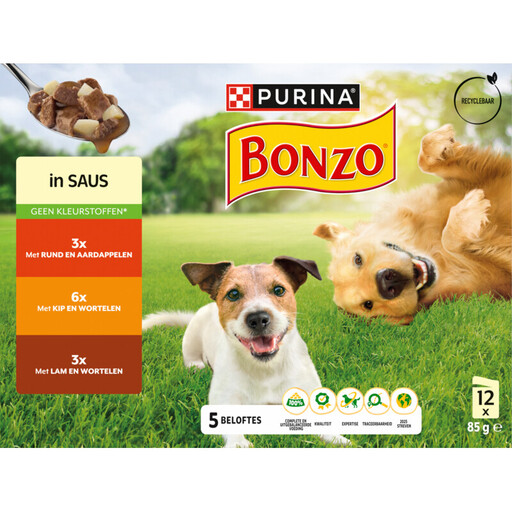
Why this fits the profile: The multipack contains portions in sauce for adult dogs and is practical when you want to alternate between different flavours.
The packaging states complete food for adult dogs, so you don’t accidentally use a complementary soup as a main meal.
12 portions with a sauce texture; designed to be served on its own or alongside dry food.
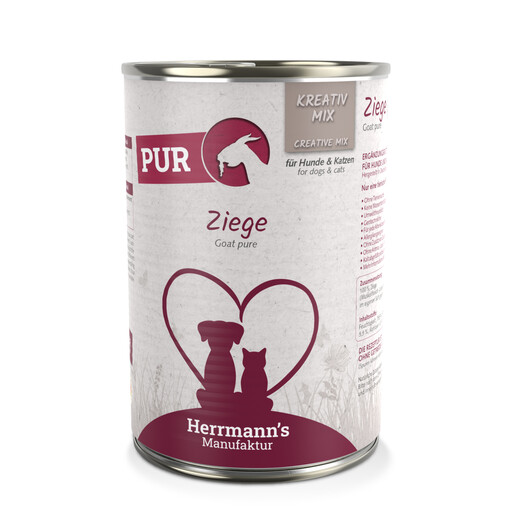
Why this fits the profile: For those looking for a recipe with one clearly named animal source and a limited ingredient list.
The ingredients list states 100% goat and specifies muscle meat, lung and heart; this is more verifiable than just a flavour name on the front.
400 g pack; product information states 100 kcal per 100 g and 79.9% moisture.
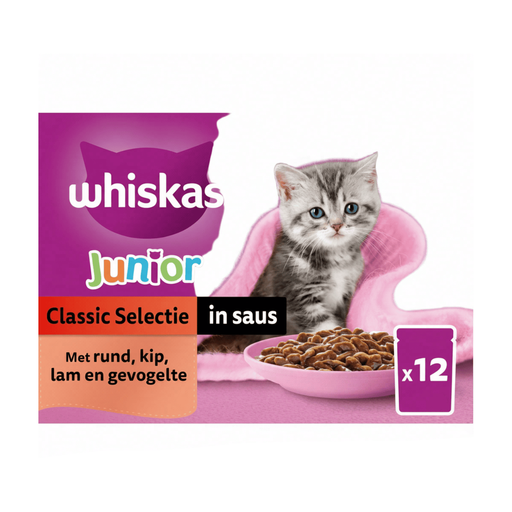
Why this fits the profile: A practical choice for kittens when you value portion sizes and age-specific labelling.
The product information states kitten food and provides separate guidelines for ages 3 to 12 months.
12 pouches of 85 g, four varieties and 67 kcal per pouch according to the product data provided.
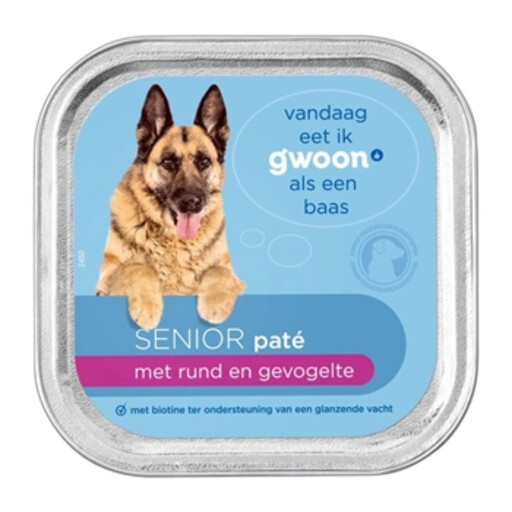
Why this fits the profile: The soft pâté texture and the 7+ designation appeal to owners looking for senior dog food.
The packaging is aimed at older dogs, so you’re not relying solely on the general term “dog food”.
150 g tin; pâté with beef and poultry; intended for senior dogs according to the product description.
We’ve put together a full, up-to-date list of products that fully meet these strict selection criteria and comply with current European safety regulations.
That depends on the description on the label. Complete wet food can be given as a daily main meal according to the feeding guidelines. A soup, treat or other complementary product should be used alongside complete food.
Store leftovers covered in the fridge and follow the instructions on the packaging. Many products recommend using within 48 hours. Throw away any food that has been out of the fridge for too long or smells unpleasant.
Compare the price per kilogram, not just the price per tin or pouch. Small portions can cost more per kilogram, but they sometimes reduce waste. Also calculate the daily amount based on your pet’s weight and activity. That way, you’ll get a more realistic picture of the cost when you want to buy pet food online.
