
Vandaag of morgen in huis

Kwaliteit gegarandeerd

Welkomstaanbiedingen ontgrendelen: GRATIS bezorging | Tot 80% korting | Gratis 30 dagen JoyPlus-proefperiode
Download de app
A glass of red wine on the light-coloured carpet, muddy paw prints on the tiles, or that unexplainable sticky spot on the sofa. For these kinds of cleaning jobs, a regular vacuum cleaner just won't cut it. A wet & dry vacuum, also known as a multi-surface cleaner, seems like the ideal solution. But the market is flooded with models that promise the world. Unfortunately, clever marketing and unclear specifications often lead to buyer's remorse.
As a Joybuy Product Recommendation Officer, I'll help you cut through the noise. We'll focus on the facts so you can choose a device that truly works for your situation. Let's start with the most common pitfalls.
Before you pull out your wallet, it's crucial to recognise three common misconceptions that manufacturers use to promote their products.
all-purpose vacuum: a carpet cleaner, spot cleaner, and vacuum with mopping function in one. While versatility is convenient, it sometimes comes at the expense of performance. For example, a model might have a powerful motor but a water tank that's too small, forcing you to constantly refill it. Or it might be too heavy and cumbersome to be practical as an upholstery cleaner.To avoid a bad purchase, focus on the specifications that matter in practice. These are the three most important points to check.
A wet & dry vacuum works with two tanks: one for clean water (often with a cleaning solution) and one for the vacuumed dirty water.
spot cleaner), a tank of 0.5 to 1 litre is sufficient. For cleaning an entire carpet or a large floor, you'll need at least 1.5 litres to avoid constant refilling. Large workshop vacuums for the garage or workspace often have tanks of 20 litres or more.Think carefully about where you will use the device most often.
upholstery cleaner is a better choice in that case.wet & dry vacs have a blower function. This is useful for blowing away leaves, removing dust from crevices, or even inflating an air mattress.The versatility of a wet & dry vacuum is determined by the included nozzles. Without the right accessories, you can't do much. Essential attachments include:
Based on these practical criteria, we have selected a number of models that suit different user profiles.
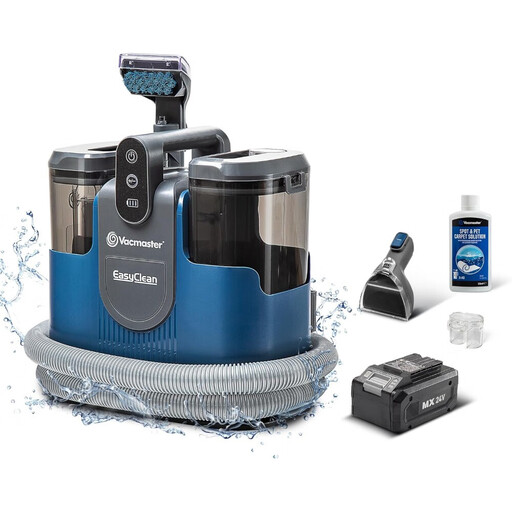
Why This Fits Their Persona: Ideal for households with children or pets. This compact, cordless device is easy to grab for accidents on the sofa, carpet, or in the car. No fussing with cords, just get to work immediately.
This model is a specialised spot cleaner and doesn't pretend to be a full-floor cleaner. It focuses on one task and does it well, thus avoiding the "jack-of-all-trades" pitfall.
Fully cordless with a battery life of up to 55 minutes. The self-cleaning hose function rinses the hose after use to prevent odours and blockages.
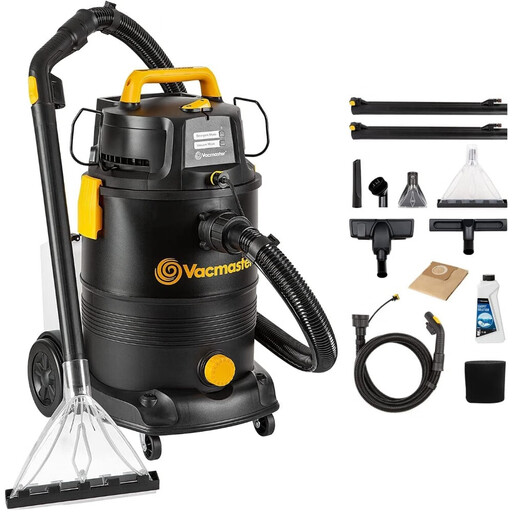
Why This Fits Their Persona: For those who don't shy away from serious cleaning jobs. Perfect for the garage, workshop, or after a renovation. It vacuums up both construction dust and liquid spills and can deep-clean carpets.
This model focuses on power and capacity. Its large, robust tanks are designed for heavy-duty use and easy maintenance, avoiding the pitfall of impractical design.
A very large 30L collection tank and a separate 6L detergent tank minimise interruptions. The powerful 1300W motor tackles heavy dirt effortlessly.
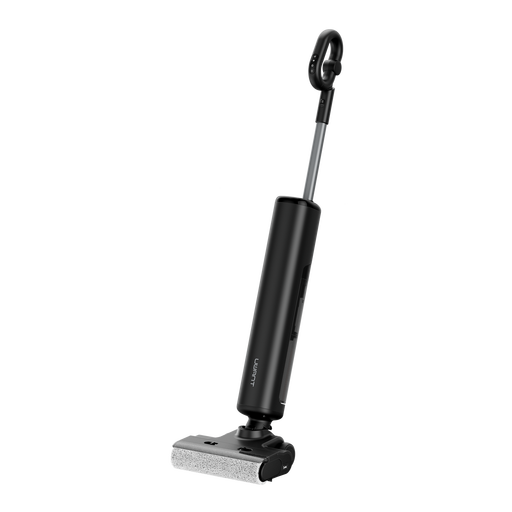
Why This Fits Their Persona: For those seeking convenience and efficiency for daily hard floor cleaning. This device combines vacuuming and mopping in a single motion. Ideal for quickly cleaning up crumbs and spills.
It tackles the maintenance pitfall head-on with a base station that automatically cleans and hot-air dries the brush roll. This prevents unpleasant odours and keeps the device hygienic.
The 180° lay-flat design makes it easy to clean under sofas and beds. The smart sensor automatically adjusts suction power and water flow based on the amount of dirt.
We have compiled a complete, real-time list of products that fully satisfy these strict selection criteria and UK safety regulations.
This depends heavily on the model and how intensively you use it. A general guideline:
Yes, but be cautious. Choose a model where you can control the water flow or that has a special parquet brush. It is crucial that the device vacuums up the water almost immediately, so moisture doesn't have a chance to seep into the seams of the floor. Models that leave the floor dry quickly are preferred.
A wet & dry vacuum uses cold or lukewarm water (sometimes with a cleaning solution) to loosen dirt and then vacuums up this mixture. It is primarily intended for removing (wet) stains and dirt. A steam cleaner uses hot steam under pressure to clean and disinfect surfaces. Most steam cleaners do not have a suction function. So, a wet & dry vacuum is for cleaning up messes, while a steam cleaner is more for hygienic deep cleaning.
