
Vandaag of morgen in huis

Kwaliteit gegarandeerd

Welkomstaanbiedingen ontgrendelen: GRATIS bezorging | Tot 80% korting | Gratis 30 dagen JoyPlus-proefperiode
Download de app
A wet and dry vacuum cleaner can do much more than simply pick up dust. Depending on the model, you can use it to remove spilt liquids, clean hard floors, wash carpets or use the machine as a blower in the garage. That versatility makes it particularly important to compare your options. Not every wet and dry vacuum cleaner is suitable for every surface or application.
A figure such as 15 or 18 kPa may sound clear, but it does not tell you everything about real-world performance. How well the machine works also depends on the hose diameter, floor nozzle, filter and airflow. For example, a compact hard-floor cleaner is designed for a different task from a large workshop vacuum.
So do not look only at the number. Also consider the intended application, accessories and filtration method.
A water vacuum cleaner or wet and dry vacuum cleaner should not be used to pick up hot ash, flammable liquids, sharp objects or hazardous chemicals without checking the instructions. Some cordless wet and dry vacuum cleaners are also intended exclusively for smooth, finished floors. Carpet, rough concrete or building dust can put strain on the brush or motor.
Always check the usage limitations in the product information. An ordinary dry vacuum cleaner, such as the Deerma DX700S, is explicitly not suitable for liquids.
After wet cleaning, dirty water, moisture and traces of cleaning solution remain in the tank or brush. Without emptying, rinsing and drying, odours can develop and airflow may decrease. A vacuum cleaner with a self-cleaning function helps with everyday maintenance, but it does not replace emptying the dirty-water tank and cleaning the filters.
Distinguish between three product types:
For hard floors such as tiles, laminate, vinyl and sealed wood, models such as the Tineco iFLOOR 5 Breeze Complete and Tineco Floor One Stretch S6 are designed for everyday combined cleaning. For car interiors, furniture and carpets, an extraction model with a separate cleaning-solution tank is a better choice.
A larger tank means fewer interruptions, but usually also a larger and heavier appliance. A 20-litre stainless-steel tank is practical for the garage, while a cordless floor model with a clean-water tank of around 540 to 910 ml is easier to move around the home.
Pay attention to the difference between:
Also check the weight. A machine weighing around 4 kg is generally easier to use every day than a workshop model weighing 10 to 12 kg.
According to the product description, a HEPA vacuum cleaner can capture fine particles in its filtration system. This makes filter maintenance important: fit the correct filter for the selected mode and do not use a wet filter for dry vacuuming if the manual does not allow it.
For cordless models, check the runtime and charging time. The Lubluelu T6 states a 30-minute runtime and 4-hour charging time. The Lubluelu T8A also states up to 30 minutes, with a 910 ml clean-water tank and 600 ml dirty-water tank. That may be sufficient for a quick kitchen clean; for a larger home or extended use, a corded model may be more practical.
Accessories determine how versatile the vacuum cleaner really is. Consider a crevice tool for the car, an upholstery brush, a carpet nozzle, extension tubes or a power-tool adapter.
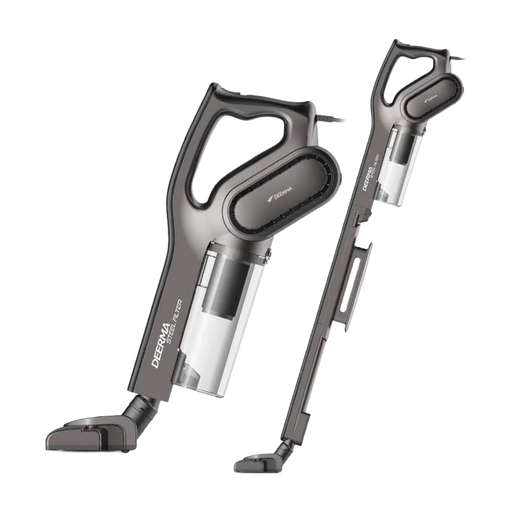
Why it suits this profile: This corded model is designed for everyday dry cleaning and can be used as either a stick or handheld vacuum cleaner. With a 0.8-litre dust container, a 4.5-metre cable and a weight of around 2.2 kg, it is practical for hard floors, furniture and crevices.
The product information clearly states that liquids must not be vacuumed up. This makes its function unambiguous: it is a dry vacuum cleaner for everyday use.
Stated suction pressure of 15 kPa, HEPA filtration, 180° rotating floor brush and three operating modes.
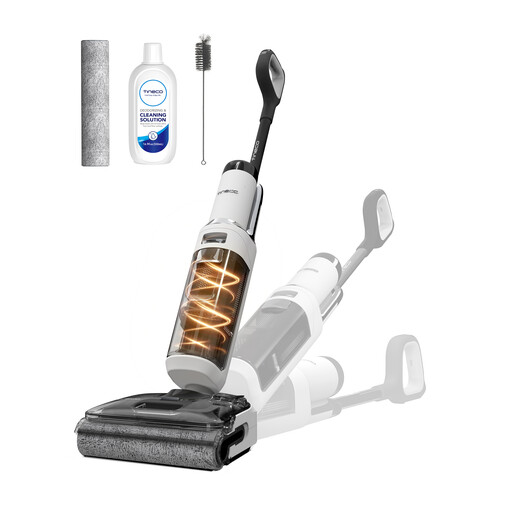
Why it suits this profile: This cordless model is designed for hard floors and combines vacuuming with mopping. Its flat 180° design is intended for cleaning beneath low furniture. The stated runtime is up to 40 minutes.
The recommended surfaces are indoor floors such as vinyl, tiles and sealed wood. The model is therefore not presented as a solution for every floor or type of dirt.
180° flat design, three-sided edge cleaning, self-cleaning and drying station, plus a spare brush included.
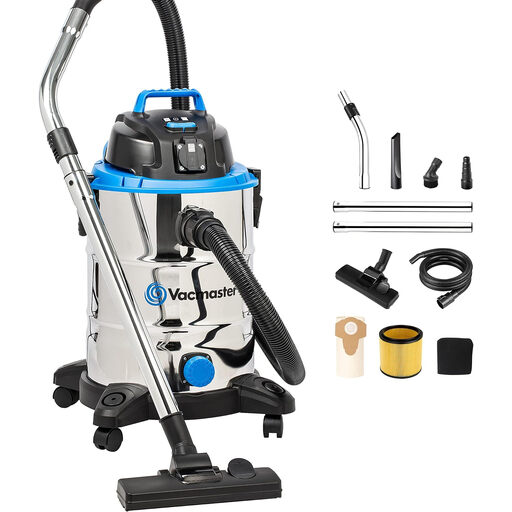
Why it suits this profile: The 30-litre stainless-steel tank, 1500 W motor, blower function and connection for power tools make it well suited to garages, workshops and DIY tasks.
The machine uses separate filters for dry and wet vacuuming. This makes the change between applications explicit; filters must be fitted and maintained according to the instructions.
Stainless-steel tank, dual-mode floor head, drain plug, EU power-tool connection and blower function.
We have put together a complete, up-to-date list of products that fully meet these strict selection criteria and the applicable European safety regulations.
For the car and garage, a long hose, crevice tool and blower function are often more useful than an extensive display. In a household with mainly hard floors, low weight, battery life and self-cleaning will generally be more important.
That depends on the model. An ordinary wet and dry vacuum cleaner can pick up liquid, but it does not automatically wash carpets. For textiles, you need a carpet cleaner or extraction vacuum cleaner that distributes water and cleaning solution and collects the dirty water. Check whether carpet or upholstery accessories are included.
Its lifespan depends on how frequently it is used, filter maintenance, storage and the type of dirt it handles. A workshop model with a metal tank is designed for heavier use, while a compact cordless floor cleaner is mainly intended for everyday hard floors. Allow tanks and filters to dry after use and avoid overloading the motor.
During use, a cordless model runs on a battery; energy consumption mainly occurs while charging. Overall running costs depend on the battery capacity, charging time, frequency of use and any replacement filters, rollers or batteries. A corded model does not need charging time, but it does use electricity for as long as it is switched on.
