
Vandaag of morgen in huis

Kwaliteit gegarandeerd

Welkomstaanbiedingen ontgrendelen: GRATIS bezorging | Tot 80% korting | Gratis 30 dagen JoyPlus-proefperiode
Download de app
A wet and dry vacuum cleaner can combine vacuuming and mopping, but not every model is right for every household. Some appliances are designed mainly for hard floors, while others can also be used on carpets, furniture or car upholstery. Focusing only on the number of pascals or a long list of features could lead to an impractical purchase.
Brands often quote a high figure in Pa, such as 15,000 or 20,000 Pa. This indicates the maximum suction power, but real-world performance also depends on the brush, airflow, filters and floor surface. A cordless wet and dry vacuum cleaner with a high maximum rating may use less power in its standard mode to save battery.
So it’s worth checking:
A self-cleaning vacuum cleaner can automatically rinse the roller brush and internal tubes. However, after use you’ll usually still need to empty the dirty water tank, leave the filters to dry and remove hair or debris from the brush. Otherwise, trapped moisture can cause unpleasant odours.
Before buying, check whether:
Many floor cleaners are designed for tiles, vinyl, laminate or sealed wood. A wet roller brush may not be suitable for carpets or untreated wood. Some models do have a dry vacuum mode, but that’s not the same as a full-featured carpet cleaner.
Always check which surfaces the manufacturer recommends. Only use a hard-floor cleaner on surfaces that the product information says are suitable.
For everyday dirt on hard floors, a standard or automatic mode is often enough. For pet hair, dried-on food or mud, a turbo mode and a brush that can clean close to edges are useful. A vacuum cleaner for pet owners should also pick up hair effectively without the brush clogging quickly.
Look beyond maximum suction power to how practical the appliance is to use. A model with several modes often gives you more control than one with a single maximum setting.
A cordless floor cleaner gives you greater flexibility, but the battery determines how many rooms you can clean in one go. Don’t just check the maximum running time: look at the charging time too. A model that runs for 30 to 45 minutes may last considerably less time in turbo mode.
For a flat or a quick daily clean, 25 to 30 minutes may be enough. For a larger home, a longer running time, a bigger tank or a second battery may be more important.
A larger clean water tank means fewer refills. The dirty water tank should be big enough for a full cleaning session, but easy to empty too. A stated drying time, such as three minutes, depends on the amount of water used, the floor and your cleaning speed. According to Lubluelu’s product information, the T8A is designed to leave hard floors dry enough to walk on in around three minutes. This is a brand specification, not a guarantee for every situation.
Noise level is worth considering too. Figures of around 55 to 70 dB(A) are measurable specifications, but how loud the appliance sounds can vary depending on the mode and room.
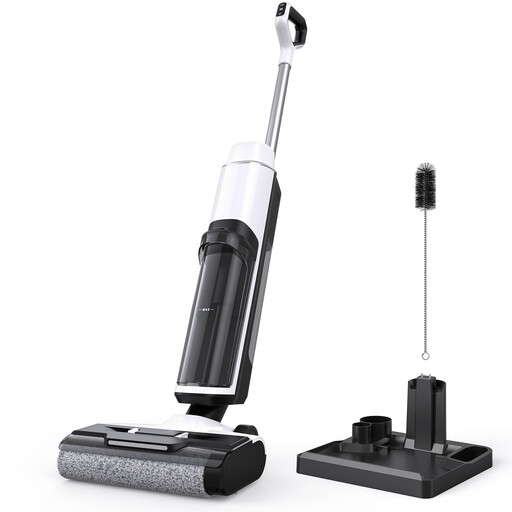
Why it suits this buyer: This cordless model combines vacuuming, mopping and self-cleaning in one appliance. With three modes and a running time of up to 30 minutes, it’s designed for everyday cleaning of hard floors.
The product information lists separate clean and dirty water tanks, a self-cleaning cycle and a noise level of up to 70 dB(A). Do check first that your floor is suitable for wet cleaning.
15,000 Pa maximum suction power, a 910 ml clean water tank, three modes and automatic roller brush cleaning.
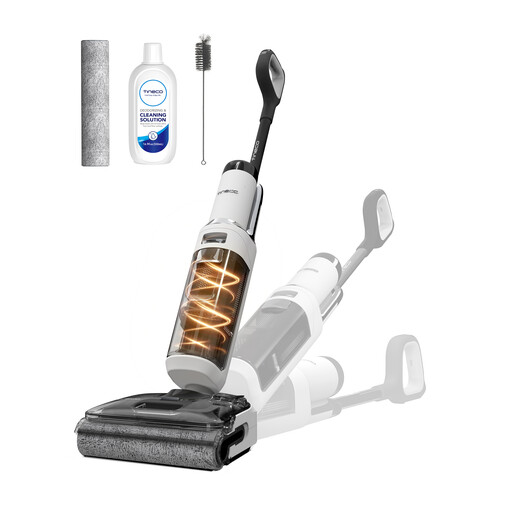
Why it suits this buyer: Its flat, 180° design is useful in homes where you need to clean under low furniture. This model is designed for hard floors and comes with a drying and charging station.
The product description makes clear that this appliance is for indoor hard floors. That helps you avoid buying a vacuum mop for surfaces it isn’t designed to clean.
Reclines flat to 180°, cleans on three sides, runs for up to 40 minutes and features automatic FlashDry self-cleaning, according to the product information.
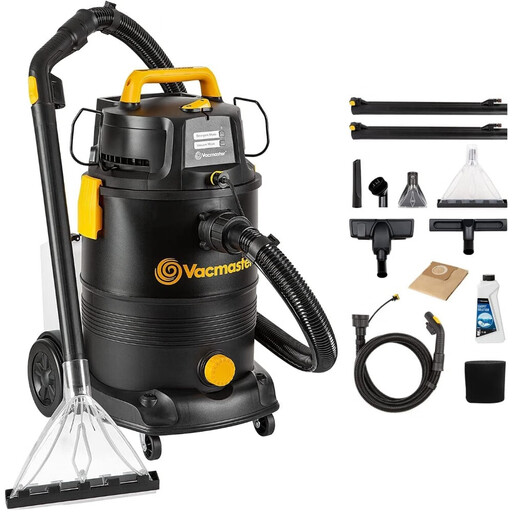
Why it suits this buyer: This corded model is suitable for larger cleaning jobs on carpets, hard floors and furniture, as well as in the car. Its generous tank capacity means fewer interruptions.
Instead of a small battery and limited tanks, this model has a power cord, a 30-litre collection tank and a 6-litre cleaning solution tank. That makes it better suited to extended use.
1,300 W motor, HEPA exhaust filter for dry vacuuming, and accessories for carpets, upholstery and hard floors.
We’ve put together a complete, up-to-date list of products that meet these strict selection criteria and the applicable European safety regulations.
A wet and dry vacuum cleaner doesn’t need a dust bag, but it does have parts that need maintaining or replacing. Allow for the cost of:
Only use cleaning products that the manual says are suitable. Too much foam can put strain on the tubes, sensors or tanks. Empty the dirty water tank after every wet clean and let the filters dry completely. This helps reduce the risk of faults and unpleasant odours, but doesn’t guarantee a longer lifespan.
It depends on the finish and the product instructions. Choose a low water setting and only use a model explicitly approved for sealed laminate or similar hard floors. Don’t leave puddles behind, and check that the floor dries quickly.
Yes, some models are suitable, particularly those with a turbo brush, strong dry suction and a brush designed to resist hair tangles. Check whether the manufacturer lists carpets, furniture or upholstery as suitable surfaces. A hard-floor cleaner isn’t automatically suitable for every fabric surface.
Its lifespan depends on how it’s used and on the battery, filters, brush and maintenance. Self-cleaning reduces the amount of manual work, but it doesn’t replace emptying and drying the tanks. Before buying, check whether spare parts are available, and keep the manual to help you maintain the appliance correctly.
