
当日/次日达

品质保障

开启新人专享福利: 全场免邮 | 低至 2 折 | 免费试用 30 天 JoyPlus 会员
下载 Joybuy
A wet and dry vacuum cleaner can do more than simply pick up crumbs and dust. Depending on the model, you can use it to tackle spilt liquids, pet hair, carpets, hard floors, car interiors and even sawdust. However, the range often appears more versatile than it really is. For example, a cordless wet and dry vacuum cleaner for hard floors is not automatically suitable for carpets or large quantities of water.
The right choice therefore starts not with an impressive list of features, but with how you intend to use the appliance.
Some models are designed to vacuum up liquids, but do not clean floors with fresh water. Other appliances combine vacuuming, mopping and dirty-water collection in a single pass. So first check whether you are looking for a wet and dry vacuum, a stick vacuum with a mopping function or a hard-floor cleaner.
For example, a compact handheld vacuum may be suitable for a spilt drink, but not for mopping an entire kitchen.
Specifications such as 15,000 Pa or 24 kPa indicate the maximum suction pressure, but they do not show how much dirt the appliance actually collects in everyday use. The brush, airflow, filter and floor surface also play a part. A model that works well on tiles may be less suitable for deep-pile carpet.
Also pay attention to the difference between a theoretical maximum setting and the normal operating mode. Maximum power can drain the battery more quickly and produce more noise.
A self-cleaning vacuum cleaner usually rinses the roller brush and internal tubes. The dirty-water tank, filters and brush still need to be emptied, dried or checked afterwards. If you leave dirty water standing for too long, it can start to smell.
With a model designed for liquids, you should also check that the correct foam filter or wet filter is fitted. Using the wrong filter can affect performance or cause damage.
For laminate, PVC, tiles and sealed wood, a cordless floor cleaner with separate clean- and dirty-water tanks is often practical. Check that the manufacturer explicitly lists the appliance as suitable for hard floors. Not every model is suitable for untreated wood, rough surfaces or carpet.
If you are looking for a carpet cleaner, you will usually need an appliance that can dispense water and cleaning solution, then extract them again. A standard cordless wet and dry vacuum cleaner can remove loose dirt or a small liquid spill, but it does not wash carpet in the same way.
A battery life of 30 to 50 minutes may sound generous, but the actual runtime depends on the selected mode, brush and amount of water. For a flat, 30 minutes may be sufficient. For a large house, several rooms or a pet-owning household, a longer runtime or a corded model is more practical.
Also check the charging time. Some cordless models need around four hours before they can be used again.
A small dust container is convenient for quick cleaning, but needs emptying more often. For larger jobs, a 23- or 30-litre tank and a longer hose are useful. A HEPA filter can help remove fine dust particles from the expelled air, but the filter must be cleaned according to the instructions and allowed to dry completely.
For pet owners, a rotating turbo brush, upholstery nozzle and crevice tool are useful accessories. For car owners, a compact handheld vacuum, flexible hose and lighting for dark areas are often more important than a large tank.
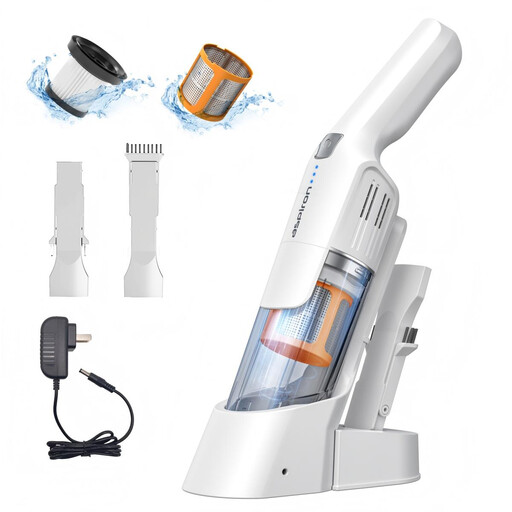
Why it suits this profile: This compact handheld vacuum is designed for quickly cleaning up crumbs, dust and pet hair around the home, on the sofa or in the car. The two modes provide 15 kPa in standard mode and up to 24 kPa in maximum mode.
The product information clearly states that this model is intended for dry dirt only. You therefore will not accidentally buy it as a mopping floor cleaner.
500 ml dust container, washable metal filter, HEPA filter and accessories for crevices, furniture and upholstery.
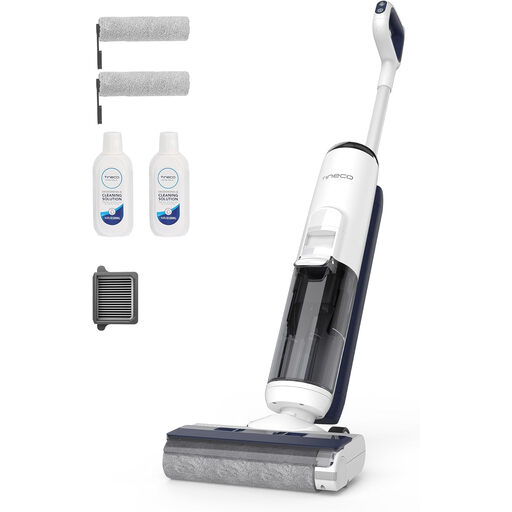
Why it suits this profile: This cordless model is designed for everyday cleaning of hard floors such as tiles, laminate, PVC and sealed wood. The set includes extra roller brushes, filters, cleaning solution and a storage tray.
The recommended floor surfaces are clearly specified. This makes it a more targeted choice than a wet and dry vacuum marketed as suitable for every surface.
Cordless design, weight of 4.3 kg and supplied with two additional roller brushes.
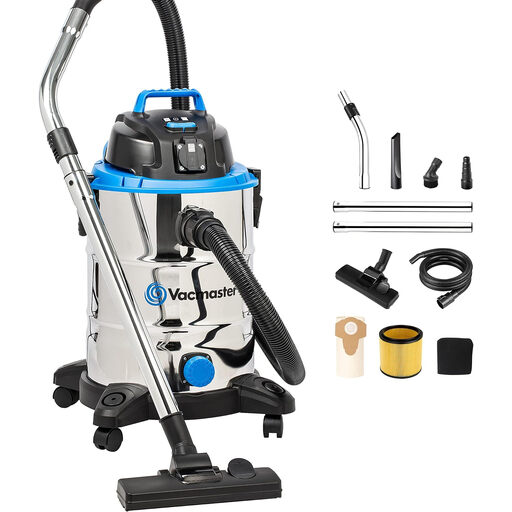
Why it suits this profile: With a 1500 W motor, a 30-litre stainless steel tank, blower function and a connection for power tools, this model is well suited to DIY enthusiasts and larger cleaning jobs.
The product description distinguishes between dry use with a cartridge filter and wet use with a foam filter. You therefore know which filter to use for each task.
30-litre tank, 240V connection for power tools, floor nozzle with carpet and hard-floor settings, and drain plug.
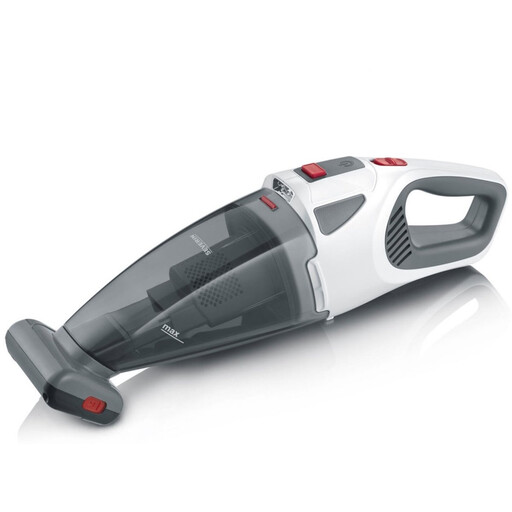
Why it suits this profile: This cordless handheld vacuum combines wet and dry pick-up with a rotating turbo brush for cushions and car seats. According to the product information, the battery lasts for up to 30 minutes.
Its intended use is clearly defined: household use, small quantities of liquid and dry dirt. This prevents you from using a compact handheld vacuum on large areas.
18.5V Li-ion battery, turbo brush, LED lighting, 4-in-1 accessories and a wall mount with charger.
We have put together a complete, up-to-date list of products that fully meet these strict selection criteria and the applicable European safety regulations.
That depends on the model. A standard wet and dry vacuum can pick up dry dirt and spilt liquid, but a carpet cleaner usually needs a spray-and-extraction function. Check that the product is explicitly suitable for carpets, upholstery and cleaning solution.
For the models mentioned, runtime per charge is approximately 25 to 50 minutes. The appliance’s overall service life depends on battery use, filter maintenance, emptying the tanks and following the safety instructions. A battery with reduced capacity may run for less time in practice than it did when new.
With a corded model, your main costs are electricity and, where applicable, replacement filters or dust bags. A cordless model uses electricity while charging and may involve additional costs for roller brushes, filters and cleaning solution. So do not look only at the purchase price; also consider the availability of replacement parts and maintenance supplies.
