
当日/次日达

品质保障

开启新人专享福利: 全场免邮 | 低至 2 折 | 免费试用 30 天 JoyPlus 会员
下载 Joybuy
A wet and dry vacuum cleaner can make everyday cleaning easier: crumbs, pet hair and spills are picked up in one pass. However, not every model is right for every home. Some are designed exclusively for hard floors, while others are primarily intended for workshops, carpets or upholstery cleaning.
The right choice depends on more than high suction power or long battery life. You should also consider floor compatibility, maintenance and how dirty water is disposed of.
Manufacturers often list maximum suction power in pascals (Pa). This is a measurable technical figure, but real-world performance also depends on the brush, water flow, seal and floor. A model with a high Pa rating isn’t automatically suitable for dried-on stains or pet hair along skirting boards.
Look at the combination of:
A cordless wet and dry vacuum cleaner runs on a battery. Its runtime is usually measured in a specific mode. The battery may run down more quickly in turbo or intensive mode, so check the stated runtime and charging time.
For a flat, 25 to 35 minutes may be enough. In a larger home, models offering around 40 to 65 minutes of runtime are more practical, although a larger battery pack can also mean extra weight.
A self-cleaning floor cleaner usually rinses the brush and internal pipes. This reduces the amount of cleaning you need to do by hand, but you’ll still need to empty and rinse the dirty water tank. Filters must be left to dry according to the instructions before being put back.
Check the drying function, too. A dock with warm air can dry the roller more quickly, but always check the stated temperature and drying time. Claims about reducing odours or bacteria should be treated as brand claims, not guaranteed results.
Most models in this selection are designed for indoor use on hard floors, such as tiles, vinyl, laminate and sealed wood. According to the product information, they’re not intended for rough or untreated surfaces. Check beforehand that your floor is water-resistant.
A machine with multiple water settings is useful if you have different types of flooring. For example, a low water flow is better suited to a delicate wooden floor than an intensive setting for tiles. Only use the cleaning solution recommended by the manufacturer.
When cleaning hard floors, dirt often gets left along skirting boards and under furniture. Check how close the brush can get to the edge. Product information sometimes gives this measurement in millimetres, for example an edge gap of 2 mm or less than 0.5 cm.
A 180° reclinable design is particularly useful for cleaning under sofas and beds. Check the minimum clearance under your furniture, too. According to its product specifications, the Tineco Floor One Stretch S6 has a reclined height of 13 cm. This gives you a useful indication, but be sure to measure your own furniture.
A larger clean water tank means you’ll need to refill it less often. A larger dirty water tank can be useful for families with children or pets, although it often means extra weight.
Also check:
A vacuum and mop floor cleaner is particularly useful if your everyday mess consists of dust, crumbs and spills. For carpets, construction dust or large amounts of water, a traditional workshop vacuum cleaner may be more suitable.
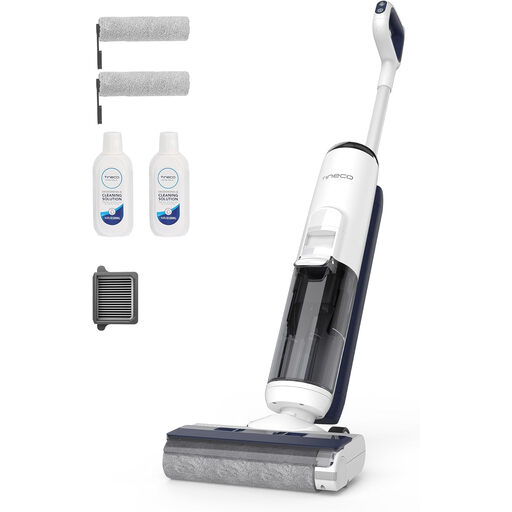
Why it suits this user: This cordless model is designed to clean hard floors in one pass. The extra rollers and cleaning solution included are useful if you want to get started without buying lots of separate accessories.
The product information recommends it for hard floors and lists a self-cleaning function. Be sure to check that it’s compatible with your floor and empty the dirty water tank after use.
Cordless design, weighs 4.3 kg, cleans edges to within less than 0.5 cm, and includes extra rollers.
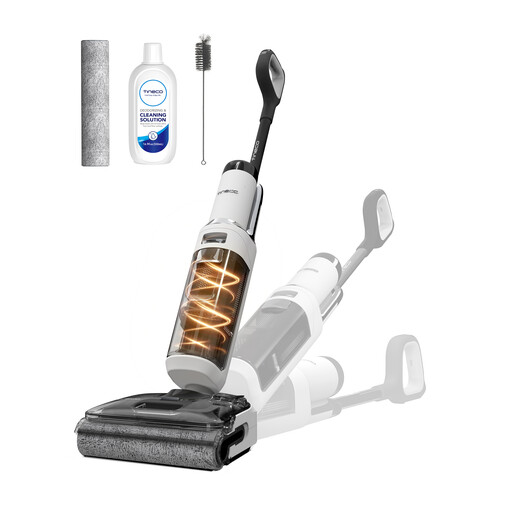
Why it suits this user: The 180° recline function and stated height of 13 cm are useful for homes with low-clearance furniture. Its vacuuming and mopping combination is well suited to everyday cleaning of larger hard floor areas.
The stated 40-minute runtime gives you a clear idea of the battery capacity. The 5-minute FlashDry self-cleaning cycle is a product specification; filters and tanks still need to be maintained according to the instructions.
180° reclinable design, three-sided edge cleaning, weighs 4.5 kg and has a stated runtime of 40 minutes.
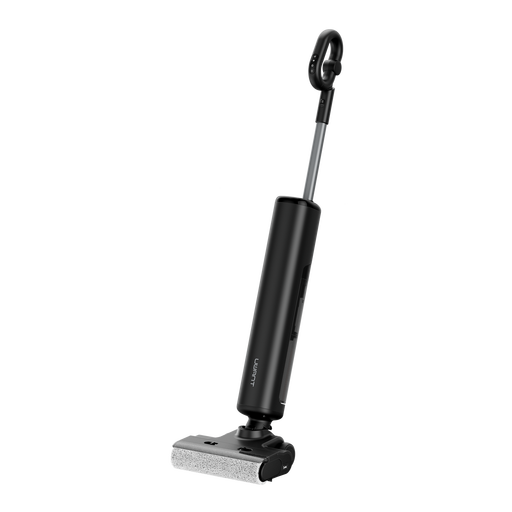
Why it suits this user: For families with pets, lots of foot traffic or larger hard floor areas, the 180° recline function, dual edge cleaning and automatic maintenance features are useful.
According to the product description, you can adjust the water flow across three levels. This lets you tailor the amount of water to tiles or other suitable hard floors.
Stated suction power of 23,000 Pa, hot-air self-cleaning, 180° recline function and dual edge cleaning.
We’ve put together a complete, up-to-date list of products that meet these strict selection criteria and the applicable European safety regulations.
It depends on the model. Many cordless floor cleaners in this selection are designed for hard floors and shouldn’t be used on carpets. Workshop models, such as the Vacmaster VQ1530SFDC, do come with a floor nozzle for different surfaces, but they’re corded and less suited to quick, everyday mopping.
After each cleaning session, run the self-cleaning programme if your machine has one. Then empty the dirty water tank, rinse any removable parts and let the filters dry completely. Don’t put a wet filter back in the machine. Always follow the manufacturer’s maintenance instructions, and don’t use foaming cleaning products unless they’re approved for your model.
Running costs mainly include electricity, cleaning solution, filters, rollers and, eventually, a replacement battery. Longer battery life can make it easier to clean a larger home, but check the price and availability of replacement parts, too. This helps you avoid ending up with higher maintenance costs for a machine that initially seemed like a good deal.
