
Vandaag of morgen in huis

Kwaliteit gegarandeerd

Welkomstaanbiedingen ontgrendelen: GRATIS bezorging | Tot 80% korting | Gratis 30 dagen JoyPlus-proefperiode
Download de app
A wet and dry vacuum cleaner can tackle crumbs, dust and spilled liquids in a single pass. That sounds straightforward, but not every model suits every British home. Particularly for families with children, pets or lots of hard flooring, battery life, maintenance and manoeuvrability make a significant difference.
Product descriptions also use terms such as “powerful suction”, “sterilisation” and “streak-free cleaning”. Always check which specifications are actually stated and which results are simply brand claims.
A high Pa rating, such as 16,000 or 20,000 Pa, tells you something about the stated suction power, but it does not automatically indicate how well the cleaner will perform on your floor. The brush, water flow, airflow and collection tank also play a part. A hard-floor cleaner must not only loosen dirt but also collect dirty water effectively.
Also consider the area you need to clean. A cordless wet and dry vacuum cleaner with a stated runtime of 25 minutes may be practical for a flat, but less suitable for a larger home if you do not want to recharge it partway through.
A self-cleaning floor cleaner will usually rinse the roller brush and internal components. You still need to empty the dirty-water tank, allow the filters to dry and remove hair or dirt from the brush. If you do not, odours may develop and suction performance may decline.
Also check how the drying process works. Some models offer warm air or a separate drying cycle; others only clean with water. According to the product information provided by the relevant brands, some systems can dry the brush with heated air. Treat this as a product specification, not a guarantee of completely odour-free operation.
Most models in this category are designed for sealed hard floors, such as tiles, vinyl, laminate or treated wood. Rough, untreated or water-sensitive floors may be less suitable. Read the manual before using an electric mop on parquet or wooden flooring.
Also do not use a wet and dry vacuum cleaner for flammable liquids, hot ash, sharp objects, chemicals or foaming cleaning products unless the manufacturer explicitly permits it.
For a cordless floor cleaner, three figures are important:
A model with 30 minutes of runtime may be suitable for daily cleaning in a smaller home. For larger areas, a longer battery life or efficient automatic power adjustment is more practical.
A larger clean-water tank means fewer refills. A generous dirty-water tank prevents you from having to stop while cleaning. Pay attention to the separate capacities:
A floor cleaner with a mopping function will only work properly if the tanks are fitted correctly and the dirty-water tank is not filled beyond the mark.
For kitchens and living rooms, the distance from skirting boards is important. Product information for some models states edge gaps of approximately 2 to 5 millimetres. Check whether the brush works close to the edge on one or both sides.
A 180° lie-flat design can help you reach beneath low sofas and cabinets. Also consider the operating height and whether the dirty-water tank remains securely in place when the cleaner is positioned this way. An anti-tangle brush is particularly useful if you have long hair or pets, but you should still inspect the roller regularly.
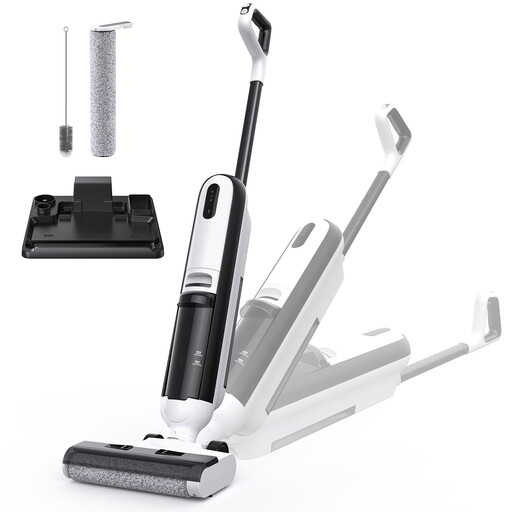
Why it suits this profile: This model combines a 30-minute runtime with a weight of 4 kg. That makes it a straightforward choice for daily cleaning of hard floors.
The product information states that it has a self-cleaning cycle and separate clean- and dirty-water tanks. However, the filter and dirty-water tank still need to be emptied and dried after use.
Stated suction power of 16,000 Pa, 540 ml clean-water tank and 460 ml dirty-water tank.
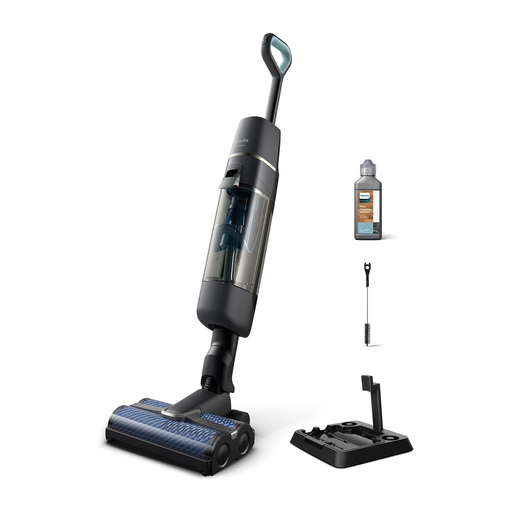
Why it suits this profile: If you value different cleaning settings and clear information on the appliance, this model combines an LCD display, automatic brush cleaning and three modes.
The water absorption mode is designed to collect residual moisture. However, the manufacturer recommends emptying and rinsing both tanks after every cleaning session.
25 minutes’ maximum runtime, 0.67-litre clean-water tank and three cleaning modes.
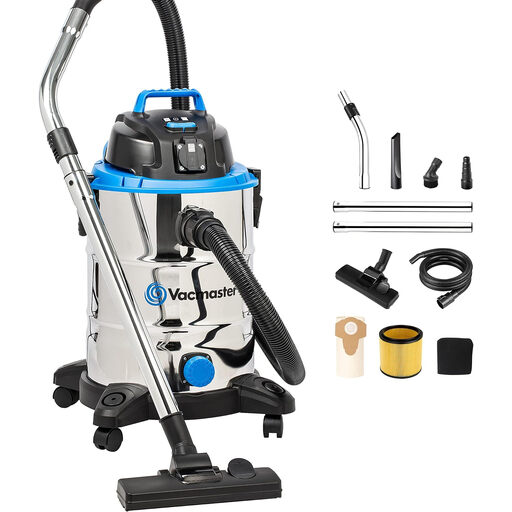
Why it suits this profile: This corded model is designed for workshops, garages, renovation work and larger wet or dry cleaning tasks. The 30-litre tank reduces interruptions.
The manufacturer specifies separate filters for dry and wet use. Change the filter according to the manual and do not use the appliance for hazardous or flammable materials.
1500 W motor, 30-litre stainless-steel tank, blow function and 240 V power-tool socket.
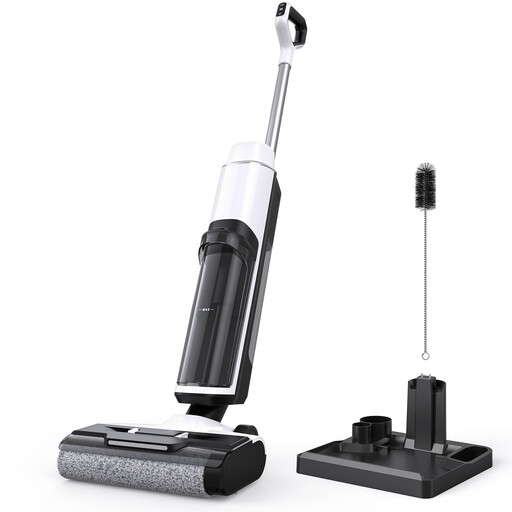
Why it suits this profile: The combination of double-edge cleaning, three modes and a self-cleaning function is well suited to homes dealing with hair, crumbs and spills on hard floors every day.
The stated three-cycle self-cleaning function and anti-tangle brush reduce manual work, but they do not replace emptying the 600 ml dirty-water tank and drying the filters.
Stated runtime of 30 minutes, maximum suction power of 15,000 Pa, 910 ml clean-water tank and product weight of 3.85 kg.
We have compiled a complete, up-to-date list of products that fully meet these strict selection criteria and the applicable European safety regulations.
A wet and dry vacuum cleaner requires less cleaning than a separate vacuum cleaner and mop, but it is not maintenance-free. To extend its service life:
Electricity costs depend on the power rating, charging frequency and selected mode. With cordless models, the appliance does not draw mains electricity while you are cleaning, but the battery does need to be recharged afterwards. A corded model with a larger tank may be more practical for intensive jobs, while a compact floor cleaner is quicker to get ready for everyday use.
It depends on the model. Many cordless floor cleaners are designed exclusively for hard floors. Some Vacmaster models do have a washing or carpet-cleaning function. Always check the supplied nozzle, filter and instructions for use.
Depending on the model and setting, battery life is often between 25 and 50 minutes. The appliance’s service life also depends on maintenance, correct storage and replacing consumable parts such as filters and roller brushes when necessary.
A self-cleaning programme can remove dirt from the roller brush and internal components. According to product information from various brands, a drying function can also help. The result still depends on correct use: the dirty-water tank must be emptied and components must be maintained according to the manual.
