
Same-day & Next-day Delivery

Quality Guaranteed

Unlock Your Welcome Offers: FREE Delivery | Up to 80% OFF | Free 30-day JoyPlus trial
Download the APP
A wet and dry stick vacuum can tackle dust, hair, spilled drinks and dried-on dirt in one go. But not every model is right for every home. A large water tank doesn’t mean much if the floor stays wet for a long time after cleaning. And a high suction-power figure on the packaging doesn’t automatically make a machine pleasant to use every day.
For Dutch households with tiled, PVC, laminate or treated wooden floors, three common pitfalls are worth bearing in mind:
A good cordless wet and dry vacuum should dispense clean water evenly and pick up dirty water straight away. So check:
A large tank is useful in a big home, but it also makes the machine heavier. A model with a smaller tank may be more convenient in a flat or for a quick daily clean.
Look out for claims such as “floor dries instantly”. This depends on the amount of water used, the floor material and how quickly you work. A manufacturer’s claim that, for example, 95% of dirty water is recovered should be read as a claim from the product information, not as a guarantee for every floor.
For cleaning hard floors, a roller brush that picks up dirt well matters more than motor power alone. Look for:
Check the warnings too. These machines are generally designed for hard floors, not carpets, flammable liquids, sharp objects or large pieces of debris. A steam cleaner for floors isn’t automatically suitable for untreated wood, delicate laminate or every type of PVC.
A cordless floor washer with a stated run time of 30 to 50 minutes may sound appealing. Also compare the charging time, weight and mode in which that run time was measured. A heavy machine can be awkward on stairs or during longer cleaning sessions.
Also check whether:
A self-cleaning vacuum mop cuts down on manual work, but you’ll still need to empty any dirty water left in the tank. This helps prevent odours and build-up.
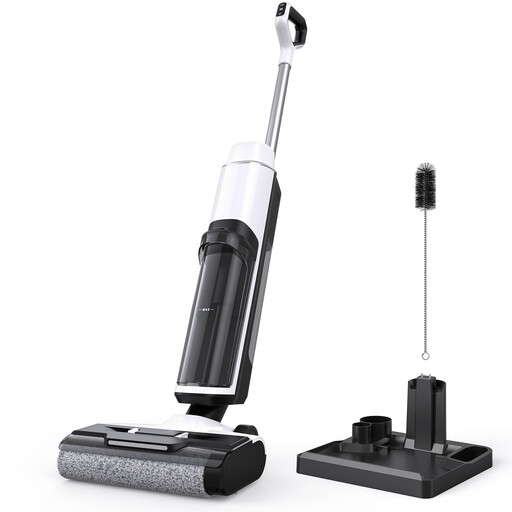
Why it suits this type of user: This model combines vacuuming, washing and self-cleaning for households trying an all-in-one vacuum and mop for the first time. Its three modes cover everyday cleaning as well as heavier dirt.
The product description lists separate modes for standard cleaning, extra suction and stubborn dirt. Its stated maximum run time is 30 minutes, giving you a clearer idea of its limits than a general promise that it will clean an entire home.
Stated suction power of 15.000 Pa, a 910 ml clean-water tank, a 600 ml dirty-water tank and automatic self-cleaning, according to the product specifications.
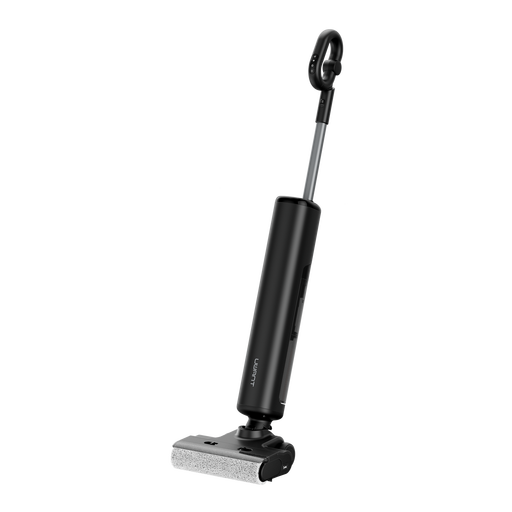
Why it suits this type of user: The 180° lie-flat design and dual-edge cleaning are handy for homes with low furniture, long cabinets and lots of corners. The PushDock base is designed to make it easy to position the machine for charging and maintenance.
As well as automatically adjusting suction and water according to the product description, you can set the water flow to one of three levels. This gives you more control than a machine with just one fixed setting.
Stated suction power of 23.000 Pa, a 180° lie-flat design, dual-edge cleaning, self-cleaning and hot-air drying, according to the product information.
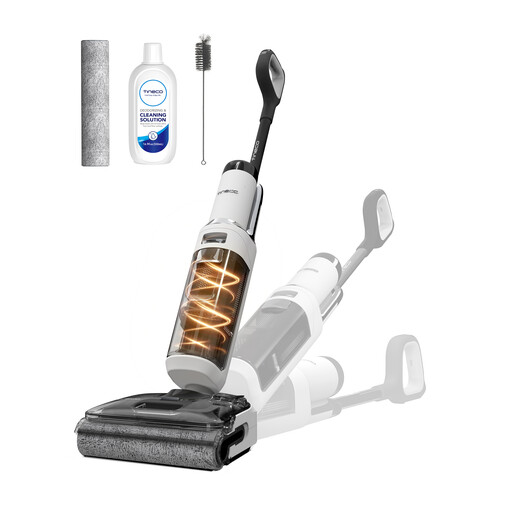
Why it suits this type of user: This model is designed for indoor hard floors and cleaning beneath low furniture. Its combination of a 180° lie-flat design, three-sided edge cleaning and a charging and drying station makes it well suited to intensive daily use.
The product information specifically lists vinyl, tiles, laminate and treated wood as suitable flooring, as well as a recommended maximum clearance of 13 cm when laid flat. Check that your floors and furniture are suitable before buying.
Stated run time of 40 minutes, 70°C FlashDry self-cleaning in around five minutes and three-sided edge cleaning, according to the product specifications.
We’ve put together a complete, up-to-date list of products that meet these strict selection criteria and current European safety requirements.
That depends on the type of laminate and the manufacturer’s instructions. Choose a model with limited water flow and dry the floor straight after cleaning. Always check whether the product description lists your type of flooring. Untreated wood and damaged joints may be more vulnerable to moisture.
Ideally, empty the dirty-water tank after every clean. Rinse the tank and check the roller brush and filter as instructed in the manual. Let the self-cleaning cycle and any heated drying cycle finish completely. This helps stop residue from building up inside the machine.
Most of the electricity is used to charge the battery and, on some models, to power the heated drying function. A longer drying cycle may use more energy than charging alone. So check the stated charging time, drying time and how often you plan to use it. An electric mop without a battery may be a simpler option for small cleaning jobs, while a cordless model gives you more freedom to move around.
