
Vandaag of morgen in huis

Kwaliteit gegarandeerd

Welkomstaanbiedingen ontgrendelen: GRATIS bezorging | Tot 80% korting | Gratis 30 dagen JoyPlus-proefperiode
Download de app
A cat may happily accept a flavour for weeks, then suddenly refuse it. Large tins can also lead to waste, while small portions may work out more expensive per meal. So when choosing wet cat food, it is not just the flavour on the front of the packaging that matters.
Pay particular attention to these common pitfalls:
For everyday feeding, it is important to distinguish between complete cat food and a complementary food or treat. The product information should clearly state which life stage the food is intended for.
Many of the varieties mentioned are described as cat food for adult cats. Do not automatically give these to a kitten. For young cats, a variety labelled junior or kitten is more suitable, such as g’woon Chunks in Jelly Fish and Meat Variation Junior. A kitten’s nutritional needs differ from those of an adult cat.
A product may look like a complete meal but actually be intended only as a snack. According to the product information, MjAMjAM Cat Cream Chicken & Salmon is classified as complementary food. Use it as a treat or between-meal snack, rather than as a replacement for complete cat food.
Do not just look for words such as “natural”, “premium” or “high-quality ingredients”. Check:
For example, Gourmet Perle Mini Fillets in Sauce states a specific proportion of the named animal ingredient for each flavour. The varieties contain mini fillets in sauce and are described as complete cat food for adult cats. g’woon Adult Chunks in Jelly, on the other hand, lists grains and plant-based ingredients in its composition. This does not automatically make these products unsuitable, but it is information to consider if you are looking for grain-free cat food.
Claims about flavour, digestibility or appeal come from the manufacturer. A brand’s own research may highlight certain properties, but such claims do not guarantee that every cat will accept the food.
Texture has a major influence on acceptance. Choose from:
Also consider the portion size. Pouches and trays of 50 to 100 grams are practical for one meal or for a household with several cats. A multipack containing 12 portions can be cost-effective for everyday use, while a large tin is particularly convenient if your cat continues to enjoy the same flavour. Once opened, wet cat food should be refrigerated according to the product information and used within the stated period.
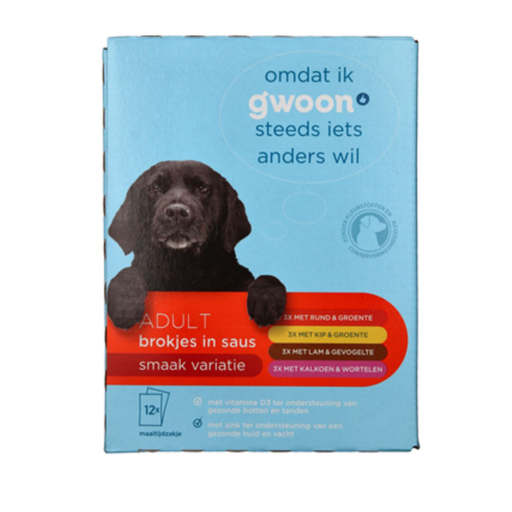
Why it suits this profile: The multipack contains 12 portions in jelly, making it practical for everyday feeding, keeping a supply at home and dividing portions easily.
The packaging states the number of pouches and the variety. However, check the ingredients if you want to avoid grains.
12 portions, a jelly texture and varieties with chicken, beef and salmon according to the product information.
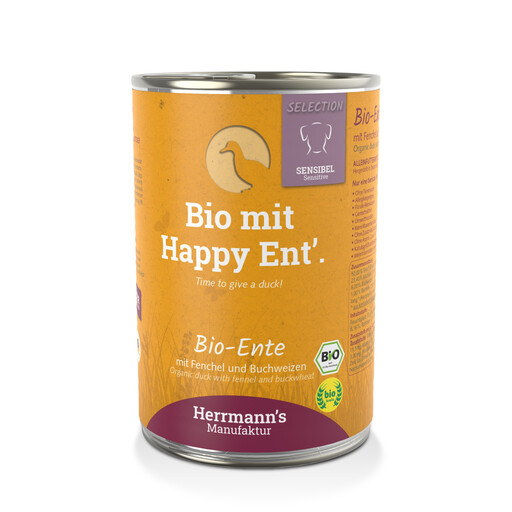
Why it suits this profile: The ingredients are clearly listed, including duck, cooking stock, fennel, apple, buckwheat and oil.
You can see the percentages of the main ingredients, rather than just a general flavour claim.
50% duck, 23,4% cooking stock and 400 grams of contents according to the product information.
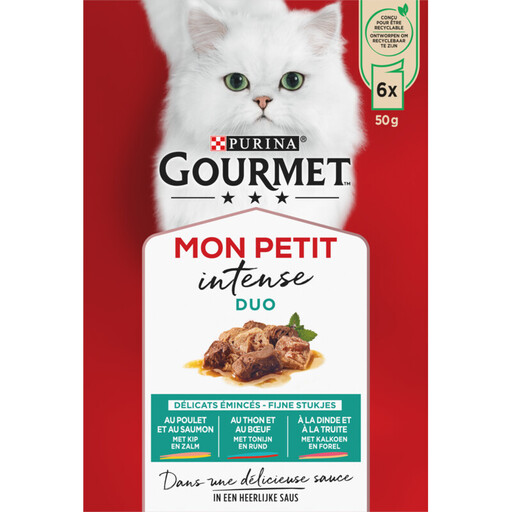
Why it suits this profile: The 50-gram pouches are designed for cats that have several small meals a day.
Small packs reduce leftovers and make it easier to tailor portions.
6 pouches of 50 grams and a combination of chicken, salmon, tuna, beef, turkey and trout.
We have put together a complete, up-to-date list of products that fully meet these strict selection criteria and the applicable European safety regulations.
That depends on the description on the label. Products sold as complete cat food for the appropriate life stage can, according to the manufacturer, be used as everyday food. Complementary products, such as some fillets or cream treats, are intended to be given alongside the normal meal.
The amount varies according to weight, age, activity level and the calorie content of the product. Use the feeding guidelines on the packaging as a starting point and preferably divide the daily portion between several meals. Always provide fresh drinking water.
Cat food in sauce contains pieces with a liquid sauce, while cat food in jelly has a firmer texture. Cat pâté is smoother and usually contains no recognisable pieces. Preferences vary from cat to cat, so start with a small pack if you do not yet know which texture your cat prefers.
