
Vandaag of morgen in huis

Kwaliteit gegarandeerd

Welkomstaanbiedingen ontgrendelen: GRATIS bezorging | Tot 80% korting | Gratis 30 dagen JoyPlus-proefperiode
Download de app
Choosing wet cat food might seem straightforward: you pick a flavour, pay and put the bowl down. But there are real differences in nutritional suitability, portion size, packaging and ingredients. An attractive packet or a label that says “with chicken” doesn’t always tell you how much chicken is actually inside.
With this practical guide, you can compare cat food in jelly, sauce and pâté on the points that really matter for everyday feeding. That way, you won’t end up buying a large multipack of cat food that your cat only eats one flavour from, or mistaking complementary food for complete wet cat food.
Packets often feature appealing flavours like salmon, beef, chicken or tuna. Always check the ingredients list and the percentage of the named ingredient. For example, several Felix and Whiskas varieties state 4% of the specific fish or meat in the chunks. That’s quite different from a recipe that’s mostly made up of that one protein source.
Also, look out for the difference between:
A large multipack of cat food can be convenient, but check the contents of each pouch. 44 pouches of 85g give a different portion distribution than 12 pouches of 100g. Work out the price per 100g and see whether your cat actually likes the flavours on offer.
Individual cat food pouches are practical and stay usable for longer unopened than a tin that’s been opened. A tin of around 400g can be good value for households with multiple cats. For a single cat, a large tin might just mean leftovers.
Claims like no added colourings, preservatives or artificial flavours describe a product feature. They don’t automatically mean the food is suitable for kittens, senior cats or cats with specific dietary needs.
So first, look at the official classification:
A kitten needs different food to an adult cat. For a young cat, choose kitten wet food that clearly states it’s for kittens or junior cats. For cats from around seven years old, there are senior varieties, such as Whiskas Senior wet cat food with fish in jelly.
Bear in mind that product information isn’t always identical across flavours or pack sizes. Check the current label text before you order.
Many cat food pouches contain 50g, 80g, 85g or 100g. Smaller portions are handy for cats that have several small meals a day. The Gourmet Mon Petit pouches, for example, contain 50g each. A 85g pouch is practical for a standard meal or to combine with dry food.
Once opened, wet cat food should be covered and stored in the fridge. The allowed storage time varies by product: some labels say up to 24 hours, others up to two days. Always follow the packet instructions and serve the food according to the feeding guide.
The texture mainly affects how well your cat accepts it and how easy it is to serve:
If your cat is fussy, it’s best to start with a small pack. That way, you avoid waste if the texture isn’t to their liking. For a cat that enjoys different flavours, a mix of cat food with fish and cat food with meat can be a practical choice.
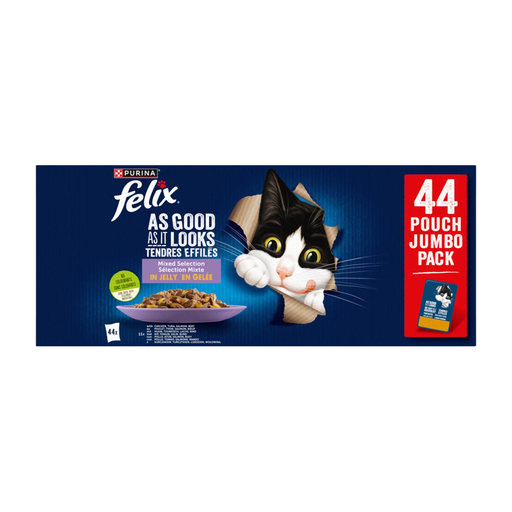
Why this fits the profile: A large multipack with 44 individual 85g pouches is straightforward for daily use and offers several varieties in jelly.
The contents per pouch and the total quantity are clearly stated. Just check that your cat accepts all the flavours in the mix.
44 x 85g, individual portions, complete food for adult cats and varieties with salmon, beef, chicken and tuna according to the product information.
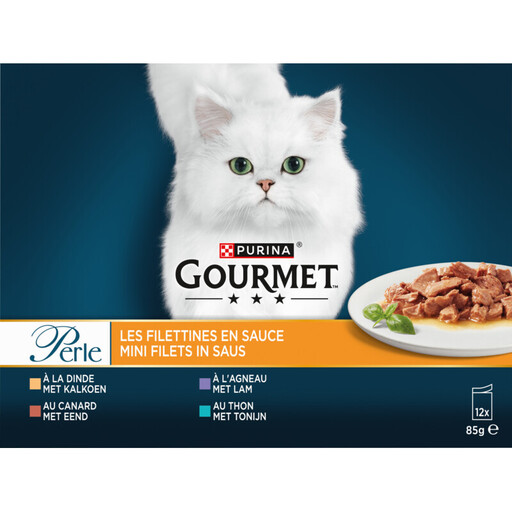
Why this fits the profile: The fine strips in sauce are designed for adult cats that appreciate a different texture to jelly.
The product description states it’s complete food for adult cats with no added colourings, preservatives or flavours. Check the packet for the current ingredients.
12 pouches of 85g, mini fillets, combinations with turkey and tuna, and a portion size that’s easy to serve.
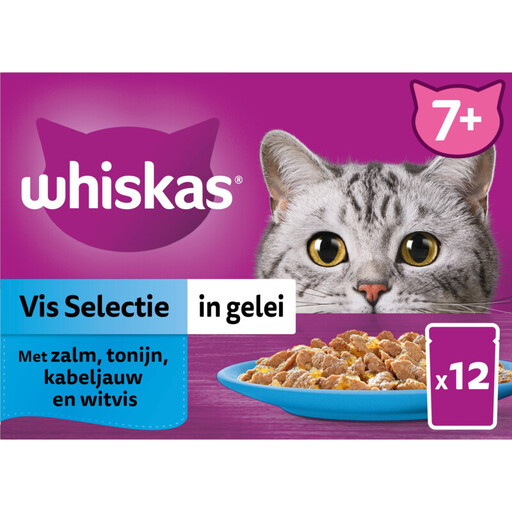
Why this fits the profile: This multipack is designed for cats over seven years old and contains several fish varieties in jelly.
The life stage is clearly stated. According to the product information, it’s complete wet food for senior cats; adjust the portion according to weight and activity level.
Fish selection in jelly, complete nutrition for senior cats and clear feeding guidelines based on body weight.
For kittens, the “junior” or “kitten” label is more important than the flavour. The g'woon Chunks in Jelly Fish and Meat Variation Junior contains 12 portions of 100g and, according to the product description, is intended for young cats. Don’t automatically use kitten food for adult cats, and always check the daily amount on the label.
Also, look out for products described as treats or extras. The MjAMjAM Cat Cream Chicken & Salmon 2 x 80g is, according to the product information, intended as complementary food. So it shouldn’t simply replace a complete daily meal.
We’ve put together a full, up-to-date list of products that fully meet these strict selection criteria and comply with current European safety regulations.
That depends on the label on the packet. If it says complete food for adult cats or an appropriate kitten or senior variety, then the product is intended as a complete diet according to the product specification. If it says complementary food, snack or treat, don’t use it as a complete replacement.
Always follow the label. In the available product information, the guidelines range from a maximum of 24 hours to a maximum of two days in the fridge. Store the food covered, serve it at room temperature if possible, and throw away any leftovers once the stated time has passed.
The amount depends on body weight, age, activity level and whether you’re combining it with dry food. For example, Felix recommends around three to four pouches per day for an average adult cat of about 4kg, depending on the variety. Use the feeding guide on the packet as a starting point and adjust the portion to your individual cat.
