
Vandaag of morgen in huis

Kwaliteit gegarandeerd

Welkomstaanbiedingen ontgrendelen: GRATIS bezorging | Tot 80% korting | Gratis 30 dagen JoyPlus-proefperiode
Download de app
Wet cat food might seem simple to choose: you pick a flavour, pay and put the bowl down. Yet products differ greatly in composition, texture, portion size and suitability for a particular life stage. What’s more, an attractive packet doesn’t always tell the whole story.
This buying guide helps you to practically compare cat food in sauce, cat food in jelly, cat mousse and multipacks. The recommendations are based on verifiable product information, such as the stated life stage, contents, analytical values, ingredients and storage advice.
The front of the pack might say “with chicken” or “with tuna”. So check the percentage in the composition. For different variants in the range, the named animal species is often at least 4% according to the product information. The rest can consist of other meat and animal by-products, cereals, vegetable components and minerals.
That doesn’t automatically make a product unsuitable, but it does help you assess the packaging more realistically. If you’re specifically looking for cat food with chicken or cat food with fish, it’s worth reading the full ingredients list rather than just the flavour name.
A cat may accept sauce, jelly, mousse or chunks differently. Cat food in sauce contains recognisable pieces with a moist sauce. Cat food in jelly usually has a firmer coating around the pieces. Cat mousse is finer and more uniform in texture.
A multipack with lots of variety sounds convenient, but it’s less suitable if your cat only eats one texture. If in doubt, start with a single 85 g pack or a small multipack before buying a large bulk package.
Compare the price per 85 g and check the shelf life after opening. A cat weighing around 4 kg typically needs 2 to 4 portions per day according to the product guidelines for several of the products mentioned, depending on the variant and any combination with dry food. So a pack of 44 × 85 g is practical for multi-cat households or for those who regularly feed the same product, but less handy if your cat quickly tires of a flavour.
Look on the label for “complete pet food” or a similar indication. This means the product is intended as a complete diet within the stated usage situation. Also pay attention to the life stage:
If your cat has a medical condition, food allergy or a noticeable change in eating behaviour, it’s wiser to consult a vet rather than switching between different foods yourself.
The label shows the analytical constituents. These give an objective basis for comparison. Look at moisture, crude protein, fat, crude fibre and crude ash. Wet food often contains a lot of moisture; as a result, protein and fat percentages appear lower than in dry food. So compare products within the same product category where possible.
For example: the Sheba Mini Fillets variant states 82% moisture, 8.5% crude protein and 4.5% fat. The Whiskas Adult variant states 84.5% moisture, 7.3% protein and 4% fat. These are product specifications, not a guarantee that every cat will accept one variant better than another.
A portion of 85 g is manageable and limits leftovers. After opening, wet food should be stored covered in the fridge according to the product information from the relevant manufacturer. The recommended time varies by product: some labels state a maximum of 24 hours, others a maximum of 2 days.
Serve the food at room temperature and always provide fresh drinking water. Follow the feeding guideline on the packaging and adjust the amount according to weight, activity, age and the amount of treats or dry food.
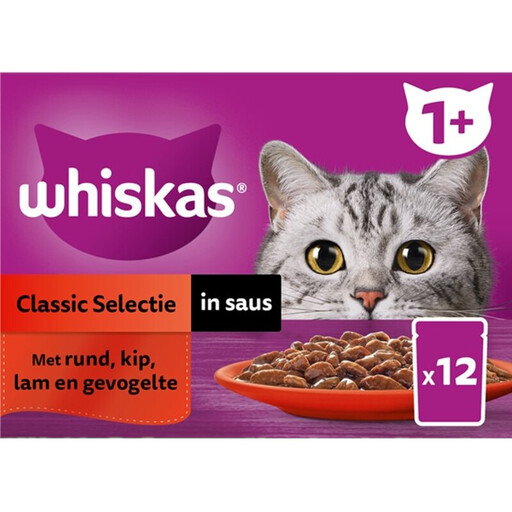
Why this fits the profile: A multipack with four flavours and individual 85 g portions makes it easy to get started with cat food in sauce.
The contents and variants are clearly stated, so you don’t have to rely on a flavour claim alone.
Complete wet food for cats over 1 year old; 12 individual portions; four meat variants in sauce.
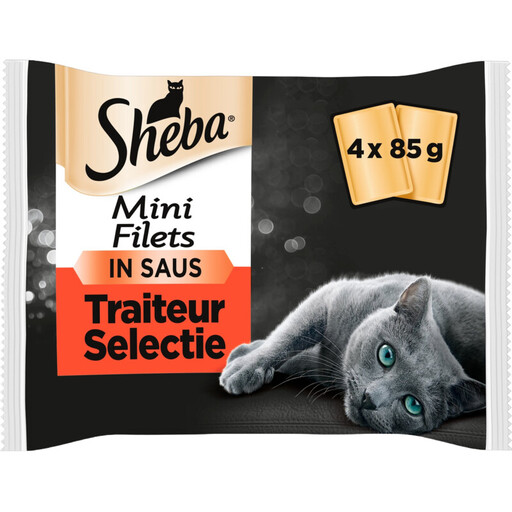
Why this fits the profile: The tender strips in gravy offer variety in a compact pack for adult cats.
The product information clearly states the life stage, portion size and analytical values.
4 tubs of 85 g; complete wet food for adult cats; variants with beef, rabbit, chicken and turkey.
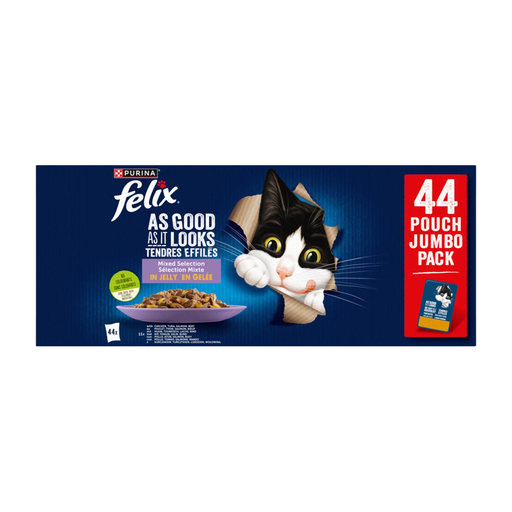
Why this fits the profile: The large stock suits multi-cat households or a consistent daily routine.
The 85 g pouches limit opened leftovers, while the full pack makes the total stock clear.
44 portions of 85 g; flavours with beef, chicken, salmon and tuna; suitable for adult cats according to the product information.
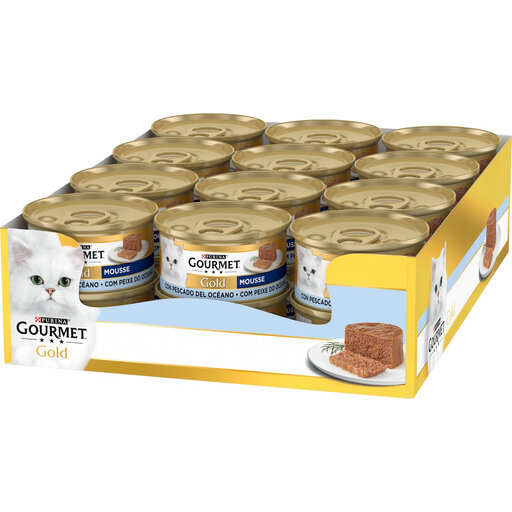
Why this fits the profile: The mousse texture is uniform and clearly different from chunks in sauce or jelly.
You consciously choose mousse rather than a pack where only the sauce or jelly is highlighted.
24 tins of 85 g; tuna variant; according to the product information, complete wet food for adult cats.
We’ve put together a full, up-to-date list of products that fully meet these strict selection criteria and comply with current European safety regulations.
Yes, when the packaging states it is complete wet food and the life stage matches your cat. Check the recommended amount and take treats or dry food into account. Complementary food is not intended as the sole daily meal.
This varies by brand and variant. Store leftovers covered in the fridge and follow the label. The product information for the items mentioned usually states a period of 24 hours up to a maximum of 2 days. Throw away food that smells odd, looks different or has been open for too long.
That depends on your cat’s preference and how easily you want to portion it. Sauce contains pieces with a liquid addition, jelly has a firmer structure and mousse is smooth and homogeneous. When trying a new texture, start with a small pack so you don’t end up with a large multipack your cat won’t eat.
