
Vandaag of morgen in huis

Kwaliteit gegarandeerd

Welkomstaanbiedingen ontgrendelen: GRATIS bezorging | Tot 80% korting | Gratis 30 dagen JoyPlus-proefperiode
Download de app
A cat may enthusiastically eat a pouch of cat food one day and leave it untouched the next. That can make choosing difficult. Packaging often highlights flavour, sauce or variety, while the main thing to check is whether the food is suitable as a daily diet. When choosing wet cat food, there are three common pitfalls:
The points below can help you compare wet cat food using verifiable information, rather than relying solely on marketing copy.
The label will state whether the product is complete food or complementary food. According to the product information, complete cat food is intended to support a cat’s daily nutritional needs when given in line with the feeding guidelines. Complementary food is generally intended as a treat or to be combined with other food.
Also check:
The word ‘complete’ is not a reason to increase the amount fed without limit. Every cat’s needs are different and depend, among other things, on body weight, activity levels and whether the food is combined with dry food or treats. Always follow the guidelines on the packaging and adjust the portion where necessary.
Wet cat food is available as mousse, soft chunks, jelly and sauce. The choice mainly depends on preference and eating habits:
Texture does not automatically indicate nutritional value. Always check whether the product is labelled as complete food and which age group it is intended for.
A portion of 85 grams is practical for one meal or for helping to minimise waste. Tinned cat food can be useful when you want to stock up. Pouches are lightweight, take up little space and are easy to open.
After opening, unused wet food should generally be covered and stored in the fridge according to the product information, then used within the stated period. This period varies by product, so check the label. If your cat is less accepting of chilled food, serve it at room temperature where possible.
A large multipack of cat food, such as 12 or 44 portions, makes most sense when your cat happily eats the flavours included. For example, Felix Every Day Party Mix Selection contains 44 pouches of 85 grams in different flavours. This provides variety, but if your cat is fussy, consider trying a smaller pack first.
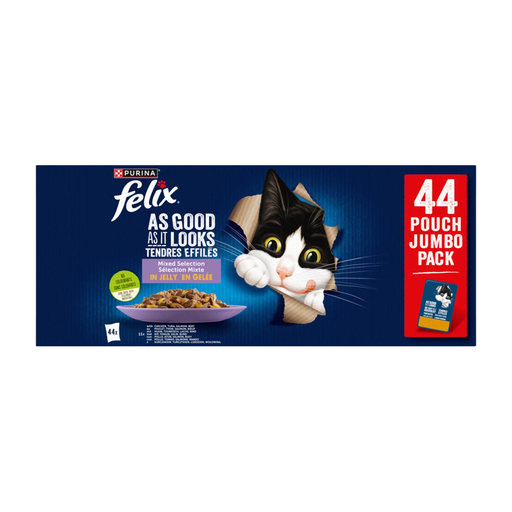
Why it suits this profile: A large multipack with 44 portions of 85 grams is practical for households that regularly serve wet food and want to offer several flavours.
The product information states that it is complete food for adult cats and clearly specifies the portion size. Check the current feeding guidelines on the packaging.
44 individual pouches, several flavours and a jelly texture. According to the product information, vitamins D and E have been added.
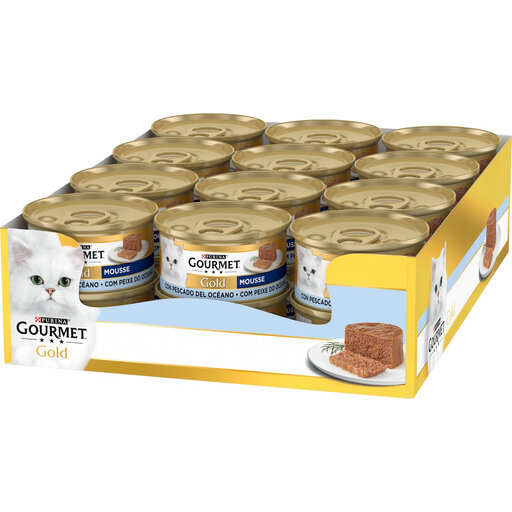
Why it suits this profile: The smooth mousse texture and individual portions suit cat owners who value convenient serving and a soft consistency.
The product information states that it is complete food for adult cats, with a mousse texture and 85-gram portions. This makes the key selection criteria clear from the outset.
24 tins of 85 grams, smooth mousse and, according to the product information, no artificial colourings, preservatives or flavourings.
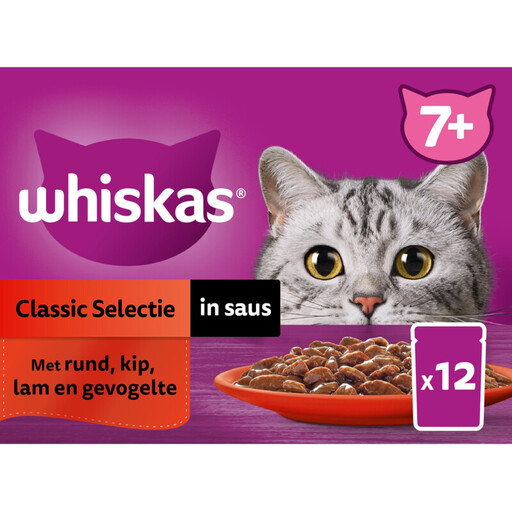
Why it suits this profile: This food is aimed at cats aged 7 and over and provides portions in sauce with a variety of meaty flavours.
The life stage is clearly stated in the product name and product information. This helps prevent you from accidentally choosing standard food for adult cats.
12 pouches of 85 grams, a sauce texture and feeding guidelines for different body weights.
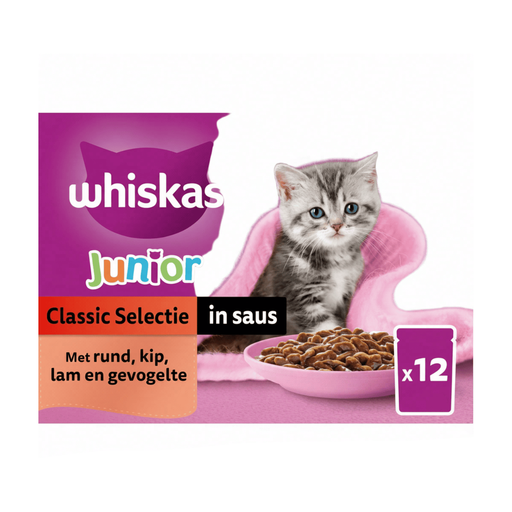
Why it suits this profile: The product information states that this is complete wet food for kittens, with guidelines for different kitten ages.
The Junior label clearly identifies the intended age group. The daily amount is linked to the kitten’s age rather than one general portion.
12 pouches of 85 grams, a sauce texture and a feeding schedule for kittens of different ages.
We have put together a complete, up-to-date list of products that fully meet these strict selection criteria and the applicable European safety regulations.
That depends on the brand, pack size, daily amount and how the two types of food are combined. Compare the price per 100 grams rather than just the price of a box. Also take waste into account: an 85-gram portion can be useful if your cat eats smaller meals.
Cover leftovers, store them in the fridge and follow the timeframe stated on the label. Product information often refers to 24 to 48 hours, but the packaging of your particular variety takes precedence. Throw away food that smells unusual, has changed colour or has been left out of the fridge for too long.
Gradually mix the new food with the old food, increasing the amount step by step. This makes it easier to see how your cat responds to the new flavour and texture. If eating problems persist or you have specific nutritional questions, it is advisable to consult a vet.
