
Vandaag of morgen in huis

Kwaliteit gegarandeerd

Welkomstaanbiedingen ontgrendelen: GRATIS bezorging | Tot 80% korting | Gratis 30 dagen JoyPlus-proefperiode
Download de app
A wet and dry vacuum cleaner can tackle dry dirt, hair and spilt liquids in a single cleaning session. Especially on hard floors, a vacuum cleaner and mop in one is practical: you do not have to vacuum first and then reach for a bucket and mop.
However, not every appliance is suited to the same task. A compact cordless floor cleaner for everyday use works differently from a large wet and dry vacuum cleaner for a workshop. So do not focus only on high suction power or long battery life. The construction, maintenance requirements and right floor type are just as important.
Manufacturers often advertise impressive suction power in pascals, such as 16,000, 20,000 or 23,000 Pa. This figure is not directly comparable between brands. The brush, airflow, water collection and sealing also affect the results.
Treat the Pa rating as one technical specification, not as the sole reason to buy. Also check whether the model is designed for hard floors, large crumbs, pet hair or liquids.
A self-cleaning floor cleaner usually rinses the brush and internal pipework. Afterwards, you will often still need to empty the dirty-water tank, check the filter and leave the components to dry. Residual moisture can cause unpleasant odours and reduced suction power.
A floor cleaner with a self-cleaning function is therefore particularly useful when the appliance has a clear drying cycle, an easily accessible tank and components that are simple to remove.
The stated battery life is often based on a specific mode. Intensive wet cleaning or turbo mode can reduce the operating time. So look at both the quoted runtime and the charging time. For a flat, 25 to 30 minutes may be sufficient; for a larger home, 40 to 65 minutes is more practical.
Most cordless floor cleaners are designed for sealed wood, laminate, vinyl, tiles and other hard indoor floors. Rough or untreated surfaces may be less suitable. Also check whether the water flow can be adjusted. A low setting is better for delicate wooden floors, while tiles can often tolerate more water.
Only use the cleaning solution specified in the product manual as suitable. Avoid foaming products, flammable liquids, chemicals, and hot or sharp objects.
A stick vacuum cleaner for hard floors is only practical if you do not constantly have to move furniture. Look out for:
A model with a low profile of, for example, 9.9 to 13 centimetres can reach under more furniture, but always check the exact product dimensions.
Separate clean- and dirty-water tanks prevent the same water from being spread back over the floor. A larger tank means less frequent refilling and emptying, but it also makes the appliance heavier.
For everyday use, these points are particularly important:
With a traditional wet and dry vacuum cleaner, changing the filters is even more important. For dry dirt, use a suitable cartridge filter or dust bag; for liquids, a foam filter may be required. Always follow the brand's instructions.
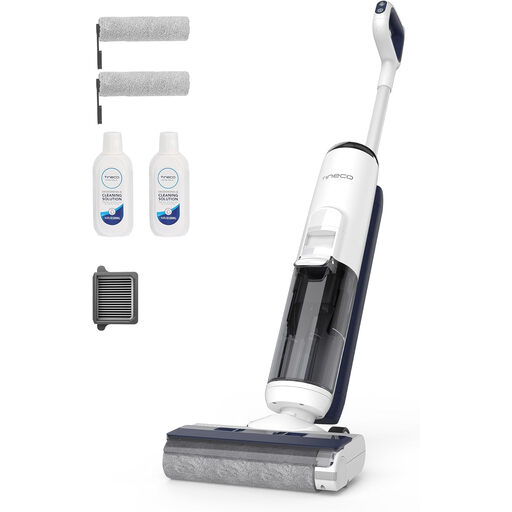
Why it suits this profile: This cordless model is designed for everyday cleaning of hard floors and has a stated weight of 4.3 kg. The set includes extra roller brushes, filters and cleaning solution.
The product information clearly states which hard floor types are suitable and warns against rough surfaces. The self-cleaning function reduces the need to clean the brush by hand, but the tanks and filters still require care.
Cordless use, 4.3 kg, edge cleaning to less than 0.5 cm according to the product description, and two extra roller brushes included in the set.
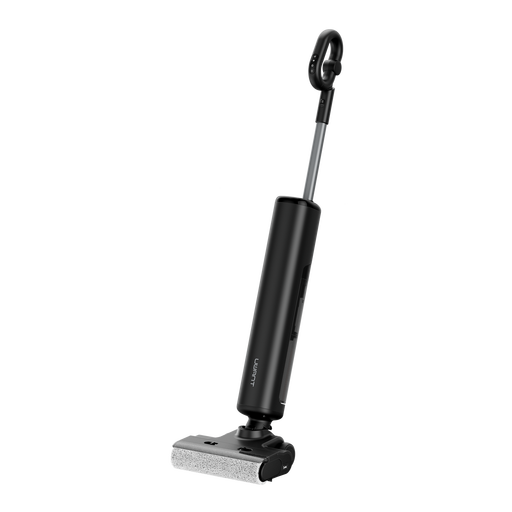
Why it suits this profile: The combination of a stated suction power of 23,000 Pa, 180° lay-flat design and dual-edge cleaning is ideal for households that regularly clean under furniture and along skirting boards.
The stated performance is supported by practical features: adjustable water flow, automatic cleaning and hot-air drying. According to the product description, the model is intended exclusively for hard floors.
23,000 Pa according to the product details, 180° lay-flat design, dual-edge cleaning, self-cleaning and hot-air drying in a push-in base station.
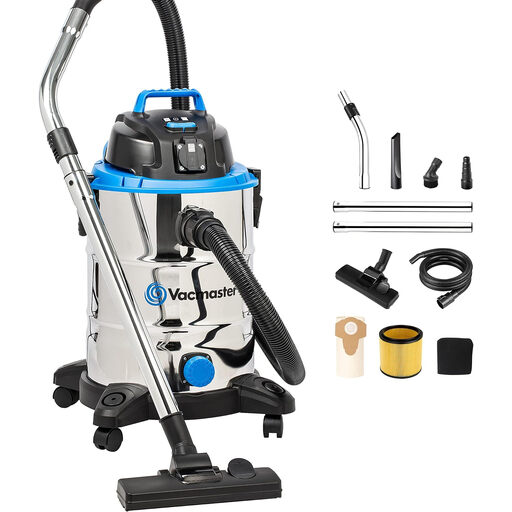
Why it suits this profile: For a workshop, garage or DIY space, a cordless model is not always the obvious choice. This version has a 30-litre stainless-steel tank, a 1500 W motor and a blower function.
The large tank reduces the number of interruptions when dealing with liquids and building dust. The product information specifies separate filters for dry and wet use; changing and cleaning them is still necessary.
1500 W motor, 30-litre stainless-steel tank, 240 V power take-off for electrical tools, switchable floor nozzle and blower function.
We have put together a complete, up-to-date list of products that fully meet these strict selection criteria and the applicable European safety regulations.
Only if the laminate is properly sealed and the product manual confirms that the floor type is suitable. Choose a low water setting and do not leave puddles behind. An appliance designed for hard floors is not automatically suitable for untreated wood or rough surfaces.
Its lifespan depends on charging habits, frequency of use, filter maintenance and the availability of replacement brushes and batteries. Empty the dirty-water tank after every cleaning session, allow the filters to dry completely and store the appliance in a dry place. When buying, check which components are available separately.
In addition to the purchase price, your main costs are electricity, cleaning solution, filters and roller brushes. A cordless model uses electricity through its charging base; a corded model consumes electricity directly while cleaning. The total cost depends on how often you clean and how well you maintain the appliance.
