
Livraison le jour même et le lendemain

Qualité garantie

Débloquez vos offres de bienvenue: Livraison GRATUITE | Jusqu'à -80 % | 30 jours d'essai gratuits à JoyPlus
Téléchargez l'application
A wet and dry vacuum cleaner can tackle crumbs, dust and spilt liquids. A vacuum mop often combines vacuuming and mopping in a single pass. That sounds straightforward, but not every model is suitable for every floor or cleaning task.
Families with children or pets, households with tiled floors and DIY enthusiasts often face the same issues: a battery that runs out too quickly, a brush that traps hair or a machine that requires more maintenance after use than expected. Below, we outline the key points to consider, along with some product recommendations for different uses.
A high figure in Pa or watts may sound appealing, but it does not tell you everything about everyday performance. The brush roll, airflow, water drainage and floor nozzle all affect how effectively dirt is picked up. With a cordless wet and dry vacuum cleaner, runtime also matters: using a high-intensity setting can drain the battery considerably faster.
So do not look at suction power alone. Also consider:
A cordless floor cleaner is generally intended for hard, water-resistant floors, such as tiles, vinyl, sealed wood or laminate. Manufacturers often state that rough surfaces are less suitable. Parquet and untreated wood require extra care, as too much water can cause damage.
A hard-floor cleaner is therefore not automatically a carpet cleaner. If you want to wash carpets, car seats or a fabric sofa, you will generally need a model with a separate spray and collection function.
A self-cleaning vacuum cleaner automatically rinses the brush or internal components, according to the product description. This does not eliminate maintenance altogether. The dirty-water tank must be emptied after use, while filters should be rinsed and allowed to dry completely.
For models with a drying function, it is important to use the specified cycle. According to manufacturers’ safety information, putting a damp filter back too soon can reduce suction power or cause electrical problems.
For a flat, 25 to 40 minutes may be sufficient. In a larger home, a model with a longer runtime or an additional battery is more practical. Also note the difference between the stated maximum runtime and the runtime when using an intensive wet-cleaning setting.
For example, the Philips XW7110/01 states a maximum runtime of 25 minutes and a charging time of approximately 4 hours. The product information also lists a clean-water tank with a capacity of 0.67 litres.
A vacuum and mop combination generally uses two separate tanks: one for clean water and one for dirty water. A larger tank means you need to refill or empty it less often, but it can also make the machine heavier.
Check whether:
Do not use foaming products unless the manufacturer expressly allows them. For example, Tineco warns against highly foaming liquids with suitable models.
A traditional corded wet and dry floor cleaner is often suitable for longer jobs in the workshop. A cordless model is more convenient for quick cleaning sessions around the home. Also check the weight: a machine weighing around 4 to 5 kilograms can be easy to manoeuvre, while a workshop model with a 30-litre tank is primarily designed for capacity.
For cars, carpets and upholstery, spray nozzles, an upholstery tool and a separate cleaning function are more useful than high suction power alone.
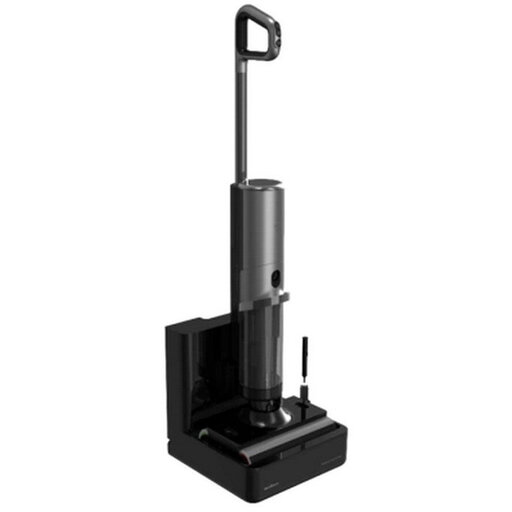
Why it suits this profile: This cordless model combines vacuuming and mopping for everyday cleaning on hard floors. The stated runtime is up to 40 minutes, and the product information gives its weight as 2.3 kg.
Three settings and three water levels let you adjust the amount of water for surfaces such as wood or tiles. Always check beforehand that your floor is water-resistant.
Cordless design, LED display, 650 ml clean-water tank and a charging and cleaning station, according to the product specifications.
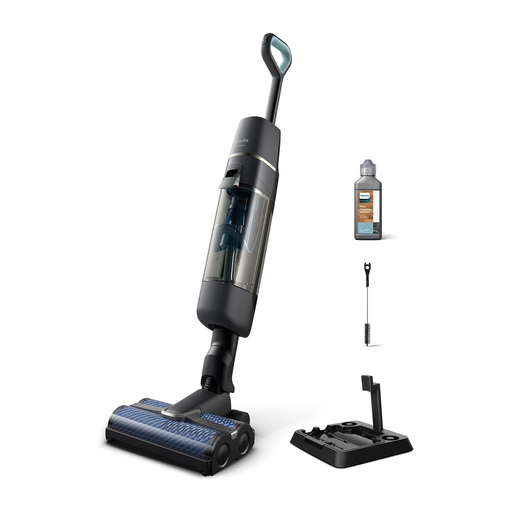
Why it suits this profile: Suitable for households looking for straightforward controls and several cleaning settings. The product information lists an LCD display, two rotating brushes and automatic brush cleaning.
Separate settings for normal cleaning, intensive wet cleaning and water pick-up make it clearer how to use the machine than a single general mode.
AquaSpin technology according to Philips, a 0.67-litre clean-water tank and a stated weight of 4.5 kg.
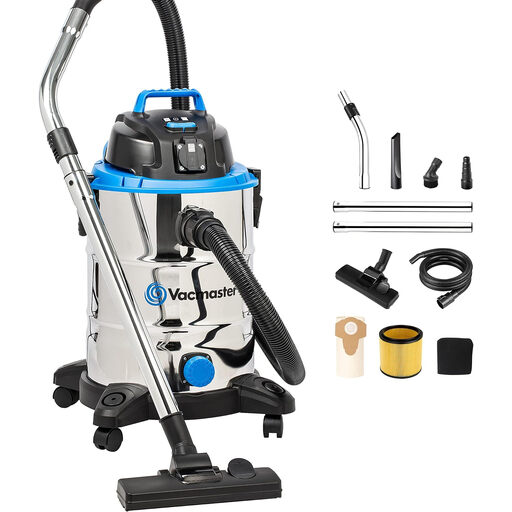
Why it suits this profile: This model is designed for workshops, cars and larger cleaning jobs. According to the product data, it has a 1500 W motor, a 30-litre stainless-steel tank, a blowing function and a power-tool socket.
The large tank reduces interruptions when dealing with wet dirt or sawdust. Make sure you use the correct filter for dry or wet vacuuming and follow the safety instructions.
30-litre capacity, switchable floor nozzle and 240 V EU connection, according to the product specifications.
We have put together a complete, up-to-date list of products that fully meet these strict selection criteria and the applicable European safety regulations.
The cost of a multifunctional vacuum cleaner involves more than the purchase price. Allow for filters, brush rolls, cleaning solution and, where applicable, dust bags. A model with a large tank may need emptying less often, but it may also use more water per cleaning session.
After every wet-cleaning session, clean the following parts:
Do not vacuum flammable liquids, hot ash, sharp objects or hazardous chemicals. When using the machine with power tools, make sure the connection and voltage match the product information.
This varies by model. A standard hard-floor cleaner is generally intended for tiles, vinyl, laminate or sealed wood. For carpets, car seats and upholstery, you need a carpet cleaner with a spray and collection function, such as a model explicitly designed for carpet cleaning.
Its lifespan depends on charging habits, maintenance, storage and the replacement of worn parts. Empty the dirty-water tank after use, allow the filters to dry and store the machine in a dry place. Before buying, also check whether replacement brushes and filters are available.
A cordless model does not use mains electricity while cleaning, but it does need to be charged. Water consumption depends on the selected water level, the floor and how often you clean. A separate corded wet and dry floor cleaner generally has a higher stated motor power, but is suitable for longer jobs without needing to stop and recharge the battery.
