
Vandaag of morgen in huis

Kwaliteit gegarandeerd

Welkomstaanbiedingen ontgrendelen: GRATIS bezorging | Tot 80% korting | Gratis 30 dagen JoyPlus-proefperiode
Download de app
A wet and dry vacuum cleaner can handle dry dirt, spilt liquids and sometimes even dirty mop water. That sounds useful, but not every model is suited to the same jobs. A cordless floor cleaner that vacuums and mops is mainly designed for hard floors around the home. A larger, more powerful wet and dry vacuum with a hose and collection tank is better suited to a garage, workshop or car interior.
So, the right choice doesn’t start with the highest number of pascals or the greatest number of features. It starts with how you plan to use the appliance.
Brands often quote a high figure in Pa. This indicates the maximum suction pressure, but it doesn’t automatically tell you how well an appliance will work on your floors. The brush, airflow, seals and collection tank all play a part too.
If you mainly need to pick up crumbs, pet hair and spilt drinks from tiles or PVC flooring, a good floor brush, edge cleaning and even water distribution are often more important than a high Pa rating alone.
A self-cleaning floor cleaner usually rinses the brush and internal tubing. You’ll still need to empty and clean the dirty water tank afterwards. Filters and brushes must also be left to dry completely before you put them back.
Leaving dirty water in the tank can cause unpleasant smells. Check whether the manufacturer recommends using only its own cleaning solution, too. For example, Tineco’s safety information says not to use highly foaming solutions unless they’re specifically designed for Tineco appliances.
A hard-floor cleaner works differently from a carpet cleaner or extractor. Models with a mopping function are often designed for tiles, moisture-resistant laminate, PVC or other hard surfaces. For a deeper clean on carpets, upholstery and car interiors, you’ll usually need a spray extraction model with separate filters and accessories.
As well as comparing the stated suction power, look at:
A wet and dry stick vacuum is usually lightweight and easy to manoeuvre. A traditional wet and dry vacuum cleaner with a hose often has a larger capacity and more accessories, but takes up more space.
With a cordless wet and dry vacuum cleaner, runtime matters more than battery capacity alone. Check the stated runtime for each mode and bear charging time in mind. An appliance that runs for up to 45 minutes on an energy-saving setting may not last as long in turbo mode.
The tanks also affect how practical a model is. A clean water tank of around 500 to 900 ml is suitable for everyday cleaning. For a large home or a longer job, a corded model with a 20 to 30 litre tank may be more convenient.
Before you buy, check:
Don’t vacuum up flammable liquids, hot ash, sharp metal objects or foaming cleaning solutions unless the product manual expressly allows it. Only use a wet vacuum on surfaces it’s designed for.
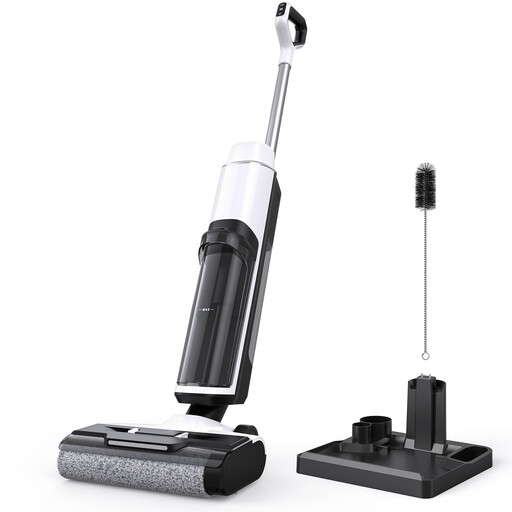
Why it suits this type of user: This cordless model combines vacuuming, mopping and self-cleaning for everyday cleaning on hard floors. The product description states a runtime of up to 30 minutes, a 910 ml clean water tank and a 600 ml dirty water tank.
The three cleaning modes mean you don’t have to use the highest setting for everyday dirt. The stated tank capacity also means fewer interruptions to refill.
Cordless design, self-cleaning programme, edge cleaning on both sides and a weight of 3.85 kg, according to the product information.
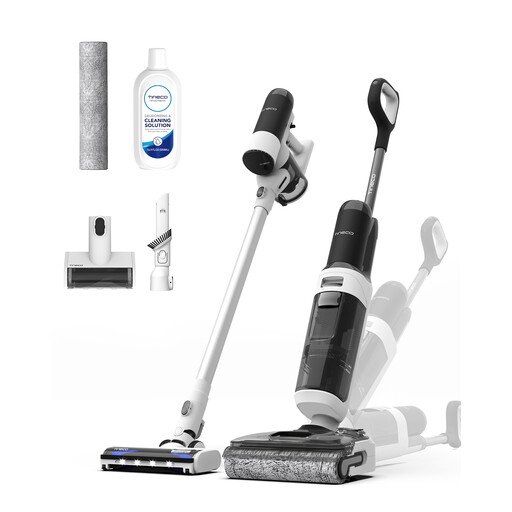
Why it suits this type of user: The product name and information highlight a 180° lie-flat design, self-cleaning, dual-sided edge cleaning and a runtime of up to 65 minutes. It’s a good fit for households that want to clean several rooms in one go.
The lie-flat design helps you clean under low furniture. The care instructions also make it clear that you need to empty the dirty water tank after use and let the filters dry fully.
Long stated battery life, 180° flexibility and edge cleaning on both sides, according to the product description.
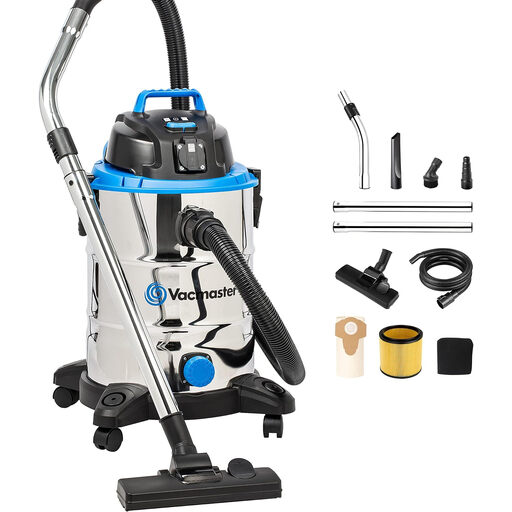
Why it suits this type of user: According to the product information, this corded machine has a 1500 W motor, a 30-litre stainless steel tank, a blower function and a power take-off socket for power tools.
Separate filters for wet and dry use make it clear which applications the vacuum is designed for. This model doesn’t rely on a small battery, but it does need storage space and access to a power socket.
Large tank, blower function, floor nozzle for hard floors and carpets, and a connection for dust extraction during DIY jobs.
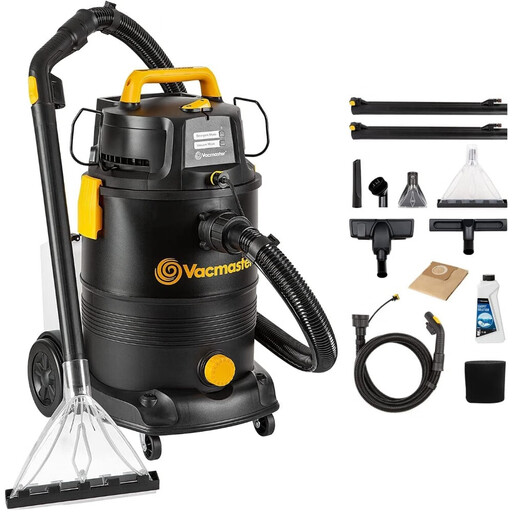
Why it suits this type of user: According to the product description, this model is designed for wet and dry dirt, carpets, upholstery and car interiors. The cleaning solution tank holds 6 litres and the collection tank holds 30 litres.
The different filters and accessories make it easier to use on fabrics and liquids than a standard vacuum mop. Bear in mind, though, that it weighs around 10.8 kg.
Suitable for cleaning carpets, upholstery and cars, with a HEPA exhaust filter according to the stated product specifications.
We’ve put together a complete, up-to-date list of products that meet these strict selection criteria and comply with current European safety regulations.
A wet and dry vacuum cleaner is easier to use when you follow a regular maintenance routine after every clean:
For a workshop model, use the right filter for wet or dry cleaning. Never use a wet filter when the manual specifies a dry one.
It depends on the model. A vacuum mop is often designed for hard floors. For carpets, fabric upholstery and car interiors, you’ll need a model with a spray or extraction function and suitable filters.
As well as the purchase price, you may need to pay for electricity, replacement filters, brushes and cleaning solution. Costs depend on how often you charge the appliance and how many consumable parts you use. So, check whether these parts are available separately before you buy.
Its lifespan depends on the battery, brush, filters and how well you maintain it. Self-cleaning reduces the amount of work you need to do by hand, but it doesn’t replace emptying, rinsing and drying. Cleaning parts promptly and fitting filters correctly help reduce the risk of unpleasant smells and loss of suction.
