
Vandaag of morgen in huis

Kwaliteit gegarandeerd

Welkomstaanbiedingen ontgrendelen: GRATIS bezorging | Tot 80% korting | Gratis 30 dagen JoyPlus-proefperiode
Download de app
As a Product Recommendation Officer at Joybuy, I see every day how owners want the best for their cats, especially when it comes to health. When a cat is overweight, the search for the right diet food is often the first step. But the market is filled with promises that don't always deliver. Before you make a choice, it's important to recognise a few common pitfalls.
Pitfall 1: The "Light" Myth Products labelled "light" or "indoor" are not the same as veterinary diet food. They often contain only slightly fewer calories than the standard version. For a cat that truly needs to lose weight, this is usually not effective enough.
Pitfall 2: The Wrong Focus on Ingredients Marketing often focuses on trendy terms like "grain-free" or a high meat percentage. While ingredient quality matters, other factors are decisive for weight loss: calorie density, a high protein content to maintain muscle, and an increased fibre content to promote a feeling of fullness.
Pitfall 3: Underestimating Portion Size Even the most specialised diet food won't work if your cat eats too much of it. The feeding guidelines on the packaging are a starting point, not a fixed rule. Every cat is different, and the portion may need to be adjusted based on weight loss progress.
To see through the marketing hype, you can focus on a few objective specifications. This will help you choose an effective veterinary cat food for weight management.
The foundation of any diet is a lower calorie intake. For weight loss kibble for cats, a reduced fat content is a clear indicator. Check the analytical constituents on the packaging. A fat percentage of around 9-11% in dry food is a good starting point for a diet food. This is significantly lower than regular food, which often contains 15-20% fat.
During weight loss, it's crucial that your cat maintains muscle mass and primarily loses fat. Protein is essential for this. A cat food for an overweight cat should have a relatively high protein percentage, ideally above 35% in dry food. This supports the muscles and contributes to a feeling of satiety.
Fibre-rich cat food is a key component of weight management. Fibres, such as cellulose and beet pulp, absorb water in the intestines and give your cat a full feeling without adding extra calories. This reduces begging behaviour and makes the diet easier for both the cat and the owner to stick to. A fibre content of around 8-10% is common in specialised diet foods.
Not every overweight cat requires the same approach. Below are some product options, linked to specific scenarios.
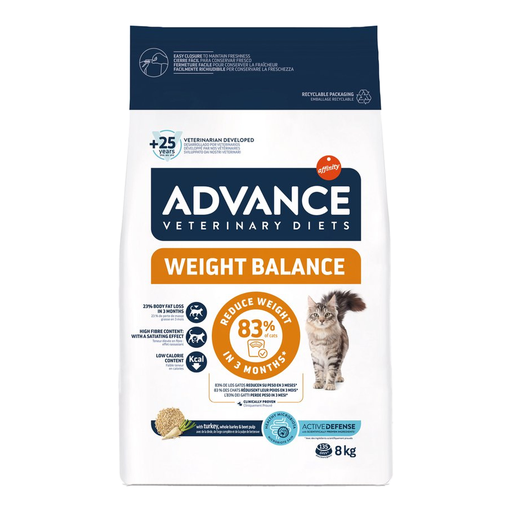
Why This Fits Their Persona: This is a complete veterinary diet food, specially formulated for cats with obesity or excess weight. It is the designated choice when a vet has recommended a diet for significant weight loss.
This is not a vague "light" food. The composition is specifically aimed at weight loss with a low fat content (9%), high protein content (40%), and high fibre content (10%).
A complete veterinary formula that supports weight loss while preserving muscle mass. Contains L-carnitine, which the manufacturer claims helps with fat metabolism.
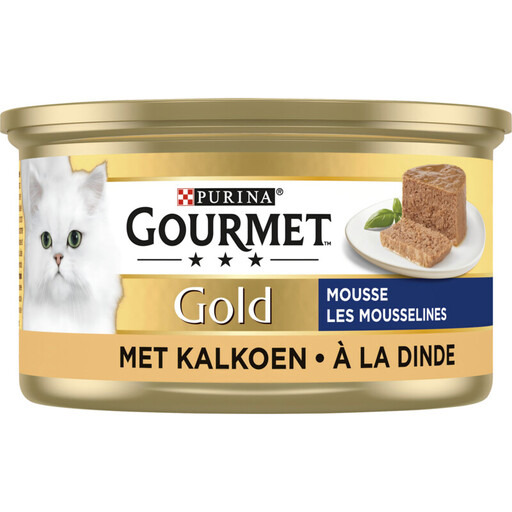
Why This Fits Their Persona: For the cat that refuses its new diet kibble. A small spoonful of this tasty wet food can increase acceptance of the main meal without completely disrupting the diet.
This is not presented as a diet food, but as a supplement. The pitfall is to replace a full meal with it. Use this sparingly, purely as a topper for the weight loss kibble for cats.
The soft mousse texture is irresistible to many cats. The small 85-gram packaging helps with portion control and prevents waste.
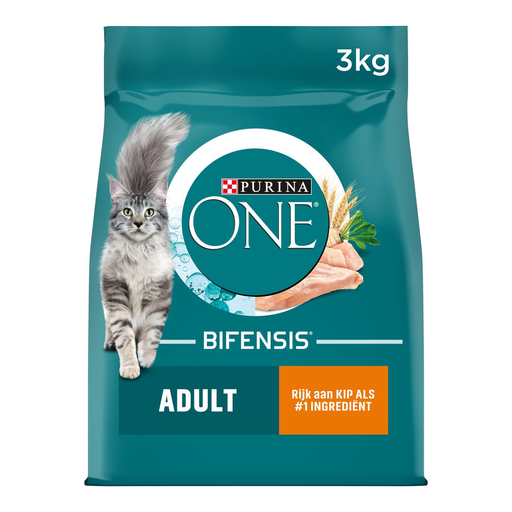
Why This Fits Their Persona: Once your cat has reached its target weight, you can switch to a high-quality maintenance food in consultation with your vet. This food is an option for the long term.
The pitfall is falling back into old habits. This is not a diet food. Strict and careful portioning remains essential to prevent weight regain. Continue to weigh your cat regularly.
Chicken is the main ingredient. According to Purina, the formula contains a functional bacterium that supports the gut flora, contributing to overall health.
In addition to the right food, specific supplements can sometimes offer support, for example, for joints that are under extra strain due to excess weight. Discover our range.
How quickly can my cat lose weight on diet food? A healthy and safe rate of weight loss is about 1 to 2 percent of body weight per week. Losing weight faster can be dangerous for cats and lead to hepatic lipidosis, a serious condition. Patience is key. Always consult with a veterinarian to set a realistic goal and plan.
Can my overweight cat still have treats? It is wise to drastically limit treats and extras, as they are often high in calories. If you still want to give a reward, opt for special low-calorie diet snacks. An alternative is to use a few kibbles from the daily diet food as a treat. This way, you provide the attention without the extra calories.
What is the difference between 'light' food and veterinary diet food? The term 'light' is not legally protected and can be used by any manufacturer. It usually just means the food contains fewer calories than the standard version from the same brand. In contrast, veterinary cat food for weight management is a product specifically formulated for a medical purpose: treating obesity. Its composition is precisely balanced (low fat, high protein, high fibre) and is typically recommended and monitored by a veterinarian.
